








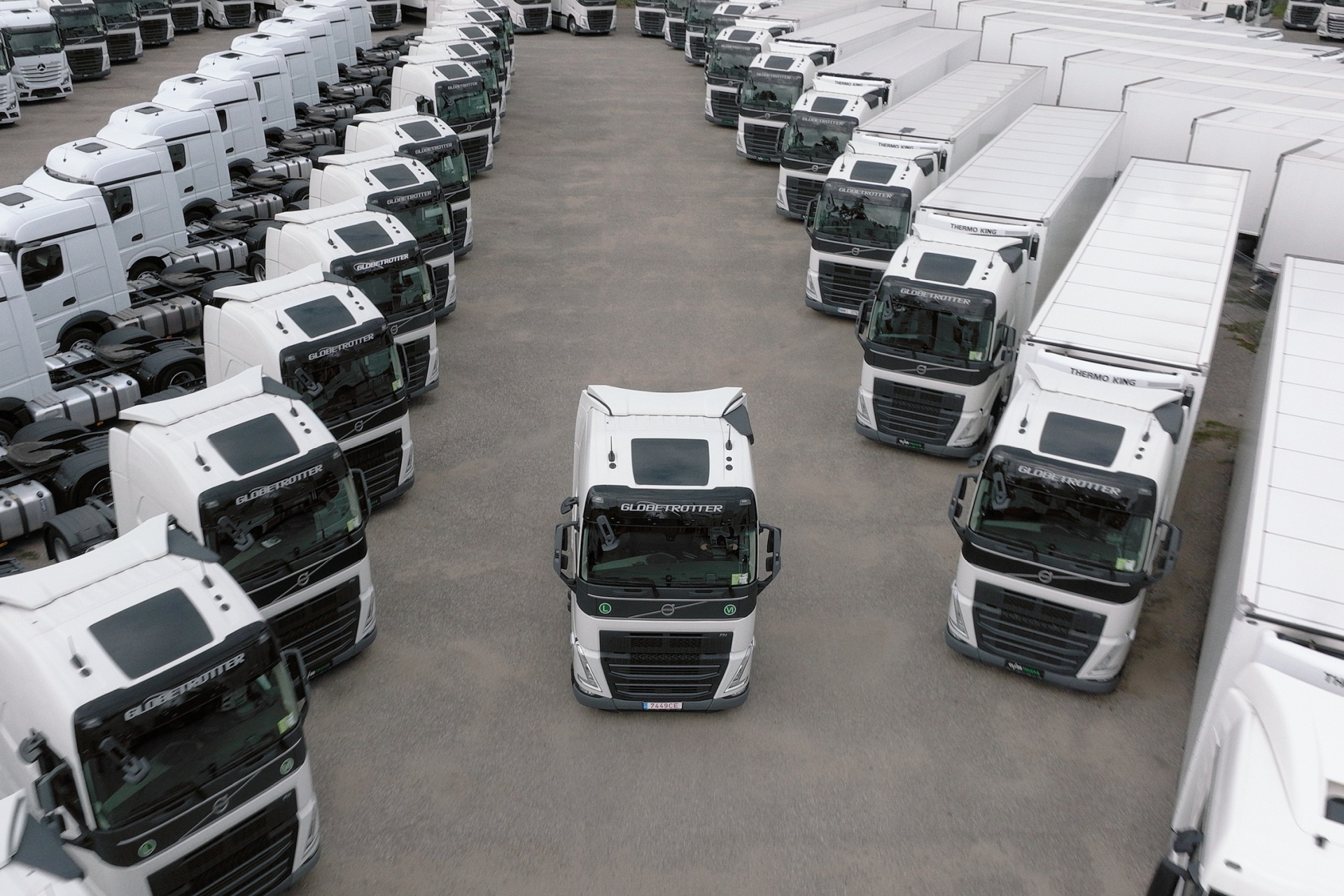
Every logistics company faces a difficult decision when its fleet ages and stops achieving optimal performance: whether to replace vehicles one by one or upgrade the entire fleet at once. Since trucks typically require replacement every 5–7 years to remain cost-effective, and rising demand necessitates fleet expansion, the challenge is not only finding but also securing a sufficient number of identical vehicles to maintain operational consistency.
The market reality is that if you want 10, 30, or even more identical trucks, you are usually limited to ordering directly from manufacturers at higher prices, often with long lead times. Most dealers and intermediaries simply do not have that many vehicles with identical specifications. You have to work hard to find the right partner, but it is worth the effort – the savings come from many areas that accumulate over time.
– explains Luuk Roelofs, Sales Department Manager at ClassTrucks.
Improved planning and operations
By expanding or renewing a fleet with identical vehicles – whether they are Volvo FH, Mercedes-Benz Actros, or other brands – companies gain immediate operational benefits through predictable performance metrics.
With a standardized fleet, you work with known variables: a fuel consumption difference of less than 3% between vehicles and synchronized service schedules every, for example, 60,000 kilometers. This predictability alone allows for reduced planning time and improved delivery accuracy. The larger the fleet, the greater the effect.
– emphasizes Luuk Roelofs.
Fleet standardization also enables more advanced route optimization. When dispatchers know that every vehicle-trailer combination is compatible and operates identically, they can focus on efficiency rather than equipment matching. This flexibility is crucial during peak season or in the event of driver absences.
Simplified supplier coordination
Procurement efficiency increases significantly with bulk purchases of identical specifications. Executing one large order instead of many smaller ones significantly reduces administrative costs – fewer contracts to negotiate, fewer delivery schedules to coordinate, and fewer invoices to process.
By purchasing vehicles in bulk from a single partner, companies minimize the time and logistics costs associated with managing multiple suppliers. This consistency ensures a uniform level of quality across all vehicles, reducing potential discrepancies in performance and maintenance requirements in the future.
– notes Luuk Roelofs.
More efficient maintenance and servicing
The most tangible benefits of standardization are seen in the service workshop, especially when combined with advanced solutions for ongoing maintenance. Research conducted by the Deloitte Analytics Institute shows that periodic maintenance – which is most effective for uniform fleets – increases efficiency by 25%, reduces breakdowns by 70%, and lowers maintenance costs by 25%.
Please consider that a roadside breakdown can cost around, for example, 2,000 euros, compared to 500 euros for scheduled maintenance. When operating 30 identical trucks, you can predict component failures based on patterns for the entire fleet. If 10 trucks show similar wear patterns at 180,000 kilometers, you can proactively service the remaining 20 before a breakdown occurs.
– explains Luuk Roelofs.
Parts inventory management becomes much more efficient. Instead of stocking 15 different types of filters for a diverse fleet, only 3 are needed. Purchasing these parts in bulk usually provides discounts and reduces storage costs.
Less complex training
Driver training becomes more efficient with fleet standardization. When drivers only need to master one type of vehicle, the onboarding time for new employees is significantly reduced, and the learning curve flattens considerably.
The safety benefits are obvious. When a driver switches from a Scania R to a Volvo FH within one week, the risk of operational errors increases. Different brake responses, blind spots, and control systems contribute to safety risks and a drop in productivity.
– notes Luuk Roelofs.
Standardization also improves driver satisfaction and retention. Truck drivers surveyed by Volvo and other industry organizations consistently report a desire to stay longer with employers who provide comfortable, well-maintained, and familiar vehicles.
Finding the right quantity in a limited market
The challenge remains: where to find large quantities of identical vehicles? The used vehicle market is usually too fragmented, and most dealers offer a maximum of 2 to 10 units of a given model.
This market gap is precisely why specialized suppliers, such as ClassTrucks, focus on young, used trucks in large quantities. We maintain stocks of 10, 30, or more identical units – the same model, year of manufacture, and specifications. For companies that want to standardize their fleet while avoiding the premiums for new vehicles and wait times, this is an optimal solution: immediate availability, 15–25% savings compared to new vehicles, and all the operational benefits resulting from standardization.
– explains Luuk Roelofs.
And when clients have specific requirements that go beyond available stock, being part of Girteka enables ClassTrucks to source vehicles directly from the Group’s operational fleet – ensuring flexibility and continuity even for large, custom orders.
In cases where we do not have available stock on-site, we can usually offer clients the option to reserve an additional number of trucks that will be delivered within a few months. These vehicles naturally undergo the same inspections and maintenance procedures as those we have in our offer. The benefits of this model are numerous, especially for companies looking to expand their fleet with a large number of trucks of the same model.
– concludes Luuk Roelofs.
As shown in the examples above, the arguments for standardization become increasingly compelling for large fleets. Mixed fleets generate inefficiencies – difficult maintenance, complex training, reduced bargaining power – that accumulate over the entire service life of each vehicle. As solutions emerge to fill this gap, fleet managers face a simple question: not whether standardization provides value, but how to best leverage it.
Source: ClassTrucks / Girteka Group