








New trend: the European production and warehousing-logistics base is moving to Romania, thanks to lower taxes, labor costs, less bureaucracy, and competition in many industries: reports the Gremi Personal Analytical Center.
Currently, the situation is very dynamic; in terms of indicators, Romania is already catching up with Poland, offering favorable conditions for development and investment, especially for foreign companies. E-commerce, IT, financial services, home & decor – there are not many strong players in these industries in Romania. Polish e-commerce clothing companies are dynamically entering the Romanian market, opening new warehouses every week. The IT and financial sectors are signing significant contracts with foreign companies, which results in the relocation of support for such large enterprises as Philip Morris from Poland to Romania. The main reason for these changes is primarily the lower labor costs in this region, which in the future may lead to Romania, and no longer Poland, becoming the logistics and warehousing center of Europe.
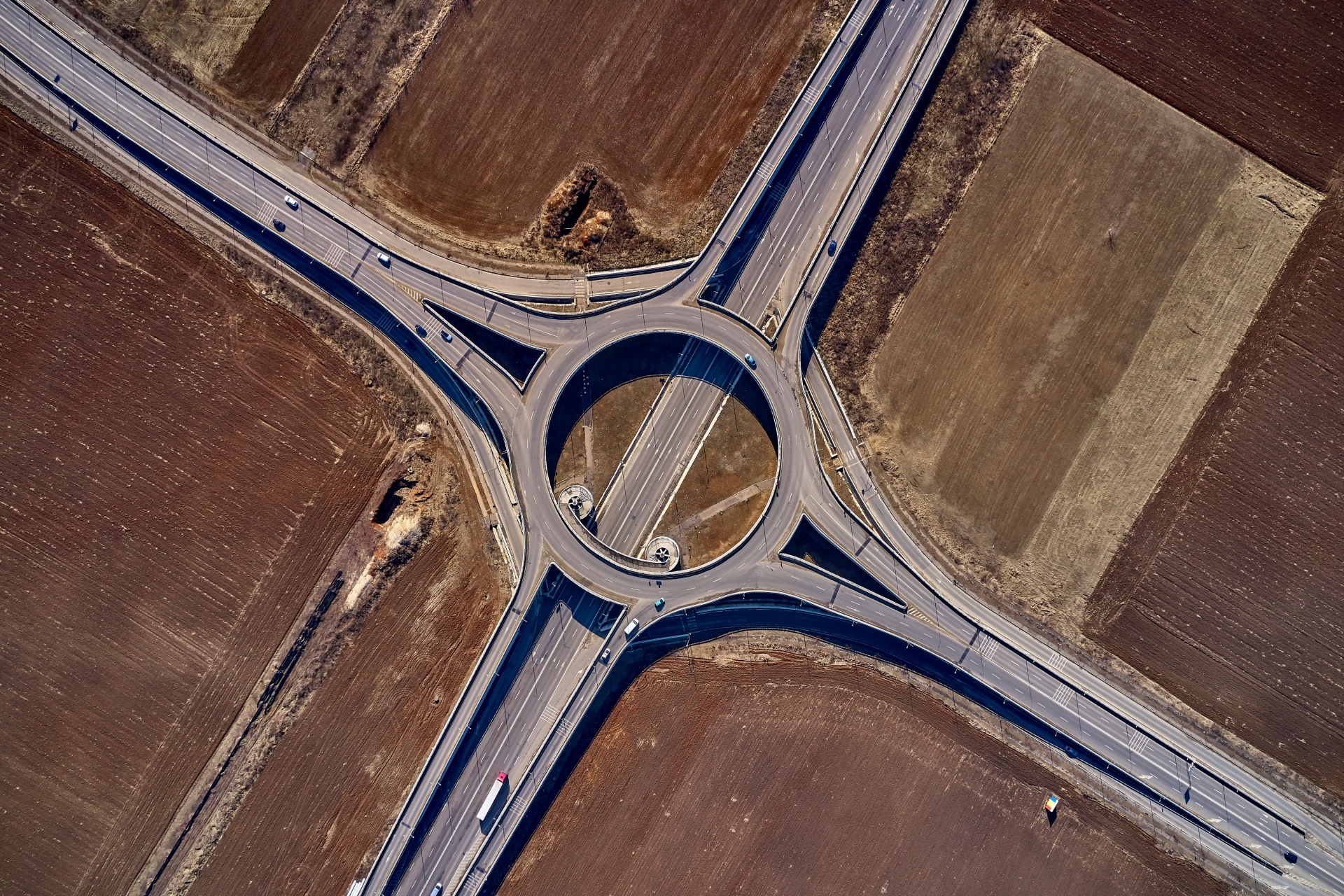
After several months of operating in Bucharest, I have observed a symptomatic phenomenon: foreign corporations are buying up large areas of land and building warehouses and production plants in Romania because the cost of buying land is several times lower. Meanwhile, in Poland, the emphasis is on long-term leasing. Next to Bucharest, a second ring road is currently being built, which is located 20 km from the city limits (already 75% open). This is practically a mass purchase of land near convenient transport hubs for logistics transport. – comments Oleksandr Chepkyi, CEO of Gremi Personal Romania, an international employment agency.
A new direction for expansion
In November 2024, Gremi Personal opened another office outside of Poland – this time, following western directions (Germany, Great Britain), an office was opened in Bucharest.
What causes Romania to slowly overtake Poland in terms of indicators, even though it joined the EU later (2007) and its share in the total EU GDP is only 1.9%?
Poland was characterized by rapid economic growth since joining the EU (2004), but despite a 4.4% share in the total EU GDP, this did not translate into the level of average wages. At approx. 20,000 euros per year, it is more about catching up on two decades of Europe’s rapid development, rather than real wealth, which starts at approx. 30,000 euros per year. In the EU ranking, Romania, Bulgaria, Hungary, and Greece usually ranked behind Poland.
Romania, in turn, lagged behind because it started from a very low base. Meanwhile, the latest Eurostat data (2023) brought a surprise and showed that Romania is actually ahead of Poland and other countries in the region in terms of GDP per capita, although its residents still earn less than Poles. Romania took 20th place in terms of GDP per capita adjusted for purchasing power parity – thanks to which it was ahead of Poland, as well as Hungary, Croatia, and Greece.
Although Romania overtook Poland by one point (21st place), the countries of the Central European region still lag behind in terms of the entire EU. GDP in Romania began to grow as rapidly as in Poland; currently, the level of foreign investment is one of the highest in the region, many technological start-ups are being created, and the level of corruption has significantly decreased. In both countries, wage costs have been rising very rapidly in recent years. According to EU data from 2024, the average annual salary in Romania was 17,700 euros, while in Poland it was 20,500 euros.
A good direction for change
But despite this, Romania has an advantage over Poland. In Romania, there is less bureaucracy – registering a company takes only a few days. The country is characterized by a simpler tax system and lower taxes apply: CIT is 16% (in Poland 19%), and the basic VAT is 19% (in Poland 23%). In Romania, social security contributions apply to all income (except capital income), so specific-task contracts or mandate contracts are not popular there.
Romania is a large market with over 19 million consumers and growing purchasing power with relatively low competition in many sectors, which results from the fact that the Romanian economy was based on heavy industry for years. It offers cheaper electricity, which, for example, influenced the relocation of the Michelin tire production line from Olsztyn to Zalau (this applies only to the Heavy Tire Plant in Olsztyn, and not to the entire production of the plant – Ed.). The Polish market is much more saturated and is characterized by greater competition. Outsourcing companies in the field of BPO (Business Process Outsourcing) and SSC (Shared Services Centers), as well as entities from the IT, fintech, or e-commerce sectors, are increasingly moving their operational centers to countries offering lower labor costs. When choosing a location, they are guided by the desire to optimize expenses, better operational control, and access to qualified human capital. Time and cultural proximity facilitate cooperation with headquarters in Western Europe and the USA, hence regions such as Central and Eastern Europe (Czech Republic, Poland, Romania) and Latin America (Mexico, Costa Rica) are particularly popular in this respect. And Romania is being chosen more and more often.
Source: Gremi Personal Sp. z o.o.