









Janusz Mincewicz talks to Przemysław Daca, President of the State Water Holding Wody Polskie.
Janusz Mincewicz: Poland has 100,000 km of rivers, streams, and brooks. Is this enough for us not to complain about a lack of water?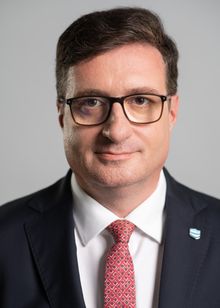 Przemysław Daca: Last year, we succeeded in increasing water resources in rural areas by 57 million cubic meters of water. This result was achieved for the first time in 30 years, mainly thanks to activities carried out under the Water Resources Increase Program, especially in channel retention, i.e., river retention. It consists of temporarily damming water in rivers and canals during periods of increased rainfall. Water structures, such as weirs and culvert-sluices, then retain water in the watercourses. Thanks to channel retention, it is possible to increase the amount of water stored in the soil in the areas of a given river basin. This type of retention allows for maintaining or even increasing groundwater levels and recharging groundwater, which enables increasing crop yields by as much as 30-40%. Furthermore, thanks to channel retention, ecosystems dependent on water are also supported. It is possible to increase retention in regions of Poland where there is a risk of the greatest drought, while not incurring high costs for activities. Thanks to the continuation of the channel retention program by Wody Polskie, the level of retention in the country will soon increase from 6.5% to as much as 7%.
J.M.: How do we compare to the rest of Europe?
P.D.: The European average for water retention is 20%. Proper implementation of water management should involve collecting exactly this percentage of the average annual river runoff in Poland. However, there are countries where the level of retention is higher, such as Spain, which collects over 40% of water. I cite these figures to emphasize the great challenge faced by Wody Polskie, which has only existed and operated since 2018. Recently, the Świnna Poręba Reservoir was put into operation, collecting 160 million cubic meters of additional water. The first stage of the construction of the Malczyce Water Barrage has also been completed. Thanks to this investment, we have collected an additional 3 million cubic meters of water by damming the Oder. Thanks to subsequent facilities – the Rybojady and Perzyny weirs built on the Obra, it will be possible to achieve channel and lake retention at the level of 11 million cubic meters. According to the assumptions, the weirs will be built by 2022. We also have long-term plans regarding the preparation of projects for large water reservoirs. Within 8 years, the Kąty-Myscowa and Wielowieś Klasztorna reservoirs will be built. The first will allow for the collection of 40 million cubic meters of water, the second 65 million cubic meters. There are also plans to build more water barrages on the Oder – Lubiąż and Ścinawa, which will serve for channel retention. Nevertheless, this is only a drop in the ocean of needs. We must take comprehensive actions, taking into account the needs of people, the economy, and the environment. It should be remembered that building hydrotechnical facilities for water retention is not everything, as investments in small retention, environmental retention, forest retention, and blue-green infrastructure in urban areas are also necessary. These actions of ours will enable an increase in the amount of water retained in Poland.
J.M.: There are over 8,600 km of flood embankments in the country. Can all Poles living near rivers now be safe?
P.D.: In Poland, we have two largest rivers that, due to the risk of flooding, require constant observation. We are currently working on projects that, when combined, will enable the creation of a comprehensive flood protection system. We are talking here about the Oder River Basin Flood Protection Project (POPDO) and the Flood Protection Project in the Oder and Vistula River Basins (POPDOW). The goal of the investments resulting from the program is to mitigate the flood wave and reduce flood risk. Their high priority is supported by statistics. According to estimates, about 15 million people live in areas near which selected tasks are being implemented as part of the mentioned projects. POPDO and POPDOW have many sources of funding. Among them, one can mention, for example, funds from the World Bank, the Council of Europe Development Bank, and the EC. At a cost of PLN 2 billion, we are conducting investments that will increase the level of flood protection. In Wrocław, Nowa Sól, and Wężyska-Chlebowo, the construction of flood embankments is underway on the section of the Middle and Lower Oder. Embankments are also being built on the Upper Vistula in Sandomierz and Kraków. A dry reservoir has been built in Racibórz, and 4 polders in the Kłodzko Valley are still under construction. The projects also provide for flood protection for Słubice and Krosno Odrzańskie. Modernization works of regulatory structures are planned in selected limiting places on the freely flowing section of the Oder. We also have plans to build a base for icebreakers. An important task is to clear the Klucz-Ustowo canal for the free movement of vessels and to improve the flow of flood waters from Lake Dąbie. In Wrocław and Kraków, the construction of operational centers coordinating flood protection activities is underway. The Wrocław base will be responsible for monitoring the Upper and Middle Oder, the Kraków one for the Upper Vistula area. Thanks to these actions, an area of 271,000 hectares will be secured against flood risk. On the sections of the freely flowing Oder, the most important goal for ensuring flood safety is to remove congestion-prone places that cause ice jams, characteristic of large rivers. In this way, working conditions for icebreakers, the best for fighting ice jams, will improve. For Wody Polskie, increasing flood protection is one of the priority tasks.
J.M.: How is the modernization of the Gliwice Canal progressing?
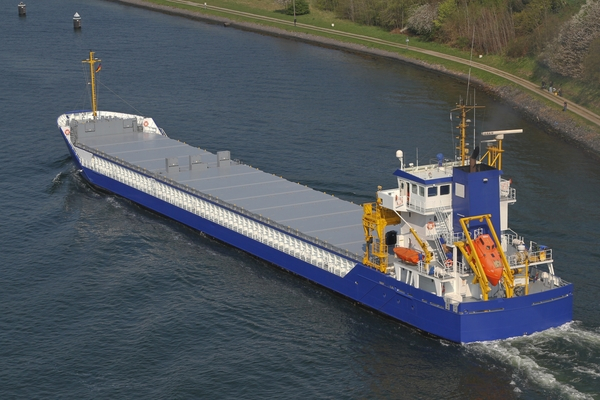
P.D.: In the second quarter of this year, the modernization of the Gliwice Canal locks in Sławięcice and Nowa Wieś will be completed. Earlier, in 2020 and 2015, works of a similar scope were completed at the locks in Łabędy, Dzierżno, Rudziniec, and Kłodnica. The Gliwice Canal is the only such artificial waterway in the country serving transport purposes. Modernization projects for hydrotechnical facilities were absolutely essential. Let me remind you that due to the poor technical condition, the southern chamber of the Łabędy lock was excluded from operation for almost 24 years, from 1994 to 2018. Completion of the modernization works will allow for the use of the facilities and will increase the reliability of the locks, which were prone to frequent failures before the renovation. Thanks to the modernization, the Gliwice Canal is regaining its former glory and functionality, which allows for moderate optimism regarding the intensification of freight traffic. In the past navigation season, nearly 6,000 vessels traveled through the Gliwice Canal, and we are talking about a pandemic year and the associated restrictions.