









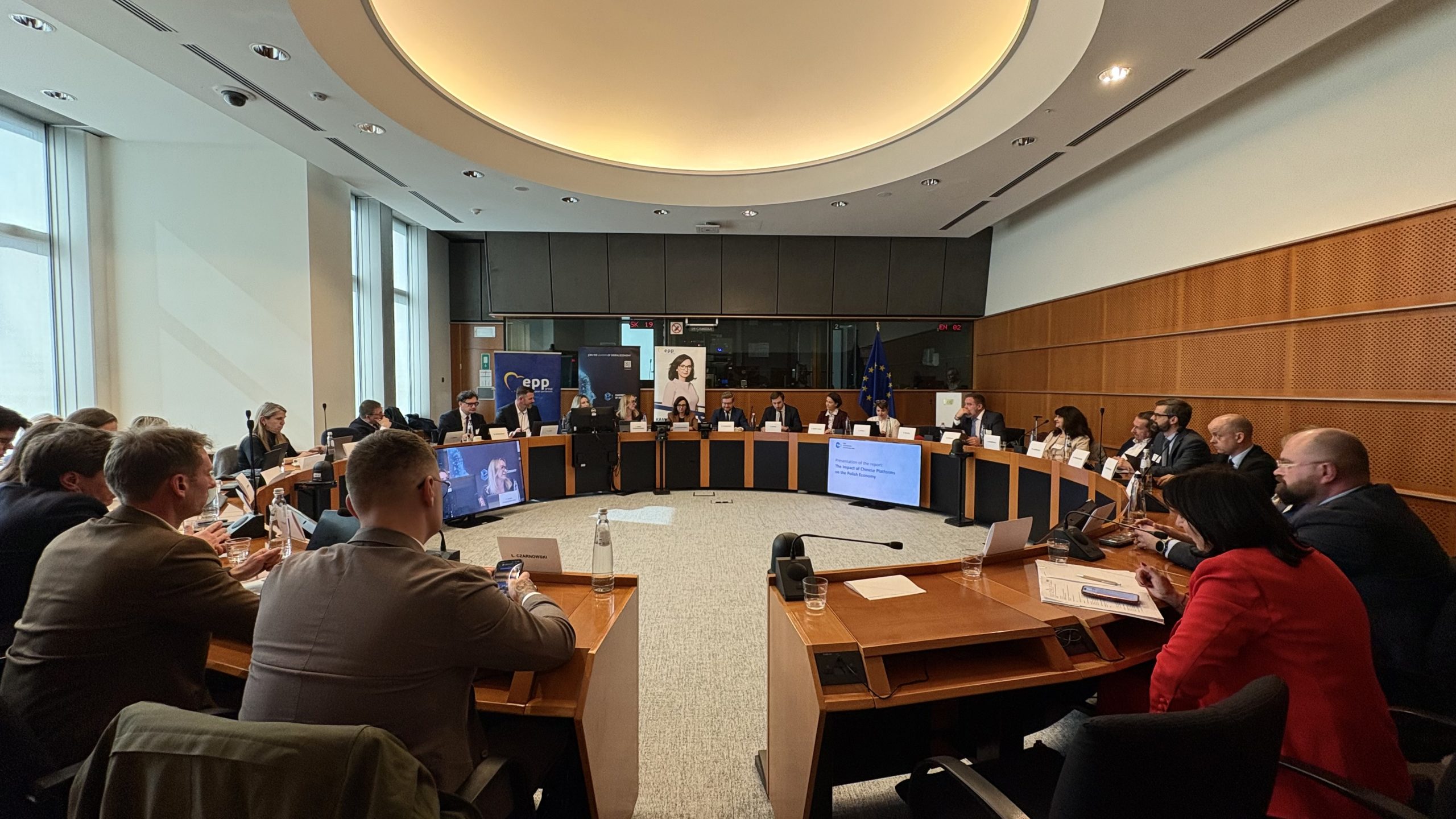
On April 14, 2026, the European e-Commerce Summit took place in Brussels, organized by the Chamber of Digital Economy in cooperation with Kamila Gasiuk-Pihowicz. The event brought together representatives of EU institutions, public administration, and business to discuss the challenges and development directions of the European e-commerce market.
The main theme of the meeting was a level playing field in e-commerce in the context of strengthening the single market and building the digital sovereignty of the European Union. The discussion, held in a roundtable format, focused on assessing the effectiveness of existing regulations in the global digital economy.
Today, we do not need more regulations, but their real enforcement. European companies operate according to the rules, but they cannot compete on equal terms with entities that do not follow these rules. This is the moment when we must move from declarations to action.
– emphasized Patrycja Sass-Staniszewska, President of the Chamber of Digital Economy.
Key conclusions from the discussion:
- Regulations vs. market reality – The European Union has extensive legal frameworks (e.g., VAT, GPSR, DSA, DMA), but the key challenge remains their enforcement – especially against non-EU entities. The problem is not a lack of regulation, but the fragmentation of competencies and insufficient coordination of actions. As a result, non-EU companies continue to benefit from competitive advantages, including in the areas of taxation, compliance, and product safety.
- Data as untapped potential – Significant gaps were identified in the effective exchange of data between member states and institutions. The barriers are both legal and technological in nature. There is an increasingly clear call for a more centralized approach at the EU level.
- Market surveillance and enforcement – Supervisory authorities have limited resources and tools, which affects the effectiveness of their actions. The system fails to identify some irregularities, especially in the area of cross-border e-commerce. The development of initiatives such as the EU Customs Hub could be an important element of support.
- Level playing field and SME protection – European enterprises operate in a more restrictive regulatory environment than their global competitors. The key challenge remains finding a balance between protecting the market and the consumer while maintaining innovation and competitiveness.
- EU digital sovereignty – This is ceasing to be a postulate and is becoming a strategic necessity. The European Union faces a decision on where the line lies between market openness and the protection of its own economic interests.
A level playing field is the foundation of the single market. If we want to talk about Europe’s digital sovereignty, we must ensure that the law is not only ambitious but, above all, effectively enforced against all market participants – without exceptions.
– noted Kamila Gasiuk-Pihowicz, Member of the European Parliament.
The conclusions from the event will be translated into legislative and operational recommendations. In the near future, a White Paper will also be developed to support European policymakers in building a level playing field in e-commerce.
Source of information: Chamber of Digital Economy