








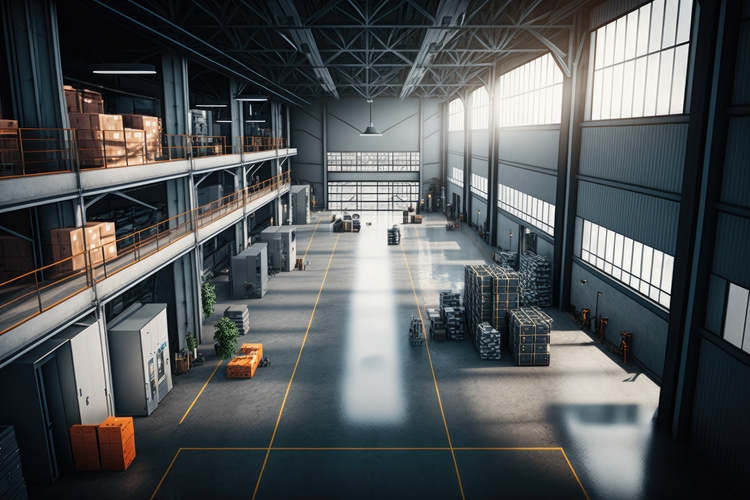
Technological development is undoubtedly already influencing all sectors of the economy. When it comes to logistics, the application of automation in warehouse systems and digitalization in management are key directions that will shape it in the near future. The warehouse of the future will intensify the digitalization of the supply chain, which will improve the coordination of its individual phases, thereby increasing flexibility and enabling better management of demand fluctuations. What exactly lies behind the concept of the “warehouse of the future”?
The warehouse of the future – smoother, faster, more efficient
Future warehouses will move not only towards the robotization of internal and external logistics operations but also towards the automation of decision-making processes, using advanced Warehouse Management Systems (WMS) to minimize manual errors. According to the MHI Annual Industry Report, 83% of respondents believe that supply chain digitalization will become the dominant practice in the industry within the next 5 years.
Many companies are currently struggling with a sudden increase in demand and logistics costs, which is a result of growing e-commerce. To effectively respond to these challenges within e-commerce, the warehouse of the future must focus on integrating all activities in the supply chain, which will ensure complete transparency of logistics processes at every stage.
A key feature of the warehouse of the future is hyper-automation – the next stage of automation involving the robotization of all company operations, supported by artificial intelligence, machine learning, as well as big data and blockchain technologies.
Modern technologies will enable the implementation of logistics based on predictive analytics, which will increase the efficiency of future warehouses. Predictive analytics uses both historical data and information collected in real-time to forecast behaviors, trends, habits, and machine performance, which is crucial for preparing for future changes and making effective business decisions.
Another important element of the warehouse of the future’s operations will be sustainable management and care for the environment. Experts predict an increase in demand for ecological facilities, including zero-emission warehouses, within the next 5-10 years.
– Sustainable logistics aims to reduce the carbon footprint and limit pollution and waste at every stage – from production to the delivery of goods to end customers. This is important both for us as a service provider and for customers who clearly state their expectations – says Anna Czyżewska from Hopi Poland.
New directions in the warehouses of the future
The vision of the warehouses of the future is shaped by upcoming social changes, the evolution of robotic and software technologies, and an innovative approach to work. All of this stems from the transformation of the industrial and business sector.
The majority of the world’s population now lives in urban areas, and according to UN projections, this percentage will rise to 70% by 2050. Urbanization directly affects logistics, causing an increase in demand for warehouse plots near large cities, which in turn leads to higher prices. Companies are responding to this by investing in so-called micro-fulfillment centers, small logistics hubs located in cities that enable fast delivery fulfillment.
Due to the growing lack of industrial space in urban agglomerations, a special sector of logistics real estate has emerged, which deals with the leasing and sale of warehouses, halls, and industrial land. Faced with this challenge, the warehouses of the future will have to effectively use limited space by applying accumulation-type storage systems, mezzanines, and other solutions allowing for the full utilization of facility height. WMS systems will be widely used to ensure maximum efficiency in cargo handling.
Outsourcing logistics services is another trend in the warehouses of the future that is gaining popularity.
– Entrusting logistics to an external operator can reduce costs of leasing, equipment purchase, and personnel employment. It is also about benefiting from the synergy of a multi-customer warehouse and thus even more effective resource utilization – adds Anna Czyżewska.
An increasingly recognizable trend is also Supply Chain as a Service (SCaaS), which is the delegation of all or selected supply chain management functions to an external service provider.
How to maximize the efficiency of the warehouse of the future?
The warehouses of the future will focus on increasing productivity through the automation of logistics processes. At the first stage – receiving deliveries, the introduction of robotic systems will improve the flow of goods from loading docks to storage locations or directly to workstations, using automatic vehicle loading and unloading systems.
Regarding storage, future logistics facilities will use automated storage systems, such as pallet and container racks, which will ensure effective space management and facilitate access to goods, while increasing safety. Advanced warehouse management software, such as WMS systems, will enable faster and more efficient order picking processes by automating the determination of the shortest picking paths and optimal inventory placement.
At the transport stage, traditional methods are being replaced by automated solutions such as pallet conveyors, AGVs, or autonomous mobile robots, which significantly improve the flow of goods. In the future, the use of drones for internal and external transport is also expected.
Digital inventory management in real-time and the coordination of all processes are becoming crucial for modern warehouses. Constant monitoring of warehouse operations by advanced WMS systems and the digitalization of operations form the basis for the effective functioning of the warehouse of the future, enabling the maximization of productivity and ensuring flexible and scalable logistics.
The warehouse of the future – summary
The basic goals of the warehouse of the future, such as increasing efficiency, minimizing operating costs, and ensuring high-quality service, remain unchanged. In the face of rapidly developing e-commerce, achieving these goals, especially ensuring lightning-fast deliveries, is becoming increasingly demanding.
Future logistics must be characterized by extraordinary speed, efficiency, and resilience to errors. Consequently, warehouses will increasingly use digital tools and predictive analytics technologies that will allow them to effectively forecast future needs based on the analysis of accumulated historical data.