









Janusz Mincewicz talks to Dr. Marek Grzybowski, professor at the Gdynia Maritime University and president of the Baltic Sea and Space Cluster, about trends in maritime transport.
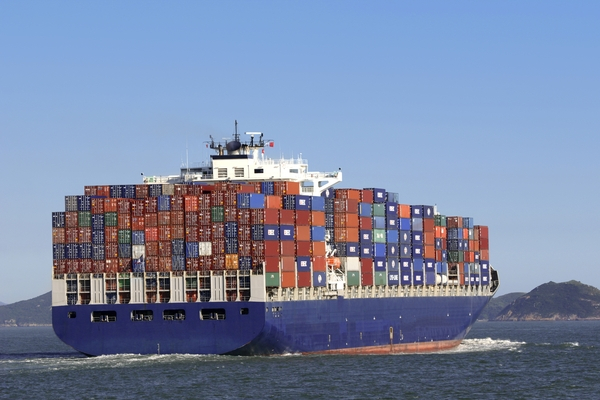
Janusz Mincewicz: Maritime freight rates from the Far East to Polish and European ports have increased. Is there any concern that maritime transport will be taken over by rail, which competes with shorter transport times? Prof. Marek Grzybowski: Freight rates have risen due to consolidation in maritime transport. We are already dealing with a monopoly in the container shipping market. Operators have also taken over ocean terminals and manage global logistics chains. There are currently over 6,200 ships with container capacity sailing on maritime routes. Among them, over 5,300 are container ships. In total, the ships can carry almost 24.3 million TEU (20-foot equivalent units), and container ships have space for over 23.8 million TEU. The five largest liner shipping operators control over 70% of the market, offering cargo space on virtually all ocean routes. Four operators have a fleet of over 500 container ships. Maersk Line and Mediterranean Shipping Company SA (MSC) represent an undoubted advantage – these are the two largest container shipping lines. The former managed a fleet of 710 ships at the beginning of 2021, and MSC operates 580 units. The third in line, the French shipowner CMA CGM Group, has a fleet of 567 container ships. The Chinese shipowner COSCO Group has 505 container ships at its disposal. The fifth in line, Hapag-Lloyd, operates 240 ships on liner routes. Neither the New Silk Road nor container transport via the Northern Sea Route will threaten global maritime players, because they are introducing units of over 20,000 TEU to liner routes. But these routes will also develop because there is demand for them.
J.M.: The importance of ferry transport on the Świnoujście – Swedish ports line is declining. Why?
M.G.: At the moment, we have had short-term supply disruptions resulting from the pandemic, and it is difficult to talk about a long-term trend. In my opinion, the threat lies elsewhere. Polish shipowners operate services with aging ferries, while their competitors are introducing new or modernized units to the market. Ferry traffic will continue between the ports of the southern Baltic and Scandinavian countries because there is demand for freight transport. Our shipowners should have started replacing their tonnage with newer ones several years ago. Swedish ports have adapted to accommodate ferries with better parameters. They even took EU aid for investments. Some ports are at risk of having to return them because we did not introduce ferries on specific routes.
J.M.: To what extent has the pandemic affected trade and maritime transport?
M.G.: The latest IAPH COVID-19 Economic Impact Barometer report states that the number of ports where the number of container ship calls has significantly decreased has recently fallen. The share of such ports in the total number has dropped by as much as 25%. About three-quarters of ports report that ship calls at container terminals are at a similar level to those before the pandemic. In some ports, they are even higher compared to the same period a year earlier. This upward trend is continuing and developing in a positive direction. This is particularly visible on liner routes between Pacific ports. Some ports recorded a few percent drops in cargo supply, others a few percent increases. The effects of the pandemic were extremely painful for car carriers. Here, a decrease in supply of about 40% to 50% was recorded. Container carriers offset the drop in supply in the first half of last year by increasing freight rates several times in the second half of last year. The pandemic primarily caused significant development of IoT and digitalization of services in ports and terminals. Freight forwarders, operators, and IT companies made excellent use of the new situation to raise rates and cut office costs. However, the globalization of industrial and consumer goods markets will not slow down, and we have moved into the world of the digital economy and space technologies in logistics and maritime transport at an incredibly fast pace.