








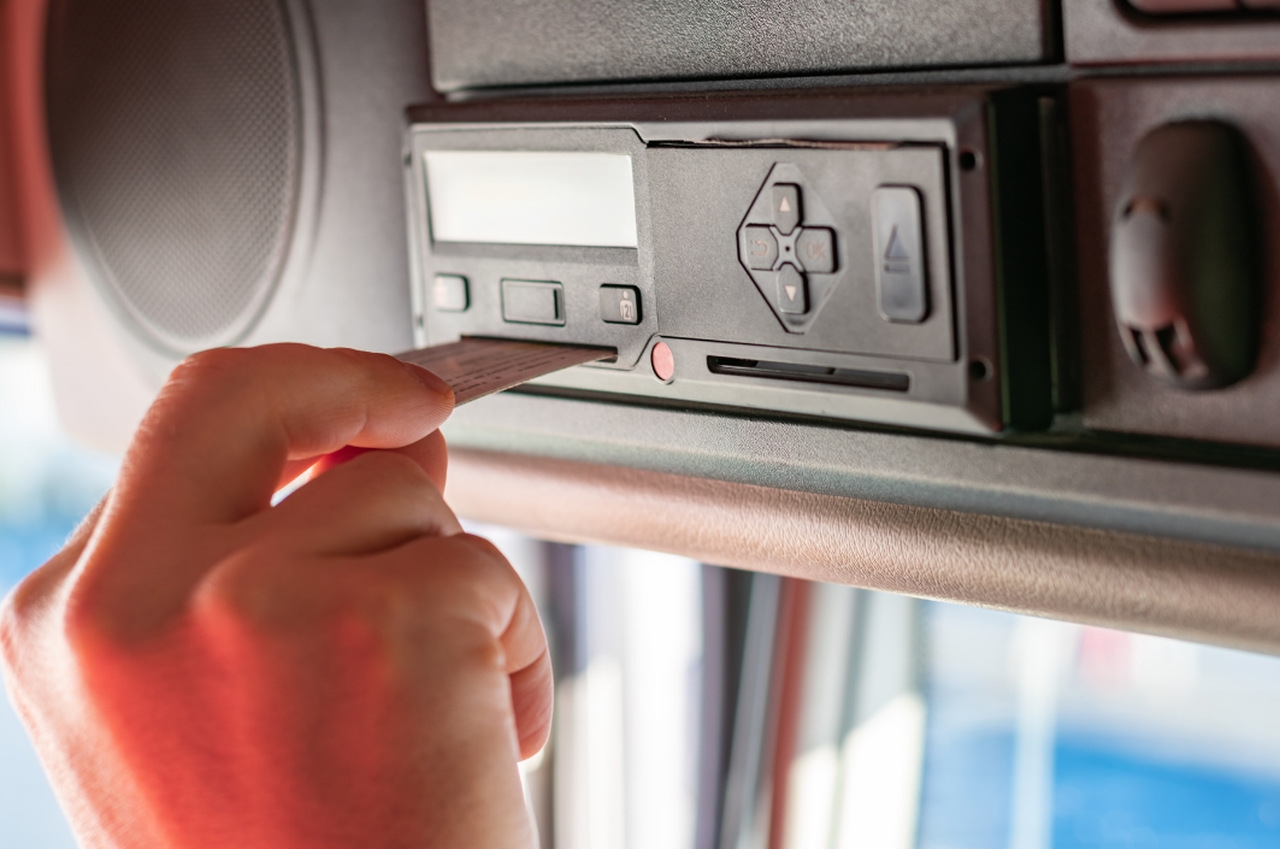
Carriers who have not yet replaced the tachograph in their trucks with the G2V2 model face fines of up to 30,000 euros. For the vast majority of vehicles, the deadline passed at the end of 2024, and the newest ones, registered between 2019 and 2023, have only until August 18, 2025. Financial penalties are just the beginning of the problems that may face carriers who ignore the replacement obligation.
How many Polish carriers have still not replaced their tachographs with new-generation models? There is no official data, but according to Inelo estimates, in the fourth quarter of 2024, about 30% of the approximately 300,000 obligated entities had not yet made the replacement. By August 18, 2025, another group of vehicles that still use first-generation tachographs must fulfill this obligation.
And this is not the end of the changes – in less than a year, specifically from July 1, 2026, tachographs will also be mandatory for vans (category N1 vehicles). The requirement applies to all vehicles with a mass exceeding 2.5 tons used for international transport or cabotage for commercial purposes.
How does the G2V2 tachograph work?
An unnecessary burden or a real convenience? Discussions surrounding tachograph replacement mainly revolve around concerns about costs, but it is difficult to find voices questioning the replacement of existing models with new ones. The controversy surrounding this matter was primarily related to the initial lack of devices on the market. Production delays were linked to problems with implementing the satellite navigation system necessary for the operation of new-generation tachographs. However, there is full consensus in the industry regarding the validity of replacing the devices,
The new tachograph gives the carrier access to the most current and precise information about transport and really makes their life easier. The device allows for crossing the border without stopping, and data can be read remotely, avoiding time-consuming inspections. The accuracy of the recorded information is also important when calculating drivers’ working time and their remuneration.
– says Jarosław Roślicki, Corporate Sales Director at Transcash.eu.
The intelligent second-generation tachograph measures and stores the most important information related to the journey, such as current device parameters, location, including border crossings, a description of the country where the vehicle is located, or driving time, including the driver’s working time. The device also checks the compliance of driving with standards and road traffic regulations, including speed, loading and unloading activities, as well as any device and sensor errors.
Data on the truck’s location, place of loading and unloading, as well as border crossings are secured in the recording system, making them difficult to manipulate. The extended memory of the devices allows for saving data from 8 weeks ago, which is why truck inspections can take place up to 56 days back.
High financial penalties for lack of a G2V2 tachograph
Hefty fines await those who do not replace their tachographs in time. In Poland, a truck owner faces a fine of up to 10,000 PLN, and 2,000 PLN for the person managing transport. In other European countries, the amount of fines ranges from a few hundred to as much as 30,000 euros for a single offense.
In many countries, penalties apply not only to transport companies but also to drivers. This principle is applied by, among others, Croatia, Spain, and Estonia. However, penalties for drivers are much lower and usually do not exceed 1,000 euros. The lack of a tachograph can prove to be extremely severe in the Czech Republic and the Netherlands, where the minimum fine starts at 4,000 euros.
– notes Jarosław Roślicki.
Vehicle impoundment and loss of licenses
Financial consequences are not the only ones that follow a delay in replacing the tachograph. In Spain, a temporary confiscation of the vehicle and loss of good repute, necessary to maintain transport licenses, can be added to the fine. In Italy, the lack of a proper tachograph threatens the driver with the loss of their driving license for a period of up to three months, and in France with a one-year prison sentence and confiscation of the vehicle until a proper device is installed.
In practice, therefore, the lack of a tachograph exposes the carrier to losses not only from fines but also from potential profits. The lack of a vehicle and licenses inevitably makes it impossible to complete current and perform future transports, which threatens the loss of orders, clients, and reputation.
How much does a tachograph replacement cost?
You have to pay about 5,000 PLN for a tachograph replacement, but this is not the only cost associated with switching to G2V2 devices. Additional funds will be consumed by updating devices and systems for downloading data from driver cards and tachographs. To these, one must add the necessity of training drivers, which may also involve expenses.
On the other hand, most transport companies registered in Poland have a few, not a dozen or several dozen vehicles, and the costs of replacement could have been spread over time. This does not change the fact that replacing a tachograph is still a burden for the tightly stretched budgets of transport companies, which is why it is not surprising that in 2024, carriers applied to the government for subsidies for device replacement – without success. Waiting for subsidies influenced decisions to delay the replacement until the last moment, which naturally made it difficult to meet the obligation to replace the devices on time.
– notes Jarosław Roślicki.
The clock is ticking – the last group of carriers has less than a month to replace their tachographs so as not to expose themselves to severe penalties. The severity of the consequences should mobilize them to replace the devices even at the cost of seeking additional financing.
At Transcash, we have prepared an offer for carriers who have not yet replaced their tachograph, under which we can finance the device with a long repayment period. Thanks to this, the carrier maintains financial liquidity and can continue transport operations without worries.
– adds Jarosław Roślicki.
Financial penalties and the risk of losing contracts should be sufficient motivation to replace the tachograph as soon as possible.
Source: Transcash