








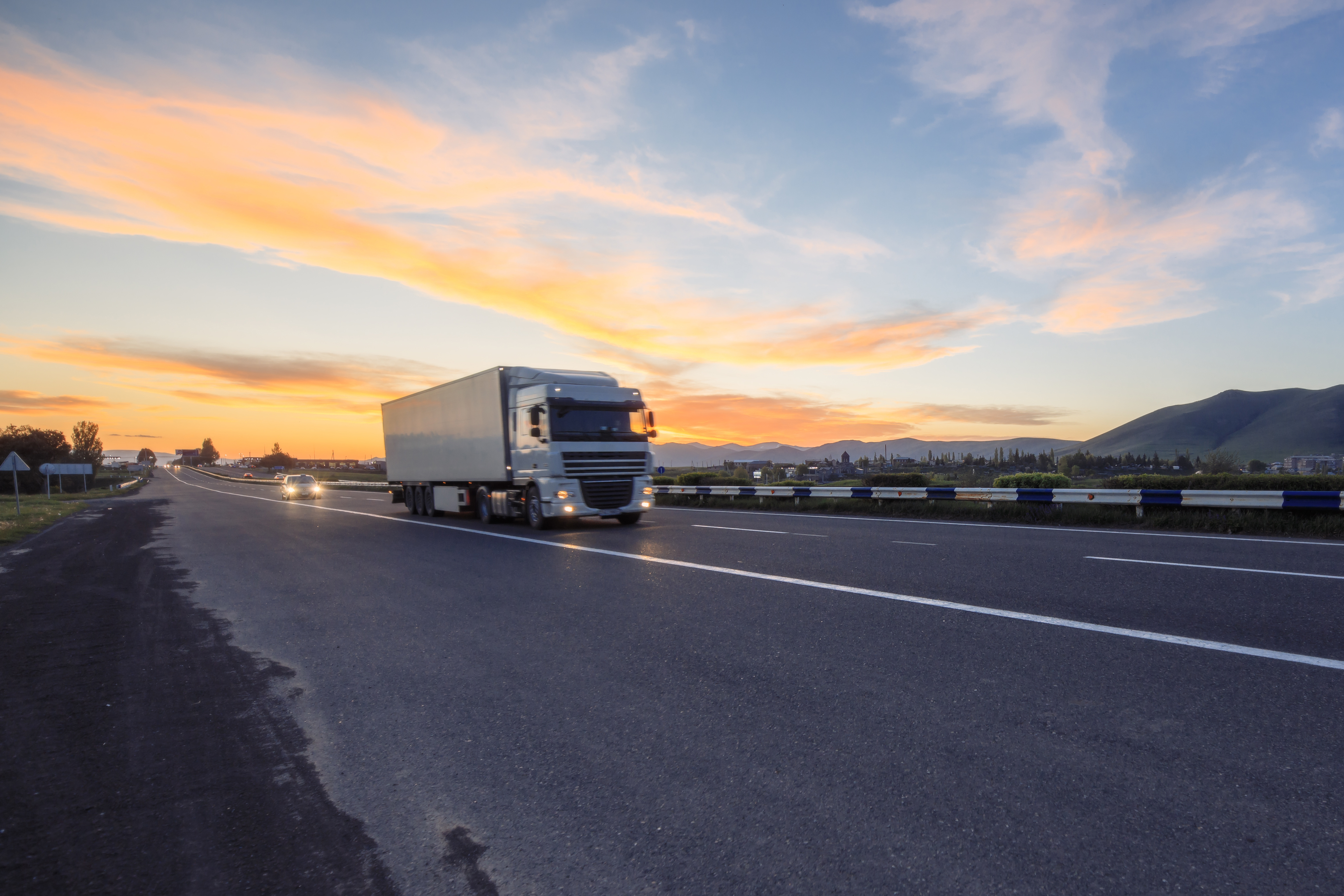
Polish transport companies are facing mounting problems. In addition to competition from Ukraine, they are also struggling with numerous intermediaries operating on the EU market. One of the most serious problems for transport companies today is the involvement of a huge number of intermediaries in the EU market. – They cleverly undercut orders, holding them until the last moment when they can sell them well at a low price. As a result, the carrier performs freight at a value that does not cover the costs of such transport – says Jan Buczek, President of the Association of International Road Carriers in Poland. He assesses that the Polish transport industry is currently in a crisis caused by a whole range of overlapping factors, including the slowdown in the European economy and challenges related to emission reductions. The disruptions caused by recent protests and the blockade of the Polish-Ukrainian border only exacerbate these problems.
– The protests and border blockades that have been ongoing in recent months are a great nuisance for the entire economy, including our industry – says Jan Buczek in an interview with the Newseria Biznes agency. – I feel very awkward expressing my opinion on this subject, because colleagues from my industry also blocked the Polish-Ukrainian border for several months, so it is difficult for me to be unequivocally critical of it. However, this does not change the fact that such blockades disrupt transport, disrupt economic processes, and are a nuisance for companies that buy and sell abroad, for importers and exporters. That is why it seems that it would be a good idea for the government to introduce a regulation that would define border crossings as critical infrastructure, in the area of which it would not be possible to conduct such protests.
For over half a year, the Polish-Ukrainian border has been periodically blocked not only by high-profile farmers’ protests, but also by road carriers, who started them back in November last year, demanding the restoration of the requirement to have transport permits for companies from Ukraine. After the Russian invasion and the outbreak of the war, the European Union – under a liberalization agreement signed with Ukraine – granted them open access to the common EU market. The problem, however, is that Ukrainian carriers operate on it with a significant competitive advantage – their costs are several times lower, making them cheaper, and EU community regulations do not apply to them. This caused a crisis: carriers in Poland and several other EU countries began to lose their livelihood and found themselves on the verge of bankruptcy. That is why at the end of last year they started protests, which resulted in multi-kilometer queues at border crossings. As a result, trade between the EU and Ukraine was seriously disrupted, and production and trading companies operating on both sides of the border suffered significant losses.
Regulations unfavorable to Polish companies, according to which Ukrainian carriers do not need permits to transport goods within the EU, are to remain in force at least until the end of June 2024. This means that the situation of Polish transport companies, especially from eastern Poland, including the Lublin and Podkarpacie regions, remains difficult. This problem was discussed during talks that began at the end of April this year at the Ministry of Infrastructure.
– Everyone has the right to express their dissatisfaction through a protest, but what we have been dealing with recently is no longer just a demonstration of dissatisfaction. Some even describe it as terrorism against citizens, because people with sick children, ambulances, fire brigades, and simply other road users who – like the protesters – also want to earn a living are moving on the roads – says the President of the Association of International Road Carriers in Poland. – I think that a further scenario for the development of this situation may be the introduction of a ban on registering any pickets or protest actions in border areas, which will only have positive consequences for the economy and for ordinary people.
The expert points out that the industry is currently in a serious crisis caused by a whole range of overlapping factors, including the slowdown in the European economy.
– Today, the transport industry is in a huge crisis unrelated to the protests, but any disruptions cause tragic consequences for every transport company of Polish origin – emphasizes Jan Buczek.
The transport industry is one of the most important branches of the economy in Poland – in 2021, it generated almost 6 percent of Poland’s GDP and employed over 950,000 people, making it the third most numerous professional group in the service sector (after trade and education). At the same time, the Polish road transport sector transported 380 billion tkm (tonne-kilometers) – the most in the EU, 24 percent more than Germany, which is second in the ranking. Poland also has the largest fleet of trucks in the Community (approx. 1.2 million) – on average, every fifth truck moving on EU roads is registered in the local market. All this adds up to the leading position of Polish carriers, who are responsible for almost 1/5 of all transport in EU member states (PSPA report “Electromobility in heavy transport”).
Currently, however, the transport industry is facing many challenges, including EU regulations aimed at fighting climate change and the growing requirements of clients related to emission reductions. This sector is currently one of the largest emitters, and trucks – although they account for only 3 percent of the entire fleet of vehicles moving on European roads – are responsible for 19.4 percent of EU CO2 emissions from road transport. According to PSPA data, in Poland, as many as 98.2 percent of registered trucks are powered by diesel engines. This means that to maintain a leading position in the EU market, Polish carriers must invest in zero-emission solutions. However, in the case of electric trucks, the prohibitive price remains a barrier, as well as the lack of appropriate charging infrastructure (white spots between TEN-T routes), which would enable long-distance transport.
– Today, the biggest problem for transport companies operating on the European market is the involvement of a huge number of various types of intermediaries – notes the President of ZMPD in Poland. – To be able to perform a transport service, you must meet a whole range of conditions. You must, among other things, have an impeccable business reputation, knowledge confirmed by a certificate of professional competence, and appropriate funds blocked in an account so that – in case of any obligations to the administrations of various countries – you can cover them. Of course, you also have to buy trucks, hire drivers, and carry this whole huge organizational burden. However, there are also intermediaries on this market who call themselves freight forwarders and cleverly undercut orders, holding them until the last moment when they can sell them well at a low price. As a result, the carrier performs freight at a value that does not cover the costs of such transport.
As he points out, this is a new form of business in which a large group of intermediaries “preys” on the transport market, passing orders from hand to hand, to which institutions responsible for ensuring fair competition do not react. There are many non-EU carriers on the EU market today who are readily used by these entities to perform transport at prices lower than those offered by EU entrepreneurs. As a result, the remuneration of carriers who actually perform the transport, after deducting all margins, is barely enough to cover transport costs.
– Since the transport industry is currently regulated to such a large extent and we are checked at every step to see if we comply with these regulations, every other participant in this industry should be eliminated from this market. However, the client should also know that when they pay 2,000 euros for an order, the carrier performing the transport order with the goods entrusted to them only takes 1,200 euros, because 800 euros are stolen from under their nose by others somewhere along the way – says Jan Buczek.
Source: Newseria