









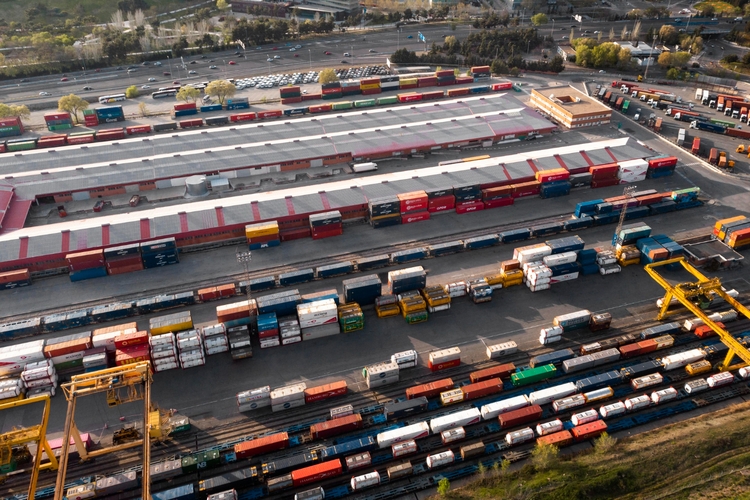
Global logistics today is a system based on the precise coordination of many processes, often spanning several continents. As the scale of international trade grows, so does the importance of solutions that allow goods to be transported faster, more safely, and in a predictable manner. Increasingly, the standardization of load units plays a key role, simplifying transport planning and reducing the number of operational critical points in the supply chain.
Containers as the foundation of modern logistics
One of the main challenges in the global transport of goods today is the efficient and safe movement of cargo between different modes of transport – ships, rail, and road transport. In this context, container transport enables a seamless transition between successive stages of the supply chain without the need for time-consuming transshipment of goods. This translates into better control over the cargo, reduced risk of damage, and greater predictability of the entire logistics process.
In practice, this means shorter downtime at terminals and easier integration of different transport branches within a single, coherent system. Container standardization allows for orderly transport planning, regardless of the route length or the number of operators involved.
Containers in road and multimodal transport
The importance of containers is not limited to maritime transport. In land transport, they are an essential element enabling the combination of road transport with rail or sea transport within a single supply chain. This approach allows for a reduction in the number of transshipment operations and simplifies the organization of the entire logistics process.
Multimodal transport based on containers gives companies greater flexibility in planning deliveries and better adaptation to changing market conditions. As a result, it is possible to manage time, costs, and the availability of transport means more efficiently, which has a direct impact on the stability of executed orders.
Standardization and operational efficiency
One of the greatest assets of container transport remains its standardization. Uniform container dimensions enable efficient handling in ports, terminals, and logistics centers around the world, regardless of local infrastructure conditions. This allows for shorter operation times and better utilization of available resources.
Standardization also facilitates shipment monitoring and the planning of subsequent transport stages. The ability to track containers on different sections of the route increases process transparency and allows for faster responses to potential disruptions in the supply chain.
Challenges in container logistics
Despite many advantages, container logistics also involves specific operational challenges. One of them is managing container availability and their global distribution, especially in situations of sudden demand changes or disruptions in maritime transport. This can affect delivery deadlines and transport costs.
An additional challenge remains the coordination of multimodal transport, where the synchronization of individual transport stages is crucial. This requires good organization, experience, and the ability to react quickly to changing operational conditions.
Containers and the future of global logistics
In the coming years, containers will remain one of the foundations of international supply chains. The development of monitoring technology, terminal automation, and the increasing use of data in logistics make containers an element that actively supports transport management.
Their versatility and scalability mean they will continue to be used both in classic commercial transport and in more specialized market segments. In the reality of growing logistics requirements, it is precisely such solutions that allow for maintaining the continuity and stability of global goods flows.