









A summary of 2025, characteristics of the regions, and current trends of 2025 in the warehouse sector. Where were increases recorded and where were there declines? What did investors pay the most attention to?
Warsaw
Market in numbers:
- 7.4 million sqm of existing space
- 640,000 sqm under construction
- 4.90 – 8.00 – rent EUR/ sqm/ month for the city area
- 3.20 – 6.95 – rent EUR/ sqm/ month for the area outside the city
Warsaw I – city area
Ready-to-use space in the spotlight
In the first Warsaw zone, clients expecting a quick start of operations, often within 2–3 months of signing the contract, dominated. The availability of modules and efficient completion of the office section were of key importance to them.
Last-mile logistics drives demand
Most transactions were concentrated in the 2,000 – 3,000 sqm range, with individual projects reaching approximately 8,000 – 10,000 sqm. The demand structure was largely distributive and urban in nature. Negotiation processes were dominated by incentives in the form of rent-free periods and budgets for office and warehouse space fit-outs.
Employee-friendly locations as a key asset
Tenants paid special attention to the quality and functionality of the office section, the availability of parking spaces, and good connectivity with the city. Targówek and the Okęcie area remained among the most frequently chosen locations.
Green logistics gaining importance
Sustainable development is playing an increasingly important role, and tenants are more frequently including requirements for photovoltaic panel installations in lease negotiations. Environmental issues are becoming a growing priority, especially in urban logistics projects.
Warsaw II – area outside the city
Contract renewals dominate the demand structure
Lease renegotiations remained the main activity in the market. We observed limited demand for large modules, because most tenants maintained their current scale of operations or decided only on minor expansions.
Pressure on rents
Newly completed projects increased price pressure in competition with older, cheaper facilities. As a result, there was clear pressure on effective rates and greater flexibility from landlords regarding incentive packages, which strengthened the tenants’ negotiating position.
Cautious approach to new investments
In 2025, several new warehouse facilities were commissioned, but some of them remained in the commercialization phase and were awaiting their first lease agreements. The scale of speculative projects was limited, and new investments were carried out cautiously.
In 2025, the Warsaw warehouse market entered a phase of greater balance, moving from dynamic expansion to more selective development. A more cautious approach by developers and the implementation of projects mainly with secured demand translated into greater balance on the supply side. At the same time, a significant part of the activity was concentrated around space available immediately, responding to the current needs of tenants.
– Katarzyna Madej, Director, Industrial Agency
Upper Silesia
Market in numbers:
- 6.2 million sqm of existing space
- 200,000 sqm under construction
- 3.80 – 5.40 – rent EUR/ sqm/ month
Risk-aware tenants
Greater caution was visible on the part of tenants; they decided on relocations less frequently, while more often renegotiating existing contracts, focusing on cost optimization and operational efficiency. Expansions were carried out in a more thoughtful manner and were dependent on real business growth.
Market driven by logistics and production
Strategic locations such as Gliwice, Sosnowiec, and Ruda Śląska enjoyed the greatest activity. The region continued to attract companies combining logistics and production activities. The tenant structure consisted of both 3PL companies and manufacturing enterprises, including those from the automotive sector, which confirms the diverse and resilient nature of the market.
ESG as a competitive advantage factor
Base rents remained stable, and moderate new supply did not generate significant downward pressure. At the same time, the technical quality of buildings and ESG aspects are gaining importance; environmental certificates, photovoltaic installations, improved insulation, or energy-saving lighting systems have become an important element of project competitiveness.
In 2025, the warehouse market in Upper Silesia entered a phase of stabilization after a period of very dynamic growth in previous years. Supply and demand began to balance out, and developer activity became more selective. The scale of speculative investments was limited, focusing mainly on projects secured by pre-let agreements and BTS-type implementations, tailored to the specific needs of tenants. Upper Silesia has strengthened its position as a mature, stable, and well-connected logistics and industrial market, where decision-making caution, renegotiations, and the high standard of implemented investments played a key role.
– Łukasz Ciepły, Director, Industrial Agency
Wrocław
Market in numbers:
- 5.5 million sqm of existing space
- 130,000 sqm under construction
- 3.15 – 5.50 – rent EUR/ sqm/ month
Leader in new supply in Poland
In 2025, the Wrocław region was one of the most active warehouse markets in Poland in terms of new supply. Over 300,000 sqm of modern warehouse space was commissioned, placing Wrocław among the three largest markets in the country in this respect.
Growing role of production projects
Lower Silesia has been attracting production investments from the automotive, electronics, and component manufacturing sectors for many years, which influences the structure of demand for warehouse and production space. In 2025, a significant portion of inquiries concerned facilities with the possibility of adaptation for light production or those implemented in a build-to-suit formula.
Stabilization after a period of dynamic growth
After a very intensive period of development in 2021-2023, the warehouse market in Wrocław entered a phase of greater stabilization in 2024-2025. Developers approached the implementation of new speculative projects more cautiously, and some investments were started only after securing tenants with pre-let agreements. At the same time, greater availability of space on the market, with a vacancy rate of approximately 9–11%, allowed tenants to conduct decision-making processes in more comfortable conditions and analyze available options more thoroughly.
Stabilization of rental rates
After a period of dynamic rent increases in previous years, we observed their stabilization in 2025. Base rental rates in the Wrocław region most often fell within the range of 3.15 – 5.50 EUR/sqm/month, depending on the location, building standard, and lease term. Greater competition between property owners and the growing availability of space meant that tenants could more often negotiate more favorable terms.
The Wrocław agglomeration remains one of the most important logistics and production centers in Poland. The region benefits from a very good location close to the border with Germany and the Czech Republic and developed road infrastructure, including the A4 motorway and the S8 expressway. It attracts both logistics operators serving international trade and manufacturing companies from the automotive, electronics, and household appliance sectors. Despite the clear stabilization of the market after a period of dynamic growth, Wrocław remains one of the most attractive warehouse locations in the country. In the long term, the development of the region will be supported by the strong industrial base of Lower Silesia, further development of transport infrastructure, and the growing importance of the region in European supply chains.
– Dorota Koseska, Director, Industrial Agency
Central Poland
Market in numbers:
- 5.3 million sqm of existing space
- 170,000 sqm under construction
- 3.50 – 4.60 – rent EUR/ sqm/ month
Fourth largest warehouse market
At the end of 2025, the total resources of modern warehouse and industrial space in Central Poland reached approximately 5.3 million sqm, which accounts for about 14% of the total warehouse supply in Poland. The region remains one of the largest logistics markets in the country, although it has recently been overtaken in size by Lower Silesia.
Region driven by logistics
Logistics tenants play a significant role in the region. Central Poland serves as a central distribution hub for the entire country, which is why large logistics centers serving both the domestic and international markets dominate here.
Growing demand for ESG solutions
Issues related to ESG and the energy efficiency of buildings are also becoming increasingly important. Tenants are increasingly choosing warehouses equipped with photovoltaic installations, energy-saving systems, and environmental certificates, such as BREEAM. These solutions allow for reducing operating costs and minimizing the environmental impact of operations.
Tenants from the logistics sector, serving both the domestic and international markets, play a significant role in the region. Therefore, a growing demand for cross-dock (x-dock) warehouses, which enable fast transshipment and minimization of goods storage time, is observed in Central Poland. This trend results primarily from the development of urban logistics and growing expectations regarding shorter delivery times. Facilities of this type are gaining importance, especially near major transport hubs and large agglomerations.
– Katarzyna Burlińska, Senior Consultant, Industrial Agency
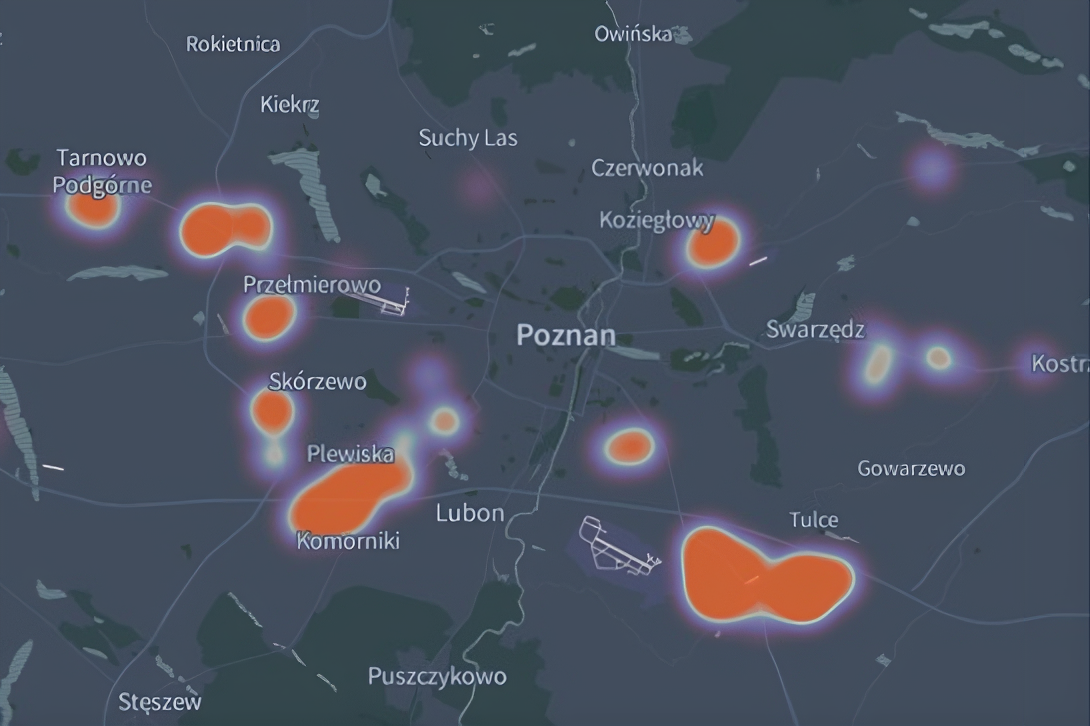
Poznań
Market in numbers:
- 4.0 million sqm of existing space
- 40,000 sqm under construction
- 3.65 – 6.00 – rent EUR/ sqm/ month
Increase in vacancies and caution of market players
The year 2025 was a period of clear slowdown for the Poznań warehouse market. A significant amount of available space hit the market, which translated into an increase in the vacancy rate and greater caution on the part of both developers and tenants. New speculative projects were implemented to a limited extent, and investment activity clearly slowed down.
Tenants from the logistics and trade sector
The demand structure was conservative and comparable to other regions in Poland; logistics and trade companies dominated, with a clear advantage of renewals over new contracts.
Demand driven by contract renewals
The limited number of large logistics tenders and the relatively high availability of space meant that most transactions concerned maintaining existing locations or involved smaller modules than in major hubs such as Warsaw or Central Poland.
Despite rental rates competitive with Central Poland, the region did not attract a significant number of large relocations in 2025, and most significant projects were implemented in other cities. A smaller share of large-scale logistics and e-commerce operations translated into limited demand for space above 10,000 sqm. At the same time, the past year showed how sensitive and flexible the Poznań market can be: a single larger inquiry was able to clearly revive activity and direct investors’ attention to the region. This means that despite the temporary slowdown, Poznań remains a market with real potential, reacting dynamically to demand impulses.
– Katarzyna Madej, Director, Industrial Agency
Source: Avison Young