








Traditional retail based on a simple supply chain model, with long inventory turnover cycles, is becoming a thing of the past. The dynamic development of the e-commerce sector, which will account for 11 percent of total Polish retail by 2021, is forcing companies to make far-reaching changes in how they handle orders and organize their supply chains. The competitive advantage of an e-store will depend on the efficiency of the solutions offered by logistics companies and warehouses. Which of these can determine the success of an online business?
Regardless of how an order is placed, two issues prove crucial for customers: the speed of delivery of the purchased goods (ideally within 24 hours) and the possibility of returning them free of charge. Both factors represent the greatest challenge for logistics companies and warehouses serving the e-commerce industry, and they also shape the way supply chains are organized and set new standards for order fulfillment.
Demand for warehouse space continues to grow
Sellers and distributors are under increasing pressure to ensure that goods, including those that are perishable (according to Gemius research, 23 percent of online-shopping Poles already order food online), are delivered to city centers within very tight time frames. In this way, companies are forced to adapt their supply chain organization to transform traditional logistics platforms, previously built based on regional distribution, into urban logistics centers designed to serve major consumer hubs. The response to the dynamic growth of the e-commerce sector is a constantly increasing demand for logistics and warehouse space tailored to the specifics of the industry. The last two years have been record-breaking in terms of the construction of new warehouse space. In 2018, according to the CBRE report “Poland Industrial Market View,” the total supply of industrial and logistics space amounted to almost 15 million sq. m., and forecasts for 2019 predict further growth of this sector by even more than 10 percent. Not only e-commerce giants like Zalando or Amazon want to invest in new warehouses, but smaller online companies do as well. The battle for the customer will be won not only by those e-businesses that have the largest warehouse space, but by those that can manage it most effectively.
A spectrum of modern solutions – automated warehouses
Managing a company’s logistics and complex production process in an era of consumers expecting lightning-fast and convenient delivery of purchased goods to a specified address is a huge challenge. How can e-businesses increase the efficiency of their operations?
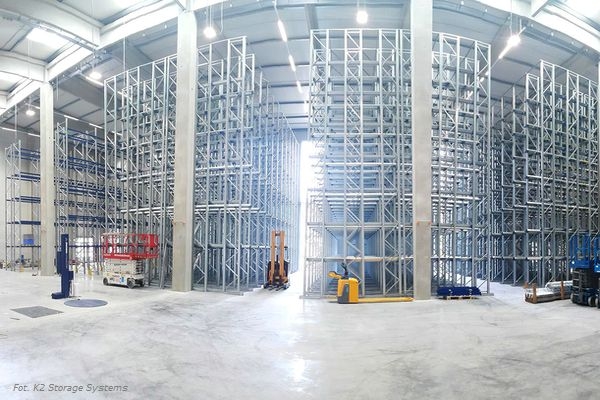
– An effective solution is automated warehouse racking, which allows for the reduction of costs associated with storage and manual labor and enables maximum utilization of available space – says Beata Antosz, Managing Director of K2 Storage Systems, which provides comprehensive services in the market for automated warehouse solutions. – For over 2 years, we have been observing over 150% growth in interest in vertical storage, an optimal solution for last-mile delivery and modern urban logistics.
The demand for intelligent warehouse solutions will continue to grow. According to estimates by the Interaktywnie.com portal, the value of the Polish online retail market reached 50 billion PLN in 2018, and it may exceed 70 billion PLN in 2020. The increasing number of internet users who are becoming convinced of online shopping, the introduction of the ban on traditional Sunday trading, the popularization of smartphones as tools for making e-purchases, or brands’ investments in omnichannel and personalized advertising – nothing suggests that anything could stop the dynamic development of the e-commerce industry, and with it, logistics and warehouse investments.