









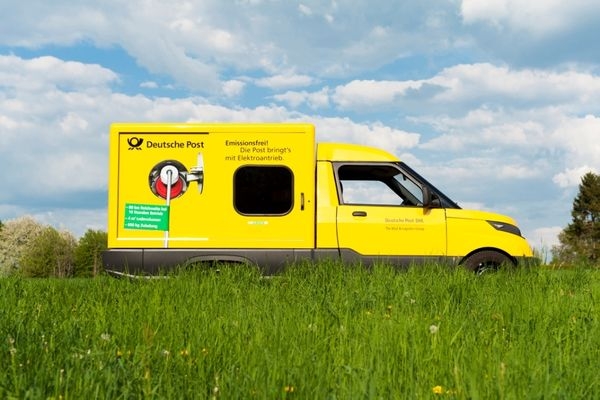
Deutsche Post DHL is switching to electric vehicles to provide delivery services in Bonn and the surrounding area. As a result, the city will become the first in Germany to implement the concept of using zero-emission vehicles.
In the initial phase, by the end of 2013, 79 vehicles will be put into service in Bonn and the surrounding area to provide parcel delivery services and combined mail and parcel delivery services. The pilot project envisages the appearance of approximately 141 electric vehicles on the roads by 2016, which will result in a reduction of CO2 emissions by more than 500 tons per year. From the very beginning of the project, Bonn will be home to one of the world’s largest fleets of electric vehicles for combined deliveries. The project is supported by the German government’s electromobility support program. In May, Deutsche Post DHL CEO Frank Appel presented the project in Bonn in the company of German Environment Minister Peter Altmaier, MAIL Board Member Jürgen Gerdes, and Mayor of Bonn Jürgen Nimptsch.
– This pilot project is unique on a global scale and can serve as a model for other cities and regions – said Frank Appel. – As a leading logistics company, we have the world’s largest fleet of vehicles. We recognize the impact of global trade on the environment and take responsibility for it: alternative vehicle drives have been used in our fleet for years. Approx. 8,500 vehicles with environmentally friendly drives used throughout the company guarantee the most efficient fleet in the industry.
Deutsche Post DHL participates in many pilot projects introducing alternative vehicle drive technologies. This involves the use of hybrid engines and vehicles powered by electricity, gas, and biogas, as well as testing dual-fuel or aerodynamic modifications. The Group cooperates with all major car manufacturers, which gives it insight into work on improving new technologies. In 2011, it also began designing a dedicated electric vehicle – this vehicle was designed for mail and parcel delivery in cooperation with StreetScooter GmbH and institutes of the German technical university in Aachen – RWTH Aachen University. “StreetScooter” is an electric-powered vehicle specifically tailored to the needs of Deutsche Post DHL. It has a range of up to 120 kilometers (the daily mail delivery procedure covers a max. of 80 km) and is ideal for use in combined mail and parcel deliveries. The first 50 produced vehicles will be delivered from the summer of 2013, of which 20 of these vehicles will be put into service in the carbon-neutral delivery pilot project in Bonn, and another 30 will be used throughout Germany for mail and parcel transport.
– The pilot project in Bonn is a model project. By focusing on deliveries in the city, we can reduce environmental pollution and noise, as well as reduce fuel consumption. Since we operate based on the largest vehicle fleet in Germany, we are particularly interested in using innovative and environmentally friendly vehicles. I am particularly pleased that we can use our own electric vehicles in the project. “StreetScooter” is a custom-made electric car that was designed for our daily mail delivery service needs. 20 such cars and about 60 more will hit the streets of Bonn and the surrounding area from mid-2013. – said Jürgen Gerdes, Board Member for MAIL at Deutsche Post DHL.
– I am glad that Bonn will play a pioneering role. In the future, our green city will benefit from the use of carbon-neutral Deutsche Post delivery vehicles – said Jürgen Nimptsch, Mayor of Bonn.
Investment in alternative vehicle drive technologies and CO2 emission reduction is part of the GoGreen program, which covers the entire Deutsche Post DHL Group. The program sets a specific goal of reducing CO2 emissions. The Group has set itself the goal of improving CO2 emissions by 30% by 2020 compared to the 2007 result. This year, the company celebrates reaching two milestones after five years of the group-wide program. The company has improved its carbon efficiency by 16% and is already halfway to achieving its overall CO2 emission goal.
Government actions in the field of electromobility are an important step on the path to introducing transport that is clean and climate-safe. Programs promoting electromobility, which began with the “Renewably Mobile” program in April 2009, were expanded in August 2011. Above all, they support plans defining the impact on the environment and climate through field tests of car and delivery traffic, combining electromobility with renewable energy sources and integrating them into the grid, plans for introducing environmental standards to business, and enabling access to resources and ensuring recycling.