








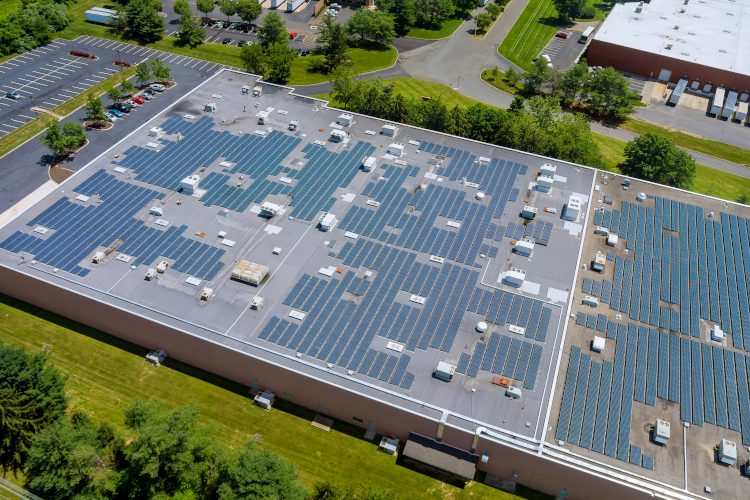
Real estate accounts for a significant share of greenhouse gas emissions into the atmosphere – totaling 37% of global emissions, of which 28% results from the operational cycle of buildings, and 9% are emissions related to the construction process. Logistics service providers and manufacturers are reducing energy consumption primarily by optimizing their transport networks, optimizing energy use, and investing in renewable energy sources.
Sustainability challenges also affect the logistics industry. JLL experts analyze current market trends and comment on ESG solutions for the warehouse sector.
- According to a report prepared by Reuters Events Supply Chain in cooperation with JLL, 72% of respondents are optimizing their transport networks, and 51% are moving warehouses closer to transport hubs and end markets.
- The war in Ukraine is one of the most important factors affecting supply chains in Europe in 2023, and the resulting disruptions and inflation have a major impact on decision-making processes.
- Optimizing transport networks is primarily about finding new convenient locations for warehouses throughout the supply chain.
- Optimizing energy consumption in real estate used in logistics and investments in renewable energy sources are the first steps taken by companies in the industry.
Climate change necessitates changes in the real estate market as well
Climate change is increasingly affecting our daily lives, which increases social awareness and the need to counteract its negative effects.
– The growing climate risk associated with the greater frequency and intensity of previously unusual weather phenomena is increasingly affecting all sectors. According to climate scenarios, by 2050 in Warsaw, the average temperature increase will be 2.4°C, and the highest temperatures may be as much as 6.6°C higher than those currently observed. It is therefore necessary to take concrete actions related to adapting our infrastructure to the changing environment and appropriately reducing greenhouse gas emissions. – says Jakub Frejlich, Director, Strategic Consulting – ESG
One of the tools for implementing changes is regulation. An important element within the green reporting structure is the CSRD (Corporate Sustainability Reporting Directive). It will introduce changes to the European corporate reporting system, establishing mandatory European Sustainability Reporting Standards. Companies will have to determine both the impact of their operations on the environment and their own exposure to risks related to climate change. This is also important from the point of view of property owners, as it is the properties that will be directly exposed to the physical risks of climate change and the resulting changes in the competitive environment.
Building attractiveness depends on its emissions
– The value of investments in the warehouse sector amounted to approx. EUR 2.0 billion in 2022, which is the third-best result in history. Buildings adapted to ESG requirements are becoming increasingly attractive on the market from the point of view of the investor or owner, but also the tenant of the property. One of the most important criteria for assessing quality and value can be the building’s emissions. – states Sławomir Jędrzejewski, Head of Industrial Investment
– It should also be noted, however, that the Polish warehouse market stands out in Europe due to its relatively young age – more than half of the existing stock consists of buildings less than 5 years old. – adds Sławomir Jędrzejewski. This is a huge asset and a distinguishing feature of the Polish market. Moreover, Poland still offers attractive land for the development of logistics and industry near the most important transport hubs.
Streamlining supply chains is key to sustainable development
In the first half of 2023, inflationary pressure affecting supply chains will not cease, but the situation should begin to improve in the second half, mainly due to a global decline in demand for goods, cheaper transport, and stabilization in the real estate market. Rising costs force the initiation of measures aimed at more efficient use of assets and reduction of energy consumption.
– Choosing the most attractive location that meets all the transport requirements of a given company allows for a clear reduction in transport costs, which account for the largest share of total supply chain costs, which simultaneously limits carbon dioxide consumption. A good initiative aimed at reducing energy consumption is the optimization of transport networks and moving warehouses closer to transport hubs and end markets. Fragmentation of the network and the launch of new distribution centers can also significantly affect the reduction of transport costs and emissions, in some cases even by 20-30%. Sustainable construction, both in terms of design and functionality, is of key importance for tenants today. – assures Maciej Kotowski, Director Research & Consultancy
Source: JLL