









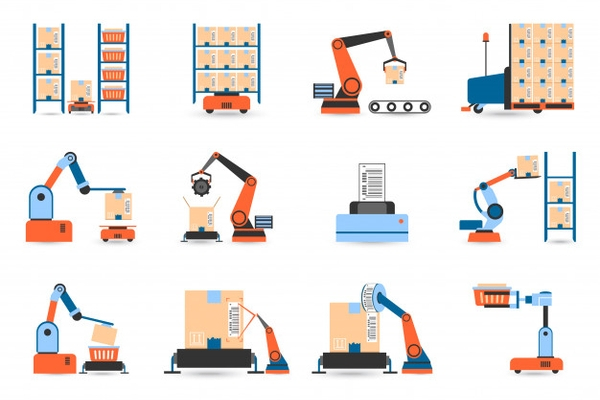
According to an analysis by the McKinsey Global Institute, introducing automation in the transport, warehousing, and manufacturing sectors in Poland would allow for a reduction of nearly 65% of the working time currently consumed by manual tasks. This can be achieved with technology available today: artificial intelligence, the use of industrial robots, autonomous cars, trucks, virtual assistants, chatbots, or process automation software.
A strategy based on automating transport, warehousing, or production processes offers the opportunity to better optimize company operations, resulting in increased efficiency, reduced costs, minimized human error, and improved competitiveness. A company that wants to function effectively in the new generation of business will also strive to shorten the production cycle, standardize the quality of products and services, improve work ergonomics, and make better use of human potential.
The latest issue of Logistyka magazine is dedicated to this very topic: robotization and automation of warehouse processes. We asked several experts for their opinions on the factors motivating Polish companies to invest in automation-based solutions:
 Maciej Gryczewski, Sales Manager, Siemens
Automation is perceived as the factor that most influences the improvement of a company’s competitiveness and revenue. Concern for improving profits and increasing the company’s market position is therefore the greatest motivator for implementing automation. According to the “Smart Industry Polska 2018” study conducted by Siemens, it is automation that primarily contributes to the growth of a company’s profits. This was the opinion of the majority, as much as 89 percent of the surveyed Polish companies. In this ranking, automation surpassed other technologies that, according to respondents, also have a significant impact on company revenue: data analytics and production optimization (87% of responses), software reducing the costs of prototyping and implementing new products (85%), and robotization (84.5%). At the same time, production line automation was among the most frequently implemented technological solutions.
The majority, as much as 59 percent of respondents, indicated that automation definitely contributes to improving a company’s competitiveness, and 17 percent of respondents are convinced that it rather contributes to improving competitiveness. Among the technologies considered, automation stands out significantly, as the percentage of respondents who considered the second-ranked data analytics and optimization as definitely important for competitiveness was 41%. Taking into account external factors, such as government actions that could motivate companies to invest more in automation, respondents stated that the most expected support for the development of new technologies, including automation, could be tax incentives (important for about 80% of respondents), providing educational frameworks allowing for the adaptation of future staff training to company needs (about 80%), and transparency of legal regulations regarding company innovation (69% of respondents).
 Szymon Arciszewski, Co-founder of FitMech
The primary reason why automation implementations should be based on a well-thought-out strategy is to maximize project profitability, i.e., economic benefits. It should be remembered that the automation of processes itself is in many cases only the beginning of the overall improvement process. For the implementation to bring the expected effect, it is often necessary to change many other factors, such as workstation organization, staff qualifications, and work culture. These factors, of course, generate a number of side projects that are not always easy to predict and define in the project’s budget and timeline. A strategically planned project for implementing automation solutions in production plants allows for all these factors to be taken into account and for the budget, timeline, and expected results to be precisely defined.
In my opinion, this is an important issue, even in the case of implementations that are technically “light” and non-invasive to the microsystem of a given production. I work with an innovative system for monitoring production events and machine performance, based on a vibration sensor. The operational implementation of our system is fast and non-invasive, but it must be remembered that the tool itself is not everything – every change generates conditions that, when met, will allow us to achieve the expected results.
 Sławomir Rodak, R&D Director, ID Logistics
With the continuous development of technology, the possibilities for automating logistics processes are increasing. The justification for automation stems from market factors such as: employee availability, production capabilities, constantly rising labor costs, ensuring flexibility, or improving service quality. The goal of implementing such technologies is to support the organization in reducing the risk resulting from the aforementioned factors and to build a competitive advantage that will allow for the next step in development. Neglect carries the risk of failure – a disruption in operational liquidity can have a negative impact on cooperation with clients. At ID Logistics, we place special emphasis on automation and innovation. To reduce the risk associated with their implementation, we have developed a strategy that supports our actions and indicates directions for further development in the area of automation.
It was established at the very beginning of the company’s operations, becoming part of our DNA. Thanks to the experience gained over many years, we have managed to develop an approach that reduces risks associated with, for example, time constraints, the lack of an experienced and qualified team of technicians and engineers, or the preparation of the IT team for integration with warehouse automation supervision and management systems, such as SCADA. It is these factors that cause the implementation of automatic systems on an “ad-hoc” basis to create risks for operational liquidity or cooperation with clients. Therefore, it is crucial to organize activities within an automation strategy that will set the direction and be consistent with the company’s overall development strategy. It will also allow the company to be secured in case of unexpected challenges related to the implementation of such projects.
 Kamil Szymański, Director of Warehouse and Industrial Space Department, Savills
The primary factors motivating tenants of modern warehouse and industrial space to use automation are the desire to streamline logistics processes, build a competitive advantage, and generate savings, among other things, by becoming independent of the labor market situation. Current challenges, related to the lack of workers and rising employment costs, are prompting companies to opt for solutions that are stable and cost-predictable in the long term. Machines are usually very efficient and can work 24 hours a day. Tenants who automate their logistics processes are much more flexible when it comes to choosing a location for a warehouse or production plant. They can therefore be guided primarily by the criterion of the attractiveness of a given place in the context of its fit into the supply chain, i.e., proximity to subcontractors and recipients, rather than access to potential employees. Automation is also an investment in innovation. A highly valued advantage of many modern automation solutions is their modularity, which allows for modifying, for example, the number of machines used, depending on current needs. However, there is a minimum entry threshold for these types of solutions. For companies that do not have the appropriate scale, there is always the option of using the services of logistics operators.
Automation is also much more accessible today. Although it still requires quite significant financial outlays, in the past, such solutions were much more expensive. Warehouse and industrial real estate developers are also aware of technological development and are meeting the needs of tenants by designing their facilities in such a way that various types of machines can be easily implemented in them. In new warehouse parks, for example, two power lines or fiber optics are becoming standard, which are often essential elements for introducing automation. In the case of advanced, dedicated solutions that tenants want to implement inside warehouses, there is the possibility of building a build-to-suit (BTS) warehouse, which is designed entirely for the client’s needs. We are observing an increase in the popularity of such projects, among other things, due to the progressing automation of logistics processes and the degree of complexity of the solutions used.
 Przemysław Piętak, Managing Director, HUB Logistics
Within our company, issues of automation in logistics occupy us both from the perspective of warehouse operations, which we manage on behalf of our clients, and consulting projects, where we help clients design future logistics centers, choose appropriate equipment, and select automation suppliers. From the perspective of a logistics operator, investments in advanced warehouse automation, especially in our Hakkila logistics center in Finland, have enabled our clients to radically shorten order fulfillment times and increase picking process accuracy to nearly 100%. At the same time, because in this model the costs of investment in automation are borne by the operator, clients do not have to spend significant one-time amounts on automation, paying for the logistics service in the form of transactional variable rates and gaining benefits resulting from automation, such as shortening delivery time to the end customer, which, for example, in e-commerce is of particular importance. Working in Poland with companies for which, as part of our consulting services, we have designed automated logistics centers in recent years, the significant factor motivating companies to implement automation strategies seems to be primarily changes in the labor market – constantly rising employment costs and decreasing availability of qualified employees.
However, it should be remembered that automation cannot always and in every situation bring the expected effects in the form of cost reduction. That is why we always encourage our clients not to treat automation as an end in itself, but to start assessing the profitability of its application by carefully identifying business goals and needs, as well as a very thorough data analysis, covering not only historical volumes and order profiles, but above all forecasts of our clients’ business development in the future. Automation is always a project for at least several or a dozen years ahead, and therefore its design must be based on predicting the strategic directions of the company’s development, its product sales channels, and logistics order profiles.
 Marek Jędra, Member of the Board, Quantum Software
There are many reasons that force entrepreneurs to reach for increasingly advanced automation. Additionally, they depend on the industry and the adopted business model. However, looking at the phenomenon more universally, it all comes down to increasing the competitive capacity of companies. Technology has accompanied man almost since the dawn of time. It is thanks to it that we have created such an advanced civilization, perfecting available work tools with each generation. Automation is a consequence of human achievements to date and a step towards the next breakthroughs in the alliance we have formed with technology. Today, when time is one of the most important elements of the competitive game, automation is becoming inevitable. In individual companies, automation can strengthen competitiveness in different ways. Entrepreneurs can reach for it to increase productivity, minimize human error, raise the level of product repeatability, or increase work safety. Quite obviously, automation allows for significant time savings and much greater accuracy than in the case of manual tasks. Companies also automate their processes to replace labor shortages with machines, become resistant to staff turnover, and lower labor costs.
Today, we are unable to perform more and more operations at all without advanced technology. This does not only apply to process automation in marketing or stock exchange systems. Today, it is difficult to imagine many factories or large distribution warehouses operated manually. Automation brings benefits to companies even when it covers only selected fragments of business processes. However, much greater efficiency can be expected when we integrate larger areas of the enterprise and allow the automated systems to cooperate with each other. The factors speaking for automation are therefore related to better time utilization, cost reduction, and better quality products. All this boils down to increasing market competitiveness.
 Dominik Kowalczyk, Director of Production and Warehousing Area, Smart Project
In order to answer such a question, one must define what a given company wants to win with in its industry. At the end of our supply chains is the customer, which is why an important element in making the decision to implement an automation and robotization strategy is meeting their expectations. If a company wants its competitive advantage to be the lowest possible service cost while ensuring the shortest possible lead time, the possibility of using automatic and robotic systems should be taken into account. One of the significant factors motivating companies to consider the possibility of using automation is the profitability calculation, resulting from a deep analysis of the assortment in terms of margin, physical parameters of products, current service costs, durability, and breadth of the assortment, as well as many other factors. Another very important factor is the economic aspect. Thanks to the rapid development of automatic and robotic systems, solutions are becoming more easily available, more diverse, and adapted to the needs of a given industry and client, which also translates into a lower cost of acquiring them.
We also cannot ignore the current situation in the labor market. Rising wages, decreasing availability of qualified personnel, and limitations resulting from human conditions are one of the main aspects motivating companies to consider a development strategy based on automated systems. There is also a social aspect regarding the automation of all processes. A consequence of rapid progress in the field of automation and robotics may be a decrease in the number of available jobs, an increase in unemployment, and a decrease in tax revenues, which the world’s economies will currently have to face. Today, the main factor deciding the need to implement automation is still the economic aspect. However, the social aspect should be taken into account, which will allow for maintaining stable relations in the labor market and economic conditions. In each case, the threshold level of automation for a given enterprise should be determined.
 Damian Żabicki, Independent Expert
Modern logistics cannot do without software responsible for supporting warehouse processes. Applications of this type can be operated via mobile devices such as smartphones, tablets, or terminals. Hence, a specific solution is chosen strictly for a specific application. For example, a basic feature of WMS (Warehouse Management System) class programs available on the market is primarily the possibility of mobile data exchange between individual elements of the system. No less important is easy access to data and full control over orders. Functions responsible for both warehouse space management and traffic direction will certainly contribute to better use of warehouse space. It is important to automatically prepare goods for shipment and create appropriate documentation in this regard. Some programs allow these functions to be handled using mobile devices. Thanks to WMS class programs, the inventory process is also automated, which, when carried out manually, is an extremely tedious and time-consuming activity. Many computer programs can also cooperate with warehouse automation devices. Modern software uses extensive hardware infrastructure based on barcode readers and printers and RFID scanners. Radio terminals are also very often used in the warehouse.
 Mariusz Jaromin, Business Development Manager Global e-commerce Vector Market, DB Schenker
From year to year, the cost of equipping facilities with automation is lower, and the solutions offered by manufacturers are more advanced. The process of automation and digitization in the logistics industry makes it easier for employees to perform tasks. In the face of rising wages, staff shortages, or staff turnover, automation is a solution that allows companies to properly respond to challenges in the labor market. In companies in the logistics industry, we often deal with shift work or the need for physical exertion. A major challenge is therefore recruitment, e.g., additional employees to handle seasonal peaks. Modern solutions allow for handling larger volumes without a jump in costs, e.g., related to additional employment, purchasing protective clothing, ordering medical examinations, or preparing larger sanitary facilities. Automation also guarantees full repeatability of processes, e.g., the same amount of tape is used for packing boxes, which ensures cost optimality. In the case of human work, ensuring the application of an optimal process is a greater challenge. Automation can be particularly effective in the case of manufacturing companies that have a long planning horizon for operations. However, it is worth verifying the delivery dates of equipment with automation manufacturers, because recently the demand for these solutions has been increasing significantly and the waiting time for their implementation is lengthening.
E-commerce clients are also increasingly willing to invest in process automation and support human work with modern technologies. This allows for responding to the growing market demands characteristic of this industry, which is characterized by high dynamics and seasonality. In e-commerce, the guarantee of service quality is equally important. The customer wants to receive their order on time, and making a mistake results in a loss of trust. In automation, the risk of error is much lower.
 Krzysztof Bielicki, WMS Solutions Architect, Sente
The automation of warehouse processes significantly contributes to improving work efficiency. It is worth considering, especially at the stage of looking for new development opportunities and improvements. When customer requirements regarding time and service quality increase, the question arises: what to do to meet these expectations. A properly selected IT system allows not only to improve speed but also to contribute to reducing the number of errors. The IT system can also have a beneficial effect on the burden on managers, relieving them of the need to decide when to conduct an inventory or how to distribute work. Another important element is better organization of warehouse space – when it starts to run out, it is good to first think about automation and reorganization instead of moving to another, larger warehouse. In summary: every company’s situation is individual, but it is worth thinking about automation when it is necessary to reduce the number of errors, increase speed, or better organize warehouse space.
 Jarosław Rak, Project Manager, Raion Automatyka
Having experience in planning and carrying out automation in various fields of production, we can list several main factors motivating companies to implement automation strategies. These factors can, for example, be divided into groups that interact and are closely related – e.g., quality, efficiency, savings. I mean that introducing changes in one area of issues usually has a good effect on improving coefficients in another area. For example, improving the communication capabilities of a machine, equipping it with sensors and an HMI control panel affects faster operation, reduction of downtime, and thus increased efficiency. One of the factors motivating companies is the desire to improve the area of management and quality. Some companies on the market that do not have an appropriate degree of automation of information transfer, e.g., MES, ERP systems – production support, are not able to precisely determine the amount of current production, demand for materials, and for this reason have problems with determining the plan and meeting deadlines.
Today, not only material ordering departments but mainly customers and transport companies expect precise data. Another factor is the desire to obtain the highest quality product by using automation to increase precision or quality control in the current cycle, in real-time. Signaling by the automation system the amount of waste (incorrectly made elements) prompts the staff to react, which results in cost reduction and improved efficiency. Increasing the reliability of production lines prompts the creation of an automation strategy. Automation, contrary to the opinions of some employees, also affects the improvement of line or device operation. Over time, the staff gets used to the way a fault is signaled and is able to react without the help of the maintenance department (UR). Other factors include standardizing spare parts, reducing the maintenance department’s warehouses. When implementing a strategy, you can impose equipment standards for the line in advance, which will favorably affect the later maintenance of spare parts stock and their searching. Deliberately at the end, I will mention the obvious factors that most strongly argue for introducing an automation strategy. I mean aspects related to improving production coefficients, such as increasing production, processing times – by increasing machine speed, using robotic workstations, or reducing and controlling the consumption of materials and utilities.
 Jesper Sonne Thimsen, Sales Director for Central and Eastern Europe, Mobile Industrial Robots
Automation brings the possibility of optimizing processes, and as a result, increasing efficiency, reducing costs, and raising competitiveness. It is also an opportunity to shorten the production cycle, standardize quality and processes, improve work ergonomics, and make better use of human potential. Internal transport is definitely an area where companies can look for a competitive advantage. Even in relatively small enterprises, the total distance that employees cover daily, transporting products, can be measured in kilometers. Autonomous mobile robots (AMR) are adapted to transport components weighing up to one ton (using the example of MiR robots). Their flexibility and advanced intelligence mean that the company has full control over what tasks it delegates to the robot on a given day. It can therefore adapt its work to the current needs of the enterprise without additional costs of changing the production layout or programming. Autonomous mobile robots navigate based on built-in sensors, cameras, and advanced software – they do not require external sensors or guides. Once a robot gets to know the environment, it will recognize it and will always choose the most efficient route to the destination, safely avoiding obstacles and people. Collaborative mobile robots are also user-friendly and easy to operate from a simple interface that does not require prior programming experience.
An interesting example from the Polish market is the implementation of MiR200 autonomous mobile robots at the Whirlpool plant in Łódź, which produces dryers and freestanding cookers. In order to increase efficiency, the company implemented a fleet of mobile robots that transport components between the pre-assembly and assembly lines. MiR robots at Whirlpool replace forklifts and tuggers, and the expected return on investment at the plant in Łódź is a maximum of two years. Thanks to the introduction of autonomous mobile robots, the company can increase productivity and engage employees in other areas that bring higher added value to the enterprise.