








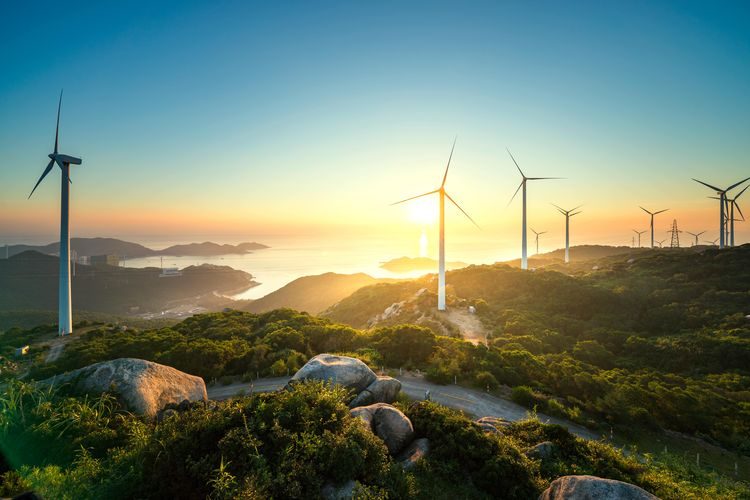
Industrial decarbonization is the next major step on the path to achieving carbon neutrality by European countries, which is the main goal of the European Green Deal. The “Fit for 55” legislative package prepared by the European Union aims to reduce carbon dioxide emissions by 55% by 2030 compared to 1990 levels. On one hand, it poses a huge challenge for the Polish economy. On the other, it is a massive opportunity for a “green” technological leap for thousands of enterprises. The recipe for success consists of several significant steps toward a low-emission future.
In 2014, industry accounted for nearly 28% of global greenhouse gas emissions. It is therefore clear that global decarbonization cannot be achieved without considering the impact of industrial decarbonization. Thanks to the knowledge and experience of companies specializing in decarbonization, industrial modernization aimed at reducing CO2 emissions can be carried out as quickly and effectively as possible.
Decarbonization solutions on the path to a low-emission future
Solid and integrated platforms are essential for global industrial decarbonization. Schneider Electric’s climate change consulting services help organizations face decarbonization challenges and achieve carbon neutrality goals. This is possible by combining strategic and analytical activities with supplier engagement. It is also worth adding the consistent implementation of changes through renewable energy procurement, carbon offsetting, or supply chain decarbonization.
– Supply chain decarbonization is crucial for achieving ambitious climate goals. It also serves as an excellent example of coordinated corporate efforts. As Schneider Electric, we are actively participating in this process by offering solutions in the field of automation and digital decarbonization. We have launched a global service for mitigating the carbon footprint in the supply chain. Its goal is to help organizations solve the problem and reduce carbon dioxide emissions at every stage of their operations – explains Ireneusz Martyniuk, Vice President of the Industry Division for the Central and Eastern Europe cluster at Schneider Electric.
It is worth emphasizing that for industrial decarbonization to become a reality, industries must take up the challenge of transformation and take advantage of the benefits of digitalization, e.g., by implementing solutions based on data from the Internet of Things or artificial intelligence. Constant cooperation and coordination of efforts among many different entities are key here.
– We estimate that by applying state-of-the-art technologies in industry, digitizing and simplifying electricity distribution systems, it is possible to reduce the carbon footprint by up to 20% with similar savings in energy and maintenance costs – emphasizes Ireneusz Martyniuk.
As the expert adds: – Schneider Electric is involved in many decarbonization initiatives around the world. For example, as part of the Zero Carbon project, we are working with nearly a thousand of our suppliers to halve carbon dioxide emissions in the supply chain by 2030. As for our own resources, we plan to switch to 100 percent renewable energy sources by that time.
Achieving the transformation of industrial and energy sectors through decarbonization solutions
The European Environment Agency leaves no doubt. Energy, industry, and transport are three strategic sectors for the gradual reduction of CO2 emissions. To achieve an effective transformation in these sectors, it seems necessary to undertake coordinated efforts across the entire economy.
The EU’s Green Deal strategy assumes the expansion of a set of instruments for sustainable financing of the energy transition. Small and medium-sized enterprises will also be able to benefit from these funds. The effective use of these funds will determine whether the Polish economy makes a great leap in terms of innovation and ecology. A leap from which future generations will reap the benefits.
Source: Schneider Electric