Michał Koralewski: Professor, why do managers who have been successful for many years suddenly start to suffer increasingly spectacular business failures, leading their companies to the brink of collapse?
Wojciech Czakon: When we talk about a manager, we often think of an individual who makes decisions with complete freedom. And if that were actually the case, a manager, like any of us, would learn from their mistakes. However, that is not the case. In management science, we talk about a person who is part of an organization, works in a team, and operates within the framework established by the organization. They remain in a hierarchical relationship with other employees, participate in competition between managers at the same level, and all this causes a very interesting phenomenon: the manager does not learn from mistakes. And they do not learn because it is better not to admit to mistakes in organizations. Mistakes and failures are usually not discussed, not shown on slides, and not described in self-presentation reports. Only success is impactful. Unfortunately, this approach has tragic consequences. A manager’s position is often based on the success they achieved years ago. But that past success may no longer fit today’s market requirements. A short-sighted manager begins to make mistakes that are hidden, swept under the rug. At some point, such a manager starts dragging the company down, but no one realizes it until it is too late.
M.K.: We are talking about the so-called strategic myopia of managers, which is the subject of your book of the same title. What was your motivation for writing it? And who is it addressed to?
W.Cz.: The book is addressed to entrepreneurs, practitioners, and people who make important decisions in an organization. I would distinguish three main motives that inspired me to write it. The first is the collaboration with Prof. Arkadiusz Kawa, who is the author of an extremely insightful work on network awareness. When we started working with Prof. Kawa, we noticed that beyond what a manager is aware of, there is a very interesting area of what a manager is not aware of, which is equally important and has a huge impact on running an organization. The second stimulus is strictly academic: my team and I managed to obtain funding from the National Science Centre for research titled “Strategic myopia of managers and company performance.” We identified the existing state of knowledge and I decided to use what I learned in this area. And the third reason: the MBA studies that I conduct at the Poznań University of Banking. I have managers in the room who struggle with strategic problems on a daily basis. I realized that in the dozen or so years of my work with students, I had not seen any literature that would serve as a compendium on the traps that await short-sighted managers and how to deal with the challenges that arise from them. On top of all this came the pandemic. I decided to use the free time that suddenly appeared productively and write a book.
M.K.: Myopia is described in your book as an ambiguous, multi-threaded term. It is not just a tendency to ignore the time horizon, but also, among other things, a lack of a broad picture of the situation. For example: according to research by Polish logistics operators, 3/4 of managers focus only on the closest business relationships and do not notice, for example, their customers’ customers or the competition that operates right next to direct rivals. What threats does the emergence of so-called blind spots in the functioning of an organization carry?
W.Cz.: By not seeing a competitor, we allow them to build their offer completely freely, improve it, and eventually reach our customers better. Due to a cognitive error, which is fatal in its consequences, we build a mortal enemy behind our backs. Please recall how hypermarket chains were entering Poland a dozen or so years ago. They were received with great enthusiasm and attracted a lot of customers who filled their baskets to the brim. We know the format of such hypermarkets very well: a large hall, a spacious parking lot, long shelves full of goods, but also long queues at the checkout. For customers a dozen or so years ago, this form of shopping made sense. But does the modern consumer still want to spend time doing large shopping? Today we have less and less of this time, we live more dynamically, changeably, and it is increasingly difficult for us to plan large shopping for a longer period of time. The lifestyle of the modern Pole has changed so much over these last dozen or so years that we are actually stopping going to hypermarkets. That is why Tesco is withdrawing from our market, because it simply lost. And here another question arises: which competitor did it lose to? It did not lose to its direct competition, like Auchan or Carrefour. It lost to Lidl, Aldi, Biedronka, and Żabka, which do not belong to the same category of stores. Żabka wins against Tesco, even though its offer, counting the value of the basket, is definitely more expensive. And why does it win? Because convenience and time savings have become much more important factors for us than lower price and the breadth of the offer. Tesco lost because it classified discount chains into a different category than hypermarkets, and therefore not as its direct competition, and it did not have a strategy that took such a threat into account. This was a huge mistake that decided the company’s withdrawal from Poland. A manager must remember that anyone who addresses their customer is their competitor.
M.K.: The same thing happened with television, which did not appreciate the competitor in the form of platforms enabling free access to content, such as Netflix or HBO GO, which appeared suddenly, somewhat alongside the direct competition between television stations, and reached the same customers through other channels.
W.Cz.: You hit the nail on the head: access to content. Television is generally based on three financing variants: subsidies from the state treasury, subscription fees, and advertising revenue. In none of these variants is there any reflection on free access to content. Unlike services like Netflix, where content is the most important thing, where the customer chooses what they want to watch themselves and does so for a symbolic fee. Several mistakes were made here, the most important of which are seeing only the closest competition and completely ignoring streaming services, as well as the mistake related to ignoring customer expectations. These are exactly the “blind spots” we talked about earlier: managers responsible for strategy did not see the threats, did not hear the customers’ expectations, and when they finally noticed them – it was already too late.
M.K.: “It doesn’t make sense to hire smart people and then tell them what to do. We hire smart people so they can tell us what to do” – Steve Jobs once said. Is it better to invest in a group of managers-strategists or in one superhero who will head the organization?
W.Cz.: A manager works with people with whom they co-make decisions. There are so few superheroes who ran a company alone that we can list their names: Steve Jobs, Elon Musk, Bill Gates. Most managers, however, are not superheroes and – if they want to succeed – they should surround themselves with the right people, strategists, advisors, creative visionaries. Let’s not look for individuals who will carry the entire organization on their shoulders. Let’s look for collective managers, let’s shape management teams by creating a strategizing environment. A fundamental category in strategic management is fit to the environment, that is – a manager succeeds because they fit a given situation. They fail because they do not fit the situation. And to find such an ideal collective manager, we must first answer the question: what is the environment in which my organization operates? Is it stable, traditional, functioning unchanged for years, or is it rather changeable, violent, and innovative? Concentration of risk in one person always takes revenge. Throughout human history, we have many such examples where excessive belief in the strength and skills of an individual ended in a spectacular failure. A superhero, unfortunately, only works in comic books.
M.K.: One of the research projects you are carrying out, together with Prof. Arkadiusz Kawa and Prof. Patrycja Klimas, concerns research on the titular strategic myopia and its translation into company results. Is it possible to somehow measure, examine a manager in terms of strategic myopia?
W.Cz.: As part of the research, we collected empirical data to measure myopia. We have a tool that allows us to assess it – just like intelligence is measured. The tool has been tested, validated on a large empirical sample, and we are currently preparing to publish this material in a scientific journal. I did not publish this empirical research in my book, because I believe there is room for separating strictly academic, methodologically juicy literature from content-based literature aimed at managers. Our tool refers to the preferences of managers, their profile when it comes to myopia. Thanks to this, a manager can perform a self-assessment, can identify those points that they assess as weaker – they can name and measure them, and a company, when recruiting a manager, can assess a candidate in terms of their fit to the organization’s needs.
M.K.: A final question: should we talk about the problem of strategic myopia?
W.Cz.: Actually, no. The metaphor of myopia suggests to us that it is some kind of disease. But we must remember that myopia sometimes also brings positive effects, such as the ability to flexibly adapt to sudden changes. We should rather say that myopia creates problems, but it is not a problem in itself. It creates challenges that a manager must somehow deal with: seeing contradictions, ambiguities, being able to take risks. Like any challenge, we can classify it as a threat or an opportunity. This is the material that a manager uses. Let’s not aim to eliminate it. Let’s not stigmatize managers who are short-sighted. Let’s treat strategic myopia as a tool that, used skillfully, can bring long-term success.
The article comes from the magazine LOGISTYKA 1/2021.
The e-edition of the magazine is available in our offer!
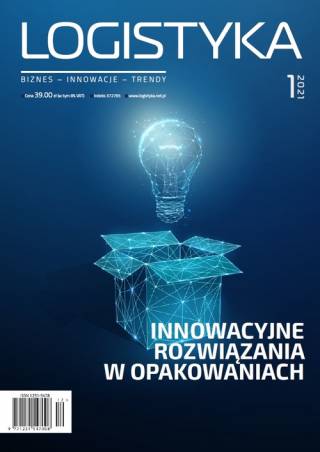
Stay up to date, order a subscription to the LOGISTYKA magazine!