








The interplay between logistics services for the chemical industry and climate action. Mitigating climate change is both a major responsibility and a challenge for logistics service providers. Transport and warehousing are energy-intensive and have a significant impact on the carbon footprint, one reason being the lack of a sufficient number of zero-emission trucks. However, technological changes are already in full swing. Michael Kriegel, Department Head DACHSER Chem Logistics, describes the potential that can be harnessed and the role that logistics can play in climate protection.
The chemical industry is of key importance to the technological sovereignty of Europe and Germany. It constitutes the first link in many supply chains, which makes almost all industries directly or indirectly dependent on it, including its products, processes, and procedures. In other words, ensuring the stability of the chemical industry means securing the future of Europe and Germany as an important business location.
According to the EU Green Deal, the industry has until 2050 to achieve the net-zero emissions target. This will require a massive effort, however, because according to calculations by the German Chemical Industry Association (VCI), it is responsible for about 5 percent of CO2 emissions in Germany. The focus is on the transition to green energy sources, increased use of renewable raw materials, and better product life cycle management. Sustainable upstream and downstream processes, especially logistics, are also of key importance.
Climate-friendly development
Transformation at any cost, for example by limiting basic logistics services, is not an option. On the contrary, the number of road, rail, air, and sea transports is expected to increase. This means it is essential to use available technologies to increasingly reduce the impact of logistics services on the climate, and thus optimize the logistics balances of customers in relation to their own sustainability goals.
Offering “climate-neutral” logistics through carbon emission trading is certainly not a sustainable long-term solution. It helps neither the climate nor energy-intensive and high-polluting companies. It is important to actually avoid and reduce emissions, even if it is a more difficult and labor-intensive option. Once all possibilities for reducing emissions through technical measures have been exhausted, it is justifiable to introduce greenhouse gas emission compensation projects. However, these ventures must be carefully evaluated based on established quality standards, and preferably on one’s own assessment.
– The situation in Poland looks similar. In 2022, the chemical industry was responsible for about 4.5 percent of CO2 emissions (data from KOBiZE “Largest CO2 emitters in Poland”), which is why achieving zero emissions may turn out to be a very big challenge. Dachser Poland, as an integral part of the group, implements the same solutions aimed at reducing CO2 and greenhouse gas emissions in regional and international transport as in other branches of the company around the world. This includes further work on increasing process efficiency, for example through digitalization or the gradual implementation of mega trailers – Ewelina Staszewska-Kobiela, Head of DACHSER Chem Logistics in Poland.
Active commitment to more sustainable development pays off and is reflected in rankings on rating platforms such as the Carbon Disclosure Project (CDP) and EcoVadis, which are also used by customers in the chemical industry. Facility assessments conducted in accordance with the Safety and Quality Assessment for Sustainability (SQAS) conditions play an important role for the chemical industry. Such analyses can verify whether work processes are constantly being improved to protect employees, the public, and the environment.
Four areas of action for sustainable development
To achieve more sustainable development, four areas of action are key for logistics service providers: process efficiency, energy efficiency, research and innovation, and social engagement that goes beyond the scope of the enterprise.
Both from the perspective of the customer and the service provider, continuously increasing the efficiency of logistics processes — for example through the use of artificial intelligence or Internet of Things applications — is an important lever for reducing greenhouse gas emissions. Other effective tools for optimizing process efficiency include maximizing truck load capacity, e.g., by using mega trailers and longer trucks, deliberately avoiding empty trucks, and consciously using multimodal transport in combined transport.
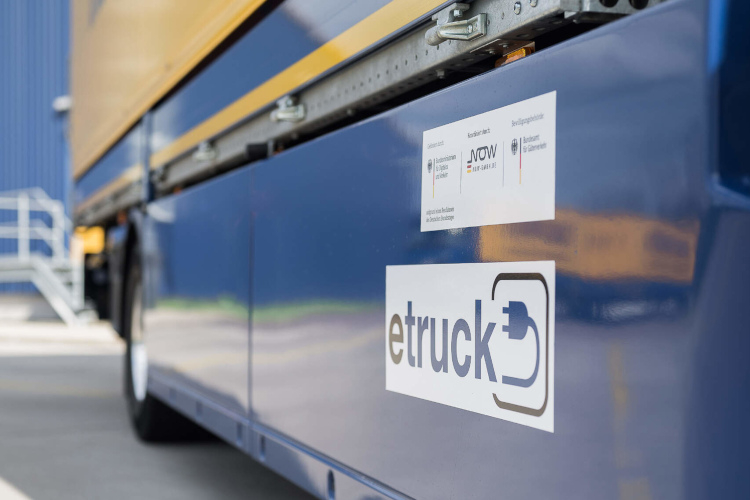
Where possible, energy efficiency and the use of renewable energy sources should be a priority. For example, all DACHSER logistics facilities worldwide are powered entirely by green energy. At the same time, the company is accelerating investments in photovoltaic systems installed on its own buildings. LED lighting, battery-powered ground conveyors, and low energy consumption due to heat recovery also contribute significantly to achieving efficiency goals. Electric trucks and cargo bikes are already used as standard for zero-emission deliveries of all non-refrigerated shipments in strictly defined city center areas. By the end of 2025, DACHSER will implement this concept in 24 major European cities.
The third area of action, research and innovation, focuses on preparing the zero-emission logistics of the future. At three e-mobility locations in Germany, zero-emission vehicles are being tested in short- and long-haul transport, as well as the infrastructure for charging them. Given that efficiency also reduces emissions, digitalization and process optimization supported by artificial intelligence also play an important role. To this end, the DACHSER Enterprise Lab was launched with the help of Fraunhofer IML. It focuses on innovations that make the flow of goods and related processes more digital, efficient, and sustainable.
Social activities that go beyond the company’s business and geographical sphere of influence play an equally important role in the company’s sustainable development. In this fourth area of action, DACHSER focuses on cooperation with the children’s aid organization Terre des Hommes. The protection of natural resources is central to these projects. In addition to actual help for children, this type of commitment is particularly important in developing and emerging countries, as they are strongly affected by the effects of climate change.
A long road ahead
In summary, a logistics service provider can contribute to promoting sustainable development and mitigating climate change in these four key areas of action. However, the road ahead is still long. For example, in the current situation, it is expected that it will take another 15 to 20 years before all diesel trucks are replaced. Climate action therefore requires great perseverance and, above all, a joint effort by all market participants: customers, logistics service providers, transport partners, and carriers.
Source: Dachser