Stelmet Group, a leader in the production and distribution of wooden garden architecture in Europe, delivered its 600th container of products from the new MrGarden plant in Grudziądz to the United Kingdom last week. Sea transport is more cost-effective than road transport, which is why all shipments from Grudziądz to the UK are currently being carried out using containers.
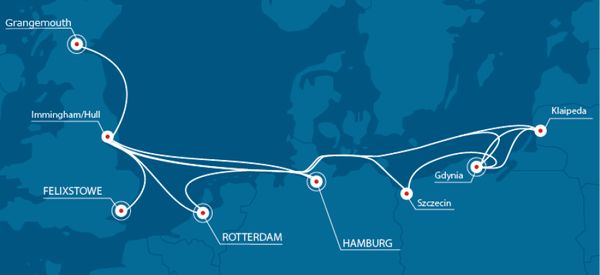
Products sold by the Stelmet Group on the British market are mainly manufactured at the MrGarden plant in Grudziądz, which was launched in the autumn of 2016 and is the most modern wooden garden architecture production facility in Europe. Since February of this year, deliveries to the UK have been carried out using sea transport. At the Grudziądz plant, products are loaded into containers, which are then transported to the port of Gdynia. There, they are loaded onto a feeder vessel, i.e., a container ship used mainly in short-sea shipping on fixed routes. In Poland, the feeder also stops in Szczecin, then sails to the port of Immingham/Hull and further to Felixstowe in the UK. From the port of Immingham/Hull, the containers go to the Group’s distribution center in Much Wenlock, while from the Felixstowe port, they go to the Group’s nearby distribution center in Harwich. The entire route takes 5-6 days.
– Last week, we delivered the 600th container of our products to the islands. Given that traditional road transport, at current rates, is about 26% more expensive than containerized sea transport, for about two months now, we have been loading all products destined for the British market in Grudziądz exclusively into containers. At the peak of the season, we plan to ship about 15-20 units per day, and we are considering whether, with such volumes, it would be possible to replace road transport with rail transport for the Grudziądz-Gdynia section – indicated Stanisław Bieńkowski, President of the Management Board of Stelmet S.A. – Initially, the feeder departed from the port of Gdynia once a week. Due to the high interest in short-sea shipping and with the contribution of our shipment volumes, the shipowner launched a second vessel a few weeks ago.
Sea transport in the Baltic and North Sea basins competes to a large extent with road transport, which is why shipowners use container units similar in volume to semi-trailers. The basic unit is a 45′ HCPW (High Cube Pallet Wide) container, i.e., a container with a length extended to 45 feet, widened, and with increased height.
– Although we are still learning how to optimize loading space, the average load size we have achieved since the beginning of container shipments is over 21 cubic meters, which is better than the average we achieved for semi-trailers – indicated Stanisław Bieńkowski.
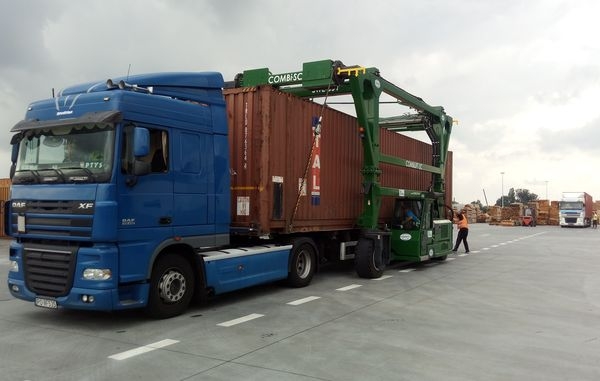
The use of containers reduces transport costs and additionally allows for better organization of loading at the Grudziądz plant. A container prepared for shipment to the British Isles is placed on a semi-trailer in just a few minutes using a special lift, a so-called straddle carrier. Transport to customers in Continental Europe is carried out by trucks using standard semi-trailers.