








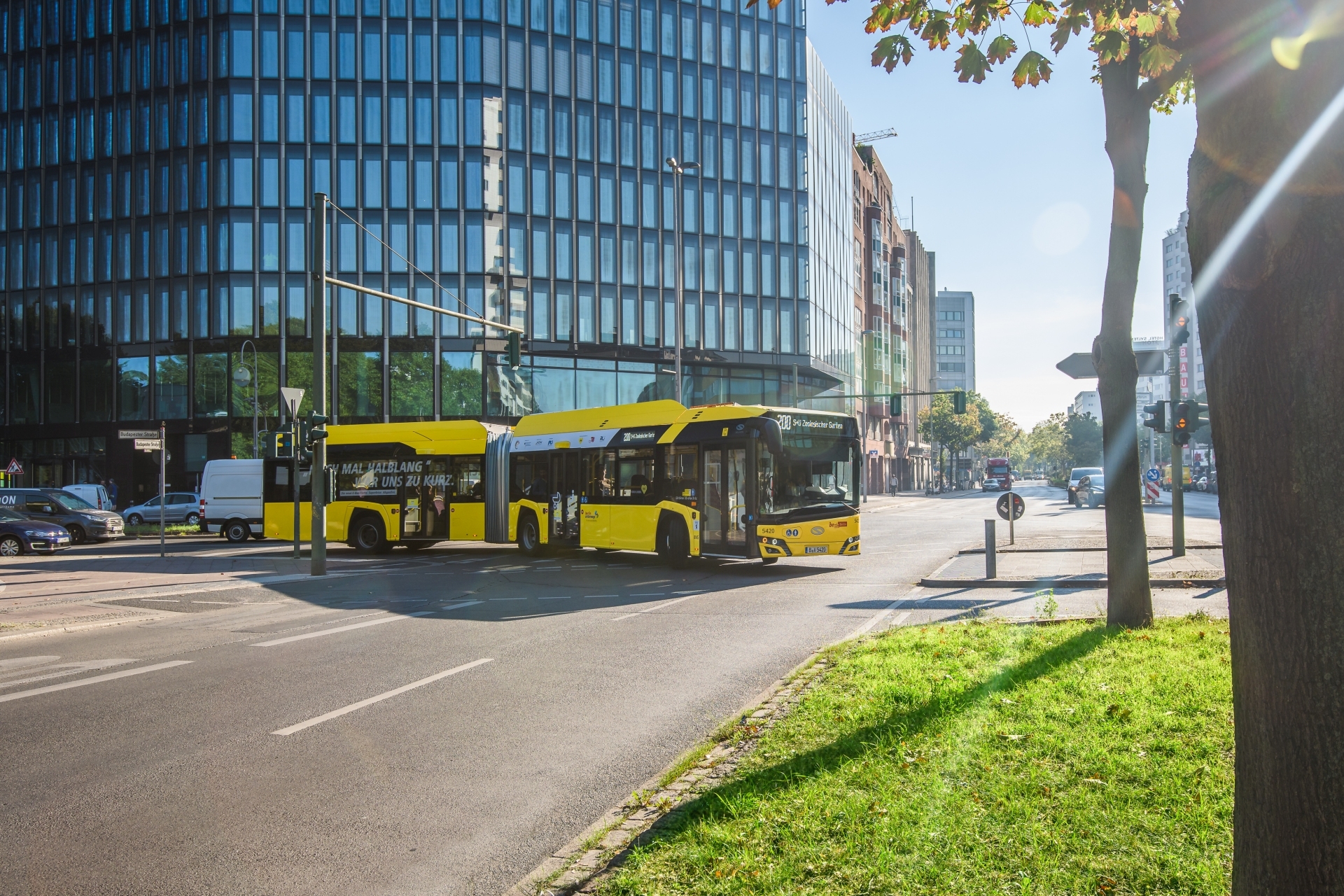
The world’s first mass-produced bus with a battery passport is the Solaris Urbino 18 electric model, which has joined the BVG fleet in Berlin. A battery passport is a digital document that provides detailed information about the origin and composition of the battery, allowing for more responsible and sustainable management of raw materials. Solaris delivered the vehicle with a battery passport three years before the entry into force of EU regulations, which will require a battery passport for all electric vehicles starting in 2027.
Solaris has delivered an Urbino 18 electric bus to Berlin, the world’s first mass-produced bus whose batteries have a passport. The model is equipped with Solaris High Energy batteries with a capacity of approximately 700 kWh. The Urbino 18 electric is the first of 50 articulated electric buses from Solaris ordered by BVG Berlin at the end of 2023. The entire order will be completed in 2025. All vehicles will have battery passports.
In accordance with the new Regulation (EU) 2023/1542 of the European Parliament and of the Council concerning batteries and waste batteries, a digital passport will be required for every battery, including those in electric vehicles, from February 18, 2027.
A battery passport is a digital document that provides detailed information about the battery – its composition, the origin of materials, environmental impact, and data necessary for proper recycling. Required data includes information on chemical composition, critical raw material content, carbon footprint, and the share of renewable materials. Information regarding the batteries in the Urbino 18 electric in the BVG Berlin fleet is available by scanning a QR code attached to the component.
Increasing battery life cycle transparency
The purpose of the document is to increase transparency throughout the entire battery life cycle, from raw material sourcing and operation to recycling. Batteries used in electric vehicles contain valuable and rare materials, the responsible management of which is crucial for protecting natural resources and minimizing their environmental impact. The battery passport allows for monitoring the origin and content of raw materials such as lithium, cobalt, or nickel, supporting responsible and ethical material sourcing. Access to detailed data on composition and environmental impact facilitates subsequent recycling and the efficient use of renewable materials.
Solaris is a European leader in e-mobility, ranking first in terms of the total number of zero-emission buses – battery and hydrogen – delivered since 2012. Solaris buses equipped with batteries are not only electric buses, but also hydrogen vehicles and trolleybuses. Solaris has already delivered 5,000 of these zero-emission models to its customers, and the order book continues to grow. With the popularization of e-mobility, the number of batteries is also increasing, and responsible management of this strategic component of zero-emission transport is becoming crucial. Within the company’s structures, there is the Solaris Battery HUB, a battery competence center that comprehensively manages battery-related operations and is also developing work on implementing a circular economy for lithium-ion batteries.
Source: Solaris Bus & Coach sp. z o.o