








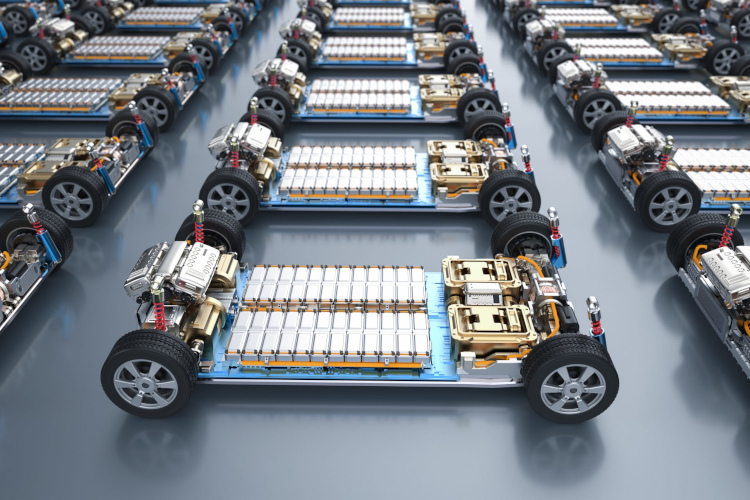
Raw material consumption for battery production could fall by 36-49% by 2050 – if further actions are taken, not only by making batteries smaller, but also by improving their chemical composition and reducing the number of private car trips.
Demand for critical metals will grow rapidly in Europe by 2050 as the Union transitions to zero-emission road transport. This is essential for Europe to meet its climate goals. However, according to a new analysis by the NGO Transport & Environment (T&E), the projected demand for raw materials could fall by as much as 49 percent during this period. To achieve this, governments and the EU must take action to reduce the size of batteries and cars.
If policymakers do not take action, Europe will need about 200 times more raw materials for battery production by 2050 to decarbonize its car fleet than it did last year. However, the projected demand for lithium, nickel, cobalt, and manganese could fall by 36 to 49 percent as a result of policies encouraging the purchase of smaller and more affordable electric vehicles (BEVs), the introduction of innovative battery chemical mixes, and the reduction of passenger car travel.
“Europe must electrify its entire fleet by 2050, but the demand for battery metals will grow along with it. If we are serious about not repeating the mistakes of oil import dependency, we must commit to efficient resource management. In a world of limited supply, smaller electric cars are not only an environmental necessity but also sound economic and industrial policy,” said Rafał Bajczuk, an expert at the Electric Vehicle Promotion Foundation.
Reducing battery size by producing smaller electric vehicles is the most effective way to reduce metal demand (by 19-23%). According to the T&E analysis, a pan-European strategy is needed to shift to smaller, more affordable, and more efficient electric vehicles than the large SUVs currently being introduced to the market. National measures should include tax incentives for smaller models, while at the EU level, battery efficiency standards and requirements for car manufacturers to produce more economical models are needed.
Smaller electric cars are ideally suited for batteries that are made using fewer raw materials and can reduce metal demand by up to 20 percent. Good industrial policy is needed to further stimulate European production of new technologies, such as iron-based (LFP) and sodium-ion (Na-ion) batteries. Raw material demand can be reduced by another 7 to 9 percent by reducing the number of kilometers driven. To this end, T&E calls for a range of actions, such as limiting road construction, reducing space for private vehicles, and increasing parking fees. Governments should also promote public and shared transport as well as active forms of mobility, such as cycling.
“Smaller electric cars are the biggest contribution we can make to reducing raw material consumption for battery production. At the European Union level, we should implement a uniform energy efficiency standard to oblige car manufacturers to offer electric cars with smaller batteries, which are also more affordable than today’s large-scale SUVs. The demand for small and cheap electric cars is huge, and their absence makes electromobility still perceived in Poland as a luxury for the wealthiest,” said Rafał Bajczuk.
Source: European Federation for Transport and Environment