The Deloitte report “Industry 4.0 in Poland – revolution or evolution?” published in 2020 shows that technology – just behind operational activities – is the factor that drives innovation in the industry. It should therefore come as no surprise that nearly one-third of the surveyed companies are beginning to scale process automation based on robots and machine learning within their organizations. Production automation is one of those technological solutions whose implementation not only raises key performance indicators in a company. It can also make it a desirable workplace and a market leader.
According to a report published by the analytical firm MarketsandMarkets in 2020, progress in implementing elements of the Industry 4.0 concept in Poland is still significantly more noticeable in enterprises that are branches of foreign companies. According to 68% of respondents, this is due to low customer awareness. The question arises whether the reasons for this state of affairs should not rather be sought in unconscious needs stemming from unspecified knowledge about the possibilities offered by production automation. And these are impressive.
Production automation – tailor-made solutions
As the cited MarketsandMarkets report shows, one of the concerns related to the implementation of modern technologies in industrial plants is a radical approach and ignoring their actual needs. So what should be the role of solution providers in this area?
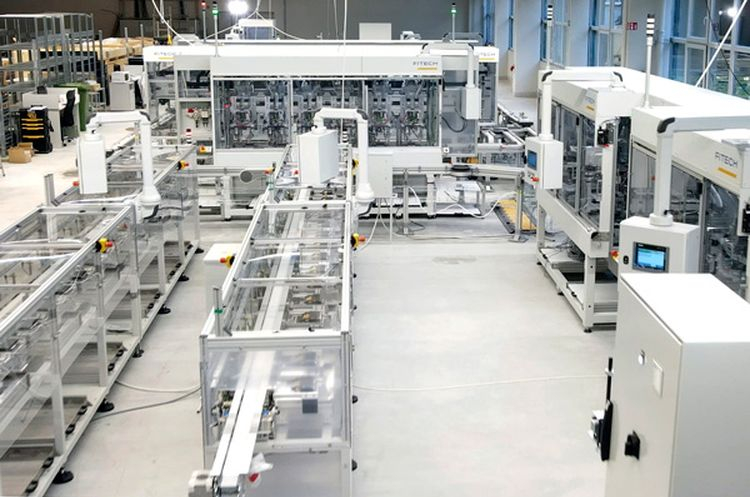
– The role of the provider is to propose “tailor-made” solutions. Production automation should be preceded by a return on investment calculation. This will allow for determining the balance between the costs and benefits resulting from the implementation. It will also lead to the selection of a solution that takes into account not only production goals but also budgetary issues related to the entire service life of the machines – says Artur Burian, a manager at Fitech.
Intelligent assembly within reach
What should characterize intelligent component assembly today? Different things are important for different industries, but one of the fundamental issues is the minimization of defects – which all manufacturers will agree on. Although we are still unable to replace robots for many precise operations, many things can be improved thanks to them. The specifics of the industry determine what these specific areas will be – e.g., packaging, palletizing, or quality control. What kind of entity’s services should you use to be sure that the production automation process will run smoothly at every stage of implementation?
– If a company can meet the highest requirements that the automotive industry undoubtedly sets, it will be able to meet any – suggests Artur Burian from Fitech.
Production automation not only for large-scale production
Automation is usually associated with mass production. Meanwhile, even with low production volumes, there are premises that justify the decision to automate. One of them is, among others, employee safety.
– When deciding on production automation in a company, it is worth knowing that there is a wide spectrum of solutions between manual, semi-automatic, and automatic production processes – explains the expert from Fitech. – The most important thing is to understand the purpose of implementing automation and to justify the costs associated with improving the production process – he adds.
Using semi-automatic solutions, the goal of which is, for example, to facilitate the most labor-intensive tasks, can also be a good way to take a step towards a fully automated environment in the future.
Read more about automation:
– GEFCO tests the ProovStation automated vehicle inspection system
– Warehouse safety in the foreground
– FM Logistic invests in autonomous robots in warehouses
– Mobile Industrial Robots published the results of research on intralogistics automation
– Automation strategy
– Blaklader hires robots
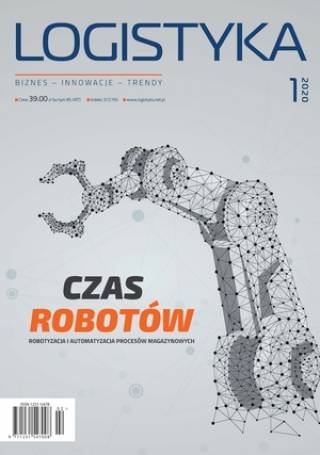
We wrote more about automation in Logistyka magazine 1/2020.
The e-edition of the magazine is available in our offer!