The popularization of global network access, increasing transmission speeds, innovative ways of reaching the end user directly, and the development of artificial intelligence algorithms are leading to the dynamic growth of the e-commerce market. From the end user’s perspective, this is a very positive trend. However, from the suppliers’ side, especially when shortening supply chains, the development of e-commerce and growing competition pose a significant challenge.
It is no wonder that all initiatives aimed at reducing distribution costs and minimizing delivery times are in high demand. In a competitive market, it is no longer enough to correctly deliver goods the day after an order is placed; one must offer shorter delivery times and ensure convenient returns. Although from a logistics perspective this seemed impossible 10 years ago, today’s demanding customer expects same-day delivery. One answer to customer requirements is solutions within the scope of the sharing or collaborative economy, based on the synergy effect in the case of collective distribution or even production, especially in the field of electronic sales.
The last mile in e-commerce
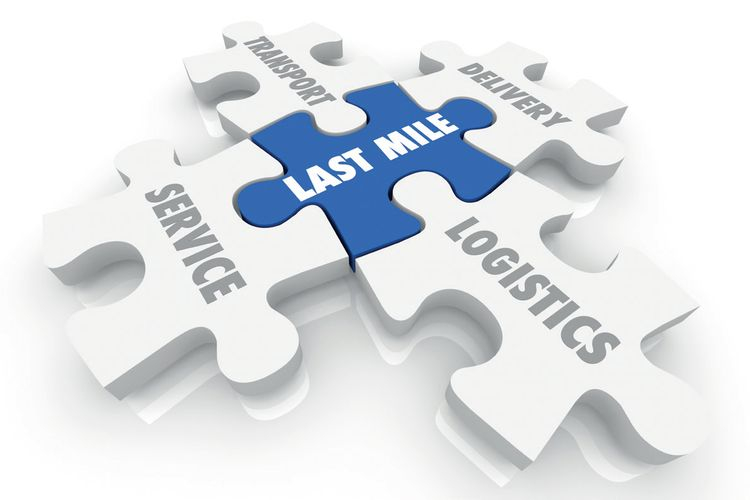
A key issue in electronic commerce is the so-called last mile, i.e., delivery to an individual customer. Anyone who buys goods remotely and works away from home often has problems receiving deliveries from a courier. Sometimes it is necessary to drive to the courier company’s office after receiving two “missed delivery” notices, although this issue has been largely resolved by direct contact with the recipient. Hence the growing popularity of parcel lockers and the multiplication of collection points. However, these are solutions that do not satisfy customers who expect home delivery in the evening for purchases made in the morning or late the previous evening. Of course, it is possible to plan deliveries so that the courier arrives at the required time. However, this requires duplicating the shipment distribution system – it is still necessary to serve entrepreneurs who expect deliveries (and shipment pickups) during business hours. This also involves a sharp increase in service delivery costs. However, this trend cannot be avoided. No delivery system will ensure fast shipment delivery if the stock is located in the wrong place and the preparation time prevents immediate dispatch. Therefore, it becomes necessary to inefficiently – in terms of costs – disperse stocks while ensuring a short response time to customer orders. Solutions from the field of the sharing economy or the related collaborative economy can be the answer to the increasingly pressing issue of last-mile service. Initiatives of this type can meet customer expectations in terms of delivery time and entrepreneurs’ expectations in terms of costs.
Distribution point location
The location of the distribution point is becoming increasingly important. It is not possible for every seller to have their own warehouse in the vicinity of major city centers. The service of storage and handling the so-called last mile can be effectively implemented in two basic ways: by making part of the available space accessible, often along with services, or as a main business activity. Everything is under the watchful eye of the product owner, who has access to full information at every stage of the distribution process. Thus, a seller who wants to share part of their margin with an operator (or in this case, operators) can focus solely on sales, entrusting distribution to partners who share infrastructure and offer e-commerce-dedicated services. If they are a slightly larger player with “excess” infrastructure relative to current needs, they can supplement their budget by making warehouse facilities available. A similar offer can be found on a larger number of platforms, such as stord.com or stowga.com. “Traditional” operators who offer identical services are also benefiting from the identified market niche. However, in this case, we cannot point to sharing, but rather to typical commercial activity. The DHL Spaces offer is similar to the offers of the aforementioned platforms, but it is based not on a network of cooperating partners, but on the commercial operator’s facilities. However, the number of these facilities, at least currently, is unable to reach the scale of the platforms. As for quality – it is difficult to find a reference point. In the field of e-commerce, not only platforms for comprehensive order fulfillment are being created. There are often prototype solutions supporting the logistics of e-commerce companies in other ways. One innovative example is “discreet urban warehousing”. This offer is aimed at both individuals and small businesses and involves sharing access to relatively small, often private, spaces that allow for the storage of goods for a time declared by the service provider. In this case, it is necessary for the operator of a potential platform to introduce strict rules for access to storage areas and forms of securing goods against unauthorized access. A significant limitation is also the necessity of carrying out ergonomic and safe transshipments in places often not adapted for this purpose, not to mention the restrictions on heavy vehicle access.
The full article is available below in PDF format.