








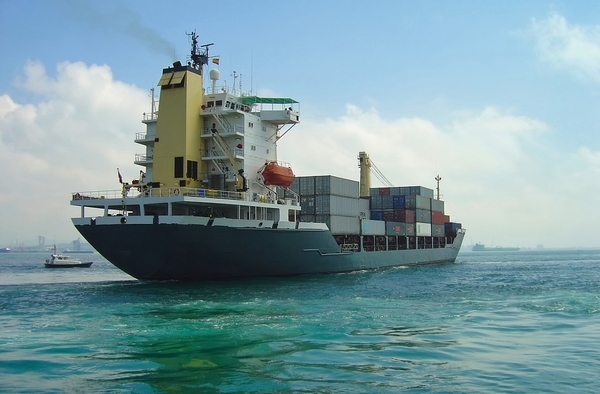
On March 28, 2011, the European Commission published a new White Paper on transport titled Roadmap to a Single European Transport Area – Towards a competitive and resource efficient transport system.
According to the provisions of this document, the role of maritime transport is set to increase further in the future, as it is one of the sectors that generates the lowest external costs (per unit of transport work). However, it is crucial that maritime transport is entirely powered by fuels derived from crude oil refining, the vast majority of which is imported from outside the EU. Furthermore, this is a very limited resource. Therefore, it is necessary to seek new, innovative solutions that will allow for the reduction of fuel consumption and, consequently, the emission of greenhouse gases and other pollutants into the atmosphere, which is the goal of this article.
The importance of maritime transport in the EU transport system
Maritime transport is a key mode of transport in the EU. In 2009, this mode of transport accounted for as much as 1,336 billion tkm, which represents 36.8% of the total transport work performed by all modes of transport, and despite the decline in transport caused by the global crisis, it maintains a constant upward trend. Ports located on the EU coast handled 3,445.5 million tons of cargo. It is of particular importance for foreign trade conducted between European Union countries and their external partners. In 2009, a total of 1.47 billion tons of cargo (72.7% of total tonnage) worth as much as 1.12 trillion euros (48.7%) were transported via imports and exports. Maritime transport is a mode of transport that causes relatively low external costs. The main components of these costs in the case of this mode of transport are air pollution and climate change. Noise costs, land occupancy (although often very extensive, it is only point infrastructure – ports), and accident costs, which have decreased significantly due to numerous initiatives and actions taken over the last decades, play a much smaller role.
Research conducted by experts from the University of Karlsruhe and the Swiss research center IWW indicates that maritime transport generates external costs totaling 22.5 euros/1000 tkm. This is significantly less than in the case of road transport – 87.8 euros/1000 tkm and air transport – as much as 271.3 euros/1000 tkm. (…)
The article contains 19,921 characters.
Source: Logistyka Magazine 5/2012
Selected methods of reducing fuel consumption in maritime transport – PDF file for download