









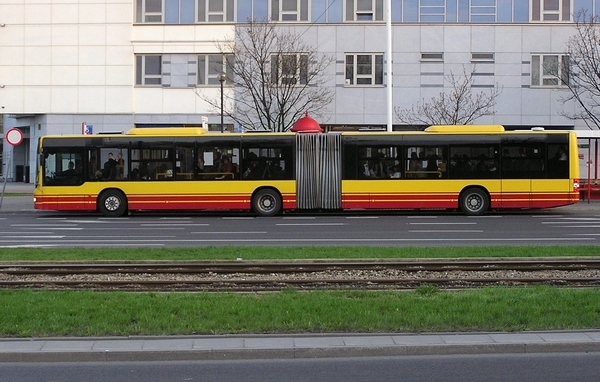
Transport is one of the most important factors determining the economic development of a country. Modern logistics infrastructure and an efficiently functioning transport system foster the economic growth of Poland’s strong centers. This infrastructure strengthens the social, economic, and spatial cohesion of the country and contributes to enhancing the competitiveness of the Polish economy.
A transport system can create development impulses in the economy, provided it is capable of meeting:
– the challenge of increasing the accessibility of transport services,
– the challenge of reducing transport costs and time, while simultaneously improving energy efficiency and lowering unit emission indicators,
– the need for the development of inter- and multimodality,
– other user expectations.
Looking at public passenger transport through the prism of sustainable development allows for taking care of all aspects of human life, i.e., a friendly economy, the natural environment, and safety. It also allows for a holistic consideration of important issues in the area of transport, of which humans are the users.
The main goal of national transport policy is to increase territorial accessibility and improve the safety of road users and the efficiency of the transport sector by creating a coherent, sustainable, and friendly transport system at the national (local) and European level. These assumptions are in line with the goals of the medium-term planning document developed in January 2013, the “Transport Development Strategy until 2020”, the essence of which is to indicate goals and outline directions for transport development. This strategy takes into account the goals and priority directions of actions identified in strategic national and EU documents, including, among others, the “Strategy for smart, sustainable and inclusive growth >>Europe 2020<<", as well as the "National Reform Program (NRP) for the implementation of the >>Europe 2020<< Strategy". Efficient and effective transport management in urban logistics results in better utilization of the economic potential of regions. Public passenger transport services, and thus the goals of evaluating them in the aspect of sustainable development, can be considered from the point of view of:
– public passenger transport users, e.g.:
- passengers in public transport,
- parents and guardians of children and youth commuting to schools via organized transport for educational purposes,
- tourists during excursion trips,
- other people during occasional trips and those related to healthcare and treatment,
- drivers during the performance of transport tasks for people and goods,
- organizers of mass events,
– principals, including, among others:
- state administration and local governments in the scope of organizing urban passenger transport,
- educational and tourism organizations in the scope of excursion trips,
- institutions in the healthcare sector (transport services related to healthcare and treatment),
- legal and natural persons commissioning the transport of goods and people,
– transport companies carrying out transport tasks in the area of public passenger transport,
– independent evaluation bodies (e.g., Transport Technical Supervision, certification bodies).
The article contains 18,940 characters.
Source: Logistyka Magazine
Szwiderski_Wybrane_aspekty_jakosci_publicznego_transportu_pasazerskiego.pdf