








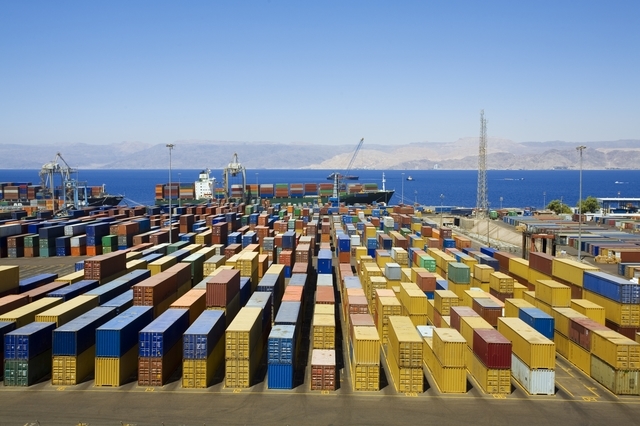
The purpose of this publication is to indicate the directions for the development of transport, transshipment, and cargo storage techniques in the European transport system, as well as preferred land-sea intermodal transport chains in intermodally integrated transport systems, and to define the conditions that must be met for traditional transport chains to be replaced by intermodal ones.
Cargo transport, as well as other activities carried out in transport processes, are possible thanks to the application of specific technical solutions in the construction and operation of transport means, warehouses, transshipment equipment, and transport infrastructure. Technical solutions, combined with organizational, commercial, and operational ones, create a transport process that often takes the form of fixed transport chains. In the European transport system, we distinguish between land and land-sea, traditional and intermodal transport chains. The latter use intermodal and combined transport techniques, and the cargo is moved in intermodal transport units (ITU). The organizers of such chains are multimodal transport operators. In Europe, there is a continuous increase in cargo transport within the multimodal system.
The material presents a number of conclusions resulting from the author’s previous professional experience and research conducted as part of a research project funded by the National Centre for Research and Development titled “Research and modeling of an intermodally integrated transport system in the West Pomeranian region, with particular emphasis on the Central European North-South Transport Corridor,” carried out by employees of the Department of Organization and Management at the Maritime University of Szczecin under the direction of Dr. hab. Czesława Christowa, prof. AM in Szczecin.
Technical, organizational, and commercial aspects determining the development of land-sea intermodal transport chains
Technical solutions regarding movement, transshipment, and storage depend on the type of cargo and the method of its transport. An example of possible supply process solutions could be the transport of wine. In the case of internal European deliveries, its transport is carried out primarily by trucks, where the loading of bottled wine in crates or cartons takes place at the point of origin, and unloading at the final delivery point is done using forklifts from/to the warehouse via loading and unloading ramps. Transport in this form classifies wine as general cargo. (…)
The article contains 40,917 characters.
Source: Logistyka Magazine 5/2012