








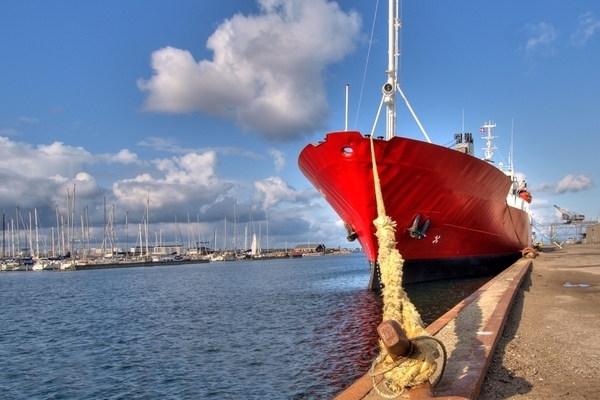
According to the definition adopted by the European Union, a port is considered a place equipped with infrastructure enabling commercial vessels to moor, load, and unload, and passengers to board or disembark from a vessel. According to the modern definition, a seaport constitutes: “a logistics and economic hub in the global transport system with a strong maritime character, where functionally and spatially diverse activities directly or indirectly related to logistics chains, of which land-sea transport chains remain a part, are concentrated”.
From a technical and economic point of view, ports are communication hubs acting as a link between maritime and land transport. At the same time, they are also complex economic organisms that, beyond their main transport function, perform commercial, industrial, logistics-distribution, as well as city-forming and region-forming functions. The strategic importance of ports in international trade and transport stems mainly from the fact that they constitute the starting and ending points of maritime transport, an important link in land-sea transport chains, which can handle the largest volume of cargo at one time. As multimodal transport hubs, seaports also serve as starting and destination points for rail, road, and river transport, participating in the transport service of ports and the carriage of goods for global foreign trade and transit. Seaports are growth poles and the primary economic organisms of coastal cities and regions. They are a convenient location for various economic activities, including industrial ones, which necessitates the concentration of cargo in their territories. A port also acts as a publicly accessible center of information about cargo, means of transport, the port’s handling potential, and possibilities for transporting cargo to/from the port. Consequently, the development of port functions is a determinant of the development of coastal cities and regions. Seaports and water transport (maritime and inland) are the most important elements of the logistics chain in international trade. The observed dynamic growth in the volume of world trade provides a stable basis for the development of ports and maritime transport. In theory and practice, large seaports with handling volumes of over 1.5 million tons are identified with international logistics centers.
Seaports are an area (water and land) where capital, technical potential (port infrastructure and superstructure), knowledge, information, innovation, qualified personnel, and companies in the Transport, Forwarding, and Logistics (TSL) sector are concentrated, providing comprehensive services to people, means of transport, and cargo of national foreign trade and transit. The most important services provided in ports include: cargo handling in specific relations and using appropriate technologies, storage, handling, intra-port transport, expert and inspection activities, forwarding, piloting, towing and mooring of vessels, supplying vessels with fuel, water, stowage materials and electricity, repairs, leasing of quays with equipment, and logistics-distribution services.
Seaports of European Union countries, alongside their transport, commercial, industrial, city-forming, and region-forming functions, have for many years also performed logistics-distribution functions. Poland, by implementing the EU’s transport and maritime policy, is obliged to implement the concept of building technical infrastructure for port logistics centers as an element of the national logistics system.
Logistics centers are the missing link in the Polish transport system. In Polish seaports, there is an urgent need and appropriate conditions for organizing logistics centers. Port logistics centers will constitute an element of the European and Polish logistics system, increasing the competitiveness of Polish ports. In accordance with the EU’s transport and maritime policy, and primarily to increase competitiveness, Polish seaports formulate their missions or strategic goals as a pursuit of development towards a multimodal logistics-distribution center.
The article contains 16,900 characters.
Source: Logistyka Magazine 4/2012.