









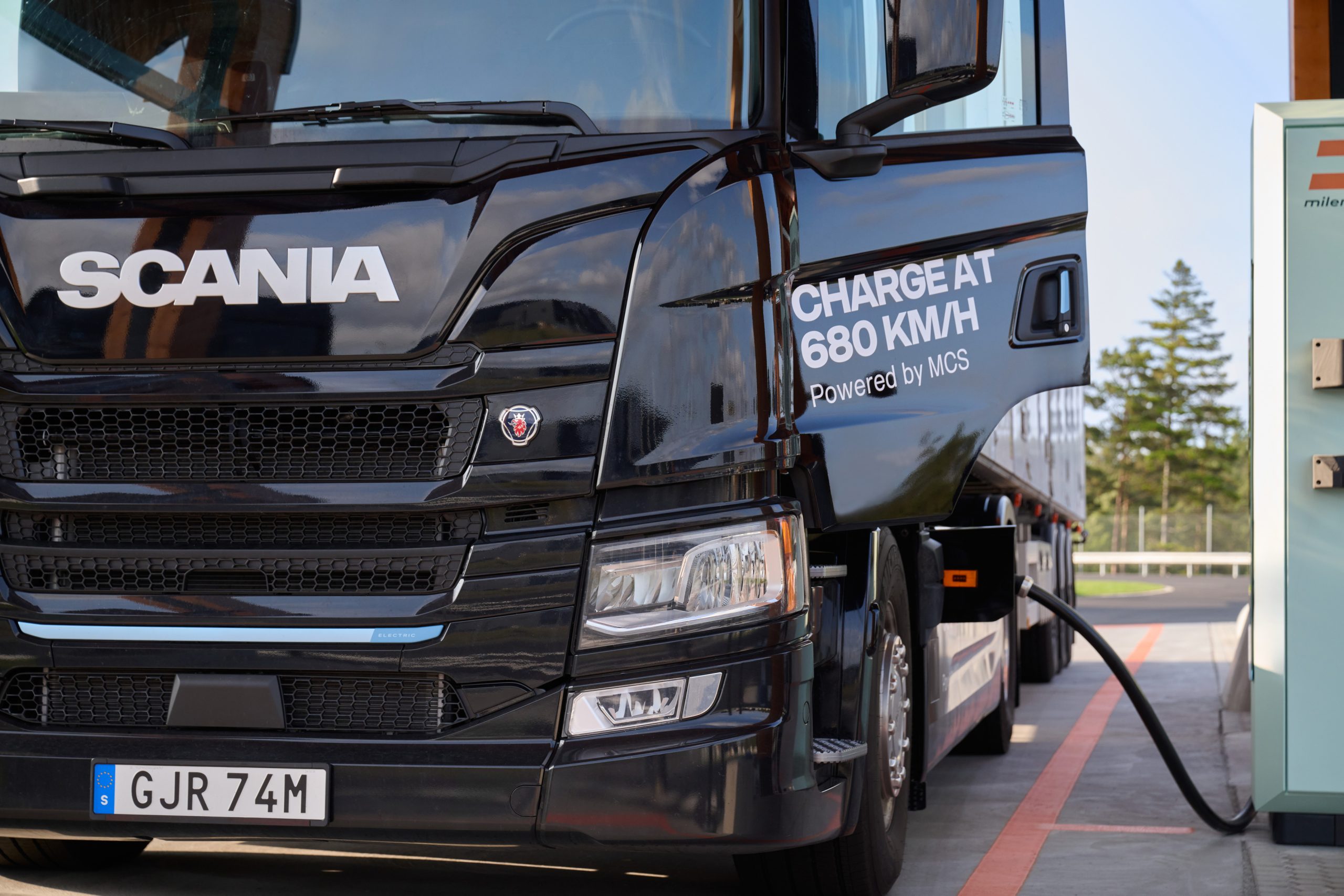
Scania, as one of the first companies in the world, has introduced vehicle-to-grid (V2G) technology—bidirectional cooperation between a vehicle and the power grid—in heavy commercial vehicles. This was made possible by utilizing the Megawatt Charging System (MCS). This is an important step toward integrating heavy electric transport with the broader energy system.
Vehicle-to-grid technology enables not only charging the vehicle’s battery with energy from the grid but also—under the right conditions—discharging energy from the vehicle’s battery back into the power grid or a local energy management system.
This solution demonstrates that electric heavy-duty vehicles can do more than just transport goods. Thanks to bidirectional charging, they can also support the power grid by providing flexible services such as peak load shaving, grid balancing, and energy storage.
As the electrification of heavy transport grows, so does the demand for flexibility in energy systems. Charging heavy vehicles on a large scale places new demands on local grids and power infrastructure. At the same time, electric heavy-duty vehicles can serve as mobile energy storage units.
Utilizing bidirectional energy transfer at transport depots can also increase the use of locally produced energy from renewable sources, such as photovoltaic installations. Simultaneously, it provides greater flexibility regarding grid connection and energy management.
Electric heavy-duty vehicles will not just consume electricity. They can also become an active asset in the energy system. This shift means that the role of a fleet operator extends beyond providing transport services to also include providing energy flexibility.
– says Tobias Ejderhamn, Global Manager for Transformation and New Business Development at Scania.
The demonstration was conducted using the Megawatt Charging System (MCS), a new generation of ultra-fast charging technology currently being introduced for electric heavy-duty vehicles. MCS is expected to play a significant role in the development of long-haul electric transport and future energy services, such as vehicle-to-grid technology.
The system enables secure, real-time communication between the heavy-duty vehicle, the charger, and energy management systems. This allows battery charging and discharging to be dynamically controlled based on transport needs and power grid conditions.
The significance of this solution stems not only from the bidirectional energy flow itself but also from the ability to combine megawatt charging with intelligent energy management. To our knowledge, this is one of the world’s first demonstrations of vehicle-to-grid functionality using MCS in heavy commercial vehicles. The vehicle, charger, and energy system can communicate with each other in real time, creating the foundation for heavy electric vehicles to become active and manageable assets of the energy system.
– says Yorben Muller, Product Manager for Charging at Scania.
The ability to combine high-power charging with intelligent and secure energy management can also positively impact the business case for owning electric vehicles. It creates new opportunities for optimizing energy consumption and reducing operating costs for fleet operators.
– adds Tobias Ejderhamn.
The presented solution includes:
- bidirectional charging and discharging via the Megawatt Charging System (MCS),
- advanced real-time communication between the vehicle, charger, and energy management systems,
- energy management controlled via IT support systems,
- integration with external charging and energy management systems,
- bidirectional energy flow through the charging interface, known as Electric Vehicle Supply Equipment (EVSE).
Enabling heavy-duty vehicles to communicate with the energy system can allow fleet operators to:
- reduce energy costs,
- support grid stability,
- optimize energy consumption at the transport depot,
- better utilize locally generated renewable energy,
- participate in future markets for flexibility and energy balancing services.
This technology also creates opportunities for charging point operators and energy suppliers, allowing them to more effectively utilize charging infrastructure and available local grid capacity.
By creating additional value streams associated with electric heavy-duty vehicles and charging infrastructure, vehicle-to-grid technology can also support the faster adoption of electric transport.
Initially, the technology will likely be most relevant in charging environments at transport depots, where vehicles remain parked for longer periods and charging can be coordinated with energy demand and grid conditions.
Key facts
- Vehicle-to-grid technology enables the flow of electricity both into the vehicle’s battery and from the vehicle’s battery back to the grid or a local energy management system.
- The Megawatt Charging System (MCS) is designed for charging heavy commercial vehicles at the megawatt level.
- The configuration presented by Scania achieved up to 1000 A / 750 kW.
- This is one of the world’s first demonstrations of bidirectional energy transfer via MCS in heavy-duty vehicles.
- The system enables secure and advanced communication between the vehicle and the charging infrastructure.
- The presented solution supports both charging and discharging through the same charging interface.
- The concept is designed to support energy flexibility services, such as peak load shaving and frequency stabilization.
Source: Scania Polska S.A.