









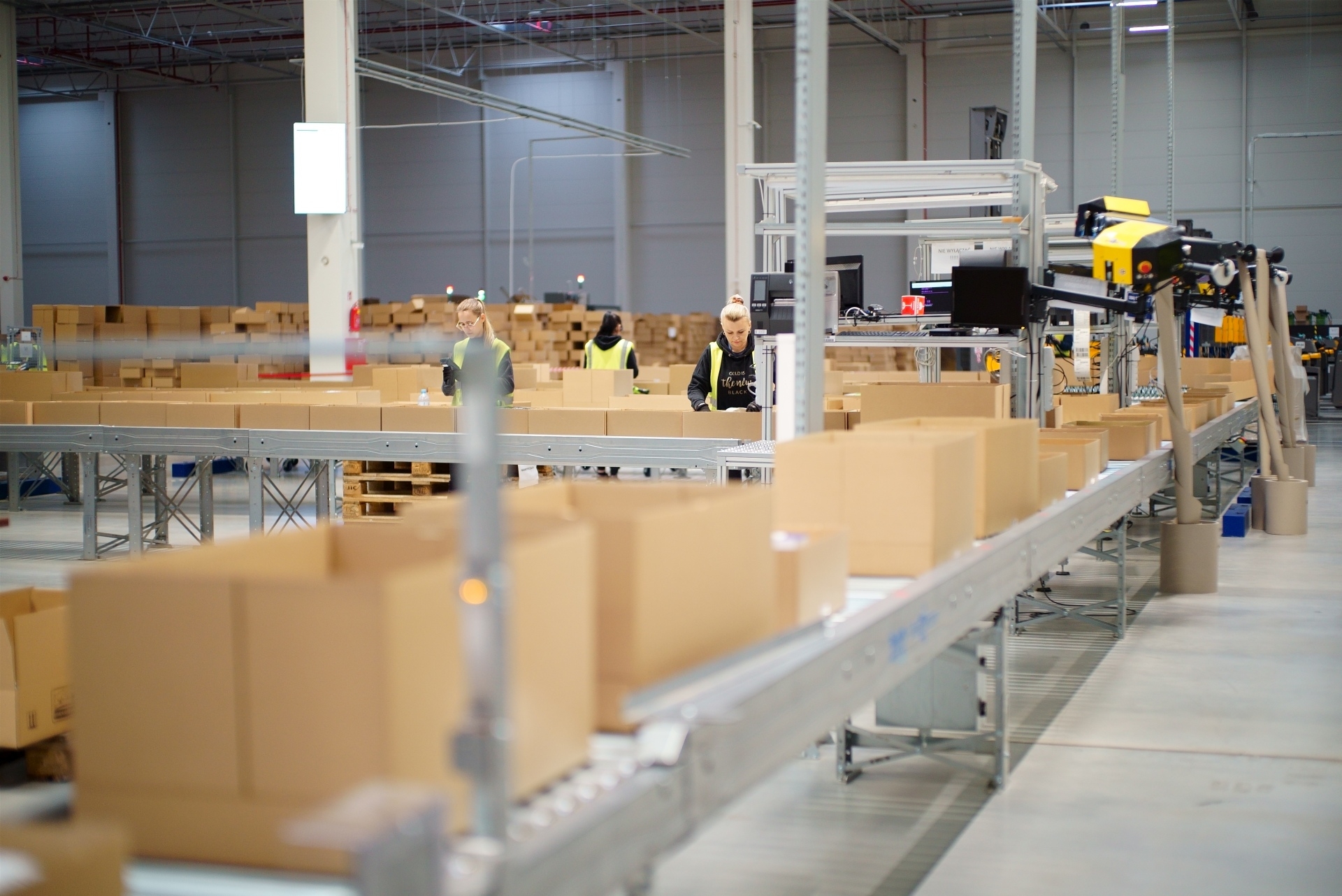
The end of every year is a time of intense sales growth, especially during periods such as Black Friday, St. Nicholas Day, or the days leading up to Christmas. It is also a major logistical challenge for which manufacturers and retailers begin preparing as early as the summer. In the face of rising consumer expectations, delivery speed has become a key element that can determine the choice of a particular retailer. Reports indicate that 60 percent of Polish consumers consider delivery time an important purchasing factor, and companies that properly manage their supply chains are able not only to meet growing demand but also to minimize costs. How can companies optimize their operations during peak sales moments by managing warehouse space, human resources, and risk?
Fast delivery is not only a consumer expectation but also an element that can provide a competitive advantage in retail. Data from Gemius[1] shows that over 60 percent of Poles consider delivery time one of the key elements when shopping online. Order fulfillment speed is becoming crucial for both online stores and traditional retailers that combine offline channels with e-commerce. Suppliers who can ensure lightning-fast shipments gain customer loyalty.
Deloitte research[2] confirms that during peak periods, such as retail holidays at the end of the year, sales of products like electronics, fashion, or groceries can increase by 30-50 percent, and companies that organize their logistics properly can not only meet demand but also stand out from the competition.
Flexibility and risk management in logistics
In the face of economic uncertainty, rising raw material costs, and demand volatility, logistics has become a key tool in risk management. Modern companies must not only manage inventory effectively but also skillfully adapt their operations to changing demand during periods of intense sales.
Operational flexibility is the foundation that allows companies to react to changing market conditions. During peak periods, such as Black Friday or Christmas, when demand for specific products increases by several dozen percent, companies must have the ability to adjust their logistical resources to dynamic sales growth. Cooperation with a professional logistics operator gives companies the ability to flexibly manage warehouse space and necessary staff, including temporary workers, which allows for a faster response to demand fluctuations.
– says Mariusz Jóźwik, Senior Business Development Director Field Sales at FM Logistic.
Flexibility in logistics also means the ability to quickly modify operational strategies in response to sudden sales spikes, which becomes crucial in the face of changing market conditions. Predictability and optimization of delivery processes are elements that allow companies not only to react to changing demand but also to effectively manage costs.
Leveraging economies of scale in operations management
One of the more effective solutions during peak sales periods are multi-client platforms and coordinated actions that provide more warehouse space exactly when it is needed most. Sharing resources, such as warehouse space or personnel, allows for the optimization of operations and faster adaptation to changing market conditions. Economies of scale also enable the reduction of operating costs while simultaneously increasing efficiency.
A good example of how to effectively coordinate activities for clients and manage shared space is provided by our platforms in Będzin, Olszowa, and Niepołomice. Each of them has its own specifics, but thanks to joint management, they function as one organism, which allows us to react quickly to volume spikes and current market demand. Thanks to this flexibility, we are able to adjust warehouse space on an ongoing basis and effectively perform additional services, such as co-manufacturing or omnichannel.
– says Mariusz Jóźwik from FM Logistic.
Managing operations within various types of platforms, including multi-client ones, allows for the dynamic allocation of resources depending on needs, which is of key importance during periods of increased demand. Temporary workers can be directed to places where the greatest demand for their work is anticipated. Warehouse space is used optimally, which allows for avoiding congestion and delays in order fulfillment.
Warehouse space optimization – a key element of preparation
Reserving the appropriate warehouse space for winter sales peaks should take place much earlier. Most often, this happens as early as the summer months. Thanks to logistics planned well in advance, manufacturers can avoid unpleasant surprises during their busiest period. Actions taken now help in the smooth fulfillment of orders and the maintenance of operational efficiency at the end of the year.
Companies that start planning logistics before sales peaks can avoid problems related to a lack of warehouse space and delivery delays. Moreover, thanks to flexible management and advance planning, they can secure and stabilize supply during periods of the highest sales peaks. Shared space is therefore also an excellent solution for companies looking for warehouses for so-called buffer stock.
– adds Mariusz Jóźwik from FM Logistic.
Data from the “Logistics in Poland 2024” report shows that 30 percent of e-commerce companies reserve warehouse space for the pre-Christmas period as early as the third quarter. For those involved in traditional retail, reserving warehouse space for sales peaks is becoming a necessity to avoid problems related to a lack of space and delays.
[1] https://gemius.com/pl/news/zakupy-zagraniczne-produkty-uzywane-i-platnosci-blikiem-raport-e-commerce-w-polsce-2024/
[2] Deloitte, “Global Retail & Consumer Products – The Holiday Shopping Season 2024”
Source: FM Logistic Central Europe