








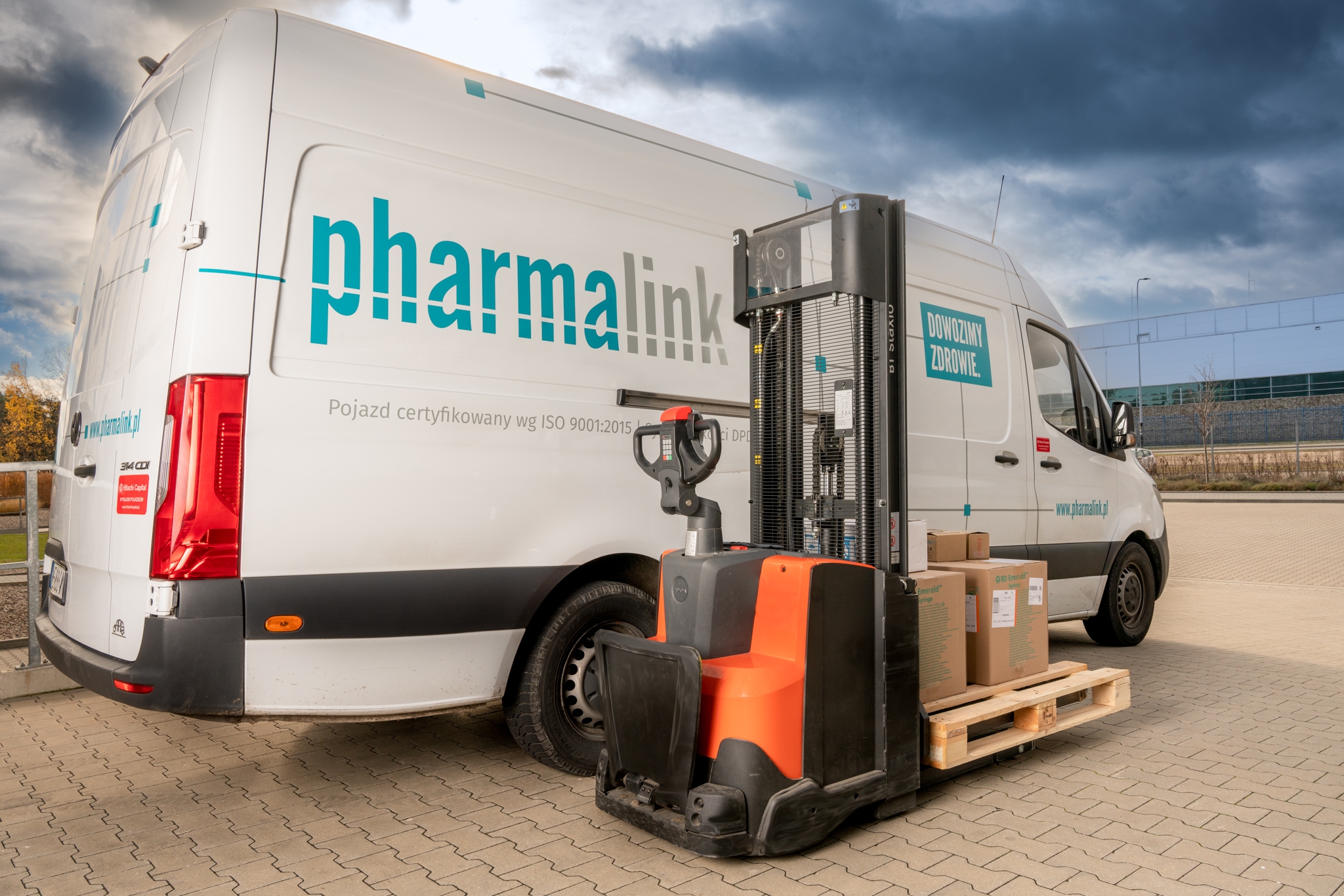
Transporting medications is one of the greatest challenges in logistics, especially for companies that do not have their own extensive transport fleet. Investing in purchasing vehicles, training drivers, and maintaining equipment is costly, and the requirements and regulations regarding the transport of pharmaceuticals can cause many difficulties.
An alternative to self-investment is using the services of a logistics company to which the task of transporting medicines is fully entrusted. So, what is the difference between the two methods of transport, and what benefits does outsourcing transport services bring to a pharmaceutical company?
Under what conditions should medicines be transported?
Many medications require storage and transport at a specific temperature or humidity, as well as specialized conditions for protection against light and vibrations to maintain stability and efficacy. A manufacturer deciding to transport pharmaceuticals on their own must therefore properly ensure the security of the transport, which in the case of limited-scale distribution usually means using thermal insulation packaging with cooling inserts (the so-called passive cold chain). A similar form of protection, although cost-effective, involves a large amount of work required to prepare the shipment, as well as low control over the temperature, which creates a risk of freezing or overheating the medicines.
A much more reliable transport method is guaranteed by handing over the pharmaceuticals to a logistics operator that has the infrastructure and vehicles to maintain a constant, evenly distributed temperature at every stage of transport: a warehouse equipped with a cold store, a system of properly equipped transshipment chambers, and a fleet of vehicles with cooling units (the so-called active cold chain). Moreover, in addition to increased safety, outsourcing transport services provides the manufacturer with savings in time and labor – the pharmaceutical company only needs to pack its goods in standard packaging and hand them over to a specialized carrier, which will deliver the shipment as part of an active supply chain to a cross-dock or directly to the end recipient.
– The key is the fleet, i.e., vehicles equipped with modern refrigeration systems and specialized technical security features, including temperature monitoring systems. All this to guarantee that the transported medicines are stored in appropriate conditions without exposing them to the loss of their physical and chemical properties – explains Daniel Charucki, Transport Manager at the logistics company Pharmalink.
What legal regulations cover the transport of pharmaceuticals?
The pharmaceutical industry is one of the most strictly regulated sectors of the economy due to public safety and health – the transport of medications is subject to many regulations and guidelines regarding safety, hygiene, and quality, aimed at ensuring that medicines are delivered in a sterile manner that takes into account their intended use. Investing in your own transport therefore requires the manufacturer to meticulously read and understand the applicable restrictions, which allows for avoiding potential image and legal problems caused by exceeding them. Furthermore, it imposes on the manufacturer the necessity of properly training employees in procedures related to regulatory compliance, hygiene, and safety.
Logistics operators specializing in the transport of pharmaceuticals must hold certificates and accreditations confirming their ability to meet industry requirements, and they are also often subject to audits and inspections by authorities to confirm the compliance of their operations with the law. Thus, entrusting the transport of medicines to a specialized transport company relieves the manufacturer of the time-consuming and costly process of training employees, while simultaneously guaranteeing safe and legal distribution of medications.
– A pharmaceutical logistics company must operate in accordance with GDP and ISO standards to give customers the certainty that the entrusted goods will be properly secured and delivered to the destination. The location and status of the shipment must be monitored in order to be able to precisely track and document every stage of transport – explains Sylwia Baranowska-Skoneczna, Manager of the Pharmalink Pharmaceutical Warehouse.
What should be taken into account when organizing the transport of medications?
Finally, the process of transporting pharmaceuticals consists not only of securing and transporting goods, but also of activities related to organizing documentation, picking shipments, storing samples, accounting, monitoring receivables and debt collection, or customer service. A manufacturer planning to organize the transport of medicines on their own should therefore properly allocate their resources to be able to properly address each stage of transport. Moreover, with such a complex process, they must also reckon with the risk of a crisis and develop appropriate response schemes to guarantee the uninterrupted continuity of their product’s supply.
Unlike organizing one’s own transport, the operation of specialized transport companies is based on extensive logistics networks, allowing on one hand for effective management of routes, capacities, and deliveries, and on the other for quick reactions to potential problems, such as delays, weather changes, or vehicle breakdowns. Thanks to this, outsourcing the transport of pharmaceuticals provides the manufacturer with a reduction in unit costs, as well as minimizing the negative effects on medicine deliveries in the event of a crisis.
– In the pharma-logistics industry, it is crucial to be prepared for potential crisis situations that may affect the safety of the transported medicines. That is why every company should have developed emergency procedures and action plans. We have such procedures – in case of crisis situations, they allow us to quickly inform all interested parties and take corrective actions to ensure the safety of products and the continuity of deliveries – emphasizes Daniel Charucki, an expert at Pharmalink.
Source: Pharmalink