









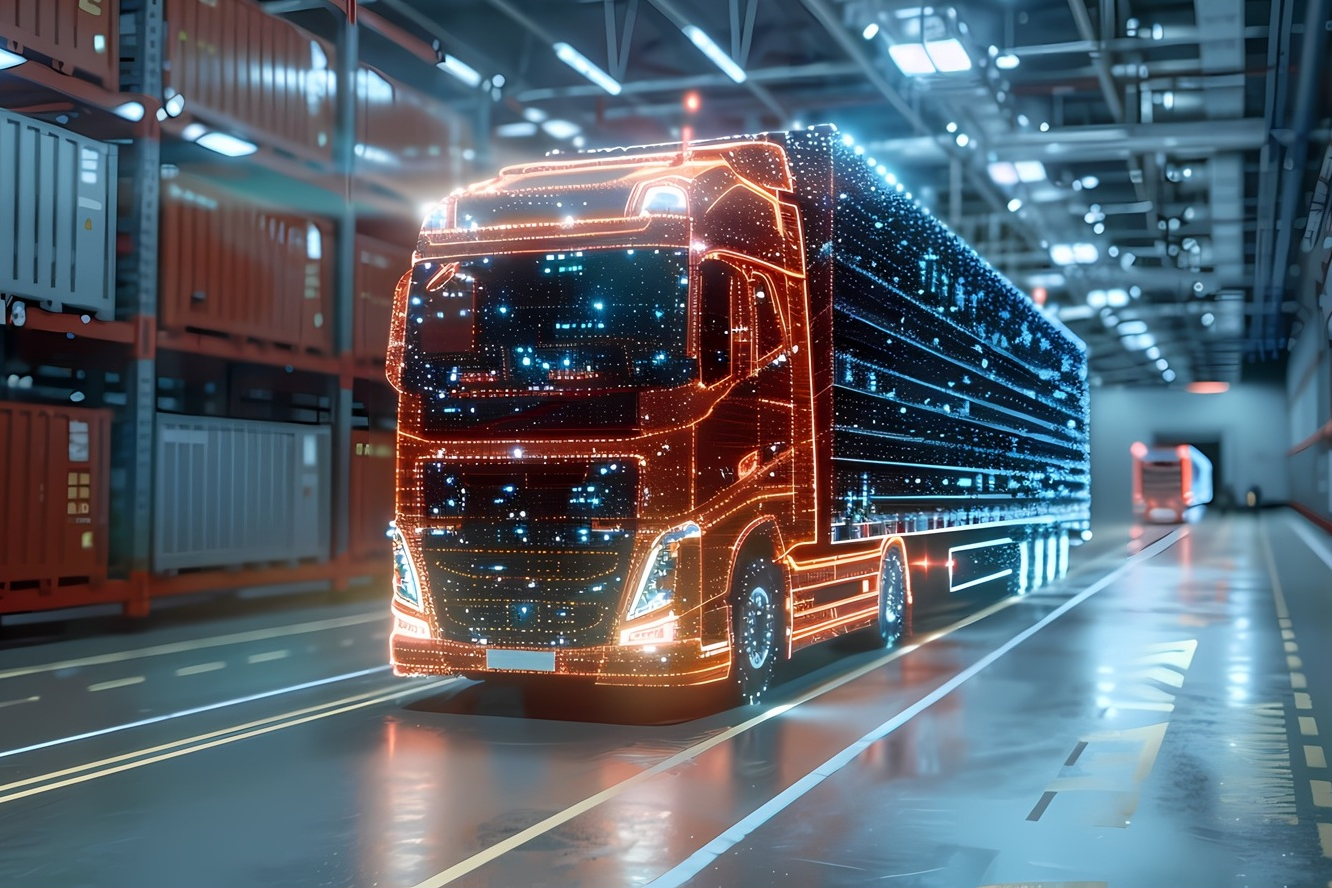
The transport and logistics industry is entering a new phase of development, in which decision-making and prediction are replacing the traditional management of transport operations using telematics data. According to experts at ALEET, a developer of AI-based transport solutions, we are entering the era of DTS – Digital Twin Systems, i.e., digital twins of fleets and transport operations. This is confirmed by analyses from McKinsey & Company[1], which indicate that companies using AI-based digital twins achieve up to a 30 percent improvement in operational efficiency, reducing costs of warehousing, transport, and inventory maintenance.
McKinsey’s findings clearly show the direction we have been observing for several years in our work with transport companies. A digital twin is no longer just a technological curiosity or an add-on to existing ERP or TMS systems. It is increasingly becoming a decision-making layer that allows not only for data analysis but, above all, for predicting the consequences of operational decisions before they are implemented in reality – says Dr. Katarzyna Marczuk, CEO and founder of ALEET. – For years, the market has been optimizing the flow of information. TMS systems organized orders, planning, and documentation. But modern transport and logistics need more than just process registration. They need the ability to predict, simulate, and react autonomously. That is why we are talking today about the end of the TMS era and the beginning of the DTS era.
– emphasizes Dr. Katarzyna Marczuk.
According to McKinsey, companies implementing digital twin solutions across the entire supply chain can achieve measurable business results: from reducing transport and inventory costs to improving customer service levels. However, from ALEET’s perspective, the most important change is not just about savings. The key is that a Digital Twin System changes the way decisions are made in transport organizations. A classic TMS organizes information about what has been planned and executed. DTS goes a step further, helping to answer the question – what might happen next and which course of action will be best from the perspective of the entire operation?
According to ALEET experts, the key is that a Digital Twin System (DTS) changes the way transport organizations operate. TMS answers the question “what happened”. DTS answers the question “what will happen next and how best to react to it”.
A digital twin of a fleet creates a virtual image of the entire transport operation, i.e., vehicles, drivers, routes, infrastructure constraints, or telematics data. The system not only analyzes historical data but constantly creates future operational scenarios.
In practice, DTS allows you to see a problem before it becomes a real operational cost. The system can predict the impact of a delay, vehicle breakdown, change in driver availability, or traffic jam on the entire transport network, i.e., punctuality, costs, and fleet utilization. This is a fundamental difference compared to a classic TMS. A digital twin not only shows the state of operations but allows you to compare possible scenarios and choose the best operational decision.
– explains Dr. Katarzyna Marczuk.
McKinsey points out that digital twins bring particular value in environments with high volatility and a high level of operational complexity. ALEET experts believe that the greatest transformation is yet to come and will primarily cover road transport and fleet management.
For years, transport companies operated in a reactive model. Planning was based on the experience of dispatchers, historical data, and static schedules. Meanwhile, modern fleet operations function in conditions of permanent volatility – dynamic route changes, driver shortages, infrastructure disruptions, new climate regulations, time constraints, or growing customer expectations require a completely new technological approach.
– lists the ALEET representative.
In the opinion of ALEET experts, the traditional architecture of transport systems is no longer meeting market needs.
The transport industry has been buying subsequent modules for years, such as telematics, fuel monitoring, planning, ETA, visibility, etc. The problem is that these systems function alongside each other and show fragments of reality. As a result, the organization had more and more data, but not necessarily a better picture of the entire operation. DTS integrates all operational layers into one living model of the organization. This is not just another piece of software. It is a new predictive system for managing transport operations.
– explains Dr. Katarzyna Marczuk.
This means a transition from looking at historical data to actively supporting operational decisions. DTS can simulate the impact of traffic jams, vehicle breakdowns, loading delays, and how this affects the entire transport network, and recommend the best course of action. The more data that flows into the system, the more accurate the forecasts and recommendations become. According to ALEET experts, this is the greatest technological change in transport since the popularization of ERP and TMS systems.
Soon, we will not be asking – do you have a TMS, but how advanced is your DTS? Companies that stick only to classic transport management systems will start losing out in terms of reaction speed, cost efficiency, and the quality of operational decisions. DTS will become one of the new standards of competitiveness.
– assesses Dr. Katarzyna Marczuk, CEO of ALEET.
The growing interest in digital twin solutions is also part of a broader trend of building resilient and flexible supply chains. In conditions of geopolitical and economic instability, the ability to test disruption scenarios before they occur becomes a strategic business advantage. Therefore, according to ALEET experts, the transformation from TMS to DTS is no longer a question of the future, but of the pace of adaptation.
[1] https://www.mckinsey.com/capabilities/tech-and-ai/our-insights/tech-forward/digital-twins-and-generative-ai-a-powerful-pairing
Source: Aleet