








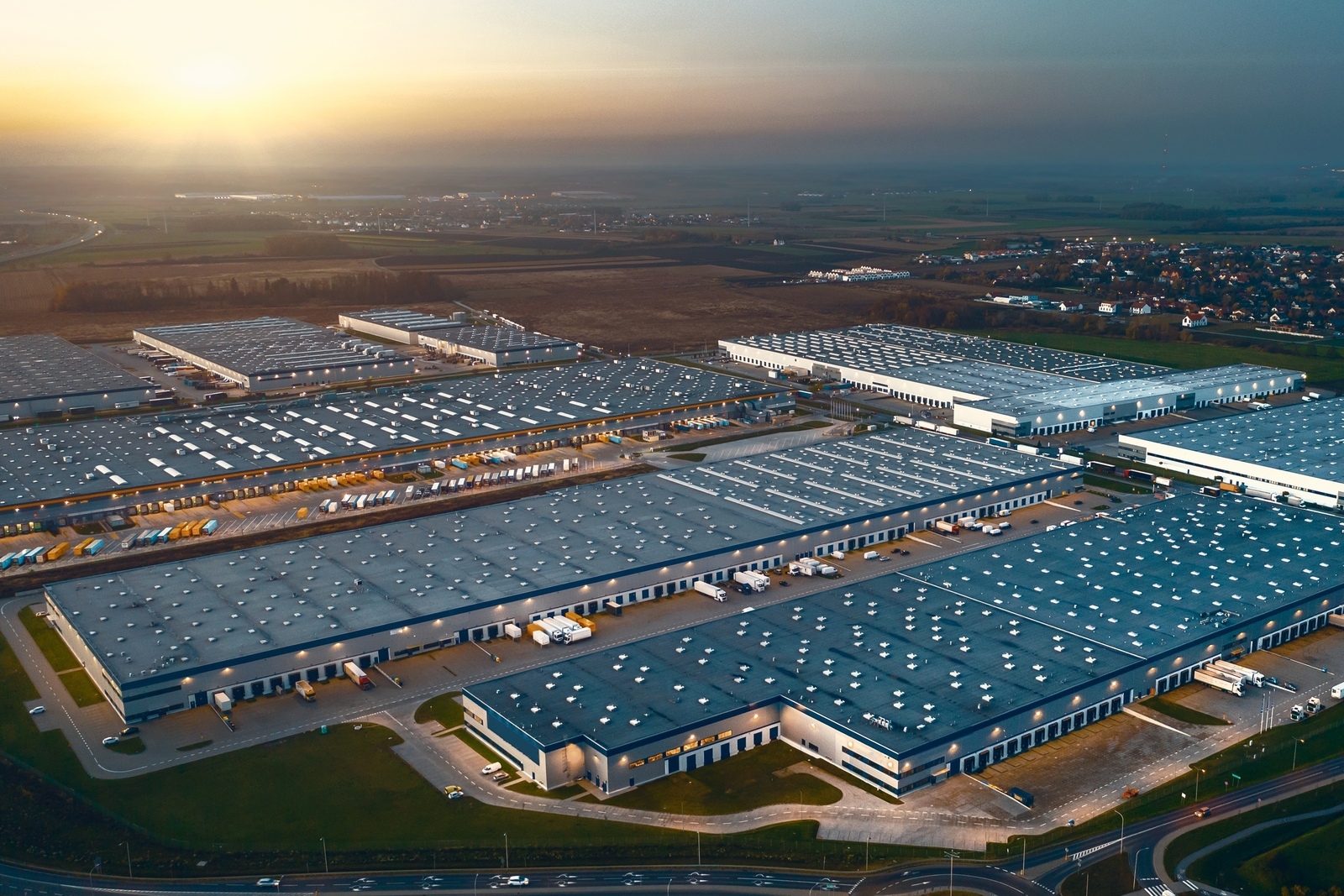
As shown in the Q3 2024 report “At a Glance. Industrial and logistics space market in Poland” by BNP Paribas Real Estate Poland, the sector is stabilizing after the intense changes of recent years, and there are signs pointing to its further development. In the third quarter of 2024, the market remained stable, with no drastic changes in supply, demand, or the vacancy rate.
Economic factors and sector development
The rise in core inflation to 4.9% at the end of September compared to the previous year and a 3% year-on-year decline in retail sales (according to Statistics Poland) have affected the e-commerce sector, which, alongside logistics, is a key tenant of warehouses. This impacts the situation of the industrial and logistics market.
– Developers of industrial and logistics space remain cautious regarding speculative investments, focusing mainly on projects where they already have partially contracted tenants. The total stock of projects under construction at the end of September reached 1.94 million sqm, of which more than half of the space (53%) is already secured by lease agreements – points out Martyna Kajka, Director, Industrial and Logistics Department, BNP Paribas Real Estate Poland.
In the period from July to September 2024, the largest amount of industrial and logistics space under construction was located in the following zones: Lower Silesia (522,000 sqm), Warsaw II (308,000 sqm), and Upper Silesia (295,000 sqm).
As analysts show, despite challenges related to the global economic slowdown and a decline in the supply of new facilities, the Polish industrial and logistics space market shows great resilience. Factors such as the stabilization of the vacancy rate, growing demand, and Poland’s attractiveness as a destination for logistics and industry indicate further positive development of the sector.
Supply and vacancy rate
In the first three quarters of the year, 2.1 million sqm of new warehouse space was delivered, which represents a 33% year-on-year decrease. The most new space during this period was completed in the zones: Lower Silesia (373,000 sqm), Warsaw I & II (a total of 311,000 sqm), and the Tri-City (272,000 sqm). Meanwhile, the most new industrial and logistics space in Q3 was delivered in the zones: Central Poland (142,000 sqm), Upper Silesia (104,000 sqm), and Warsaw II (72,000 sqm).
As for the vacancy rate at the end of Q3, it stood at 8.0%, which is a decrease of 0.3 p.p. compared to the previous quarter and an increase of 0.2 p.p. relative to Q3 2023. The highest values were recorded in the West (21.2%), Warsaw I (11.2%), and Central Poland (11.2%) regions. The lowest levels of the indicator were noted in the Opole (2.5%), Szczecin (2.9%), and Krakow (4.0%) zones.
Who is leasing warehouse space in Poland?
As the BNP Paribas Real Estate Poland report indicates, warehouse space in Poland enjoys tenant interest. The results for gross take-up in the period from the beginning of the year to the end of September amount to over 3.8 million sqm, which indicates a 3% year-on-year increase. In Q3, the volume of lease transactions amounted to over 1.1 million sqm, which means a 34% decrease compared to the previous quarter. On the warehouse map of Poland in Q3, three regions dominated – Warsaw II, where tenants leased 301,000 sqm, Central Poland with 223,000 sqm, and Upper Silesia – 134,000 sqm.
The retail and e-commerce sector dominated the demand structure in the January-September period. It accounts for 24% of concluded contracts, while 3PL sector companies had a slightly smaller share of 23%. Interesting transactions in Q3 include the launch by Amazon of a new logistics center in Gorzyczki, with an area of 211,000 sqm, which has already joined the company’s 10 existing facilities in Poland. New tenants are also appearing on the domestic market. Notino, a European e-retailer of cosmetics and health products, launched its first warehouse in Gołuchów, near Łódź. Meanwhile, in the town of Stary Konik, right at the eastern border of Warsaw and the A2 motorway junction, the construction of a logistics center by GLP is underway. It will be the largest logistics building in Poland with a wooden roof structure.
High share of lease renewals
In the demand structure, the share of lease renewals is at a high level. In Q2 2024, it reached as much as 41%, which was 11 p.p. less than the share of new contracts in that period. In Q3, the share of renewals was 35%. Undoubtedly, in the current geopolitical and macroeconomic conditions, tenants of industrial and logistics space avoid speculative actions, trying to maximize the use of existing space, and if necessary, sublease part of it to optimize costs.
– The warehouse market has undergone significant changes since the outbreak of the war in Ukraine. Rents for industrial and logistics space, especially in the case of new facilities, have increased significantly, which resulted directly from rising warehouse construction costs and high investment financing costs. The increase in rents in some cases reached even double the previous rates, which meant that decisions about new locations were more thought-out. Thus, we currently observe a large share of renewals of existing lease agreements on the market. Tenants carefully calculate the costs of moving and relocating operations to a new facility, which very often results in staying in older buildings, but with lower rents – explains Robert Pawłowski, Director, Industrial and Logistics Department, BNP Paribas Real Estate Poland.
New market trend: re-commerce
The report’s authors point to the development of a new re-commerce sales sector, whose dynamic growth may also mean a new role for warehouses. Re-commerce, or the market for selling used products, can include various industries such as fashion, electronics, furniture, or sports equipment. The global value of this market, according to the “Offer-Up Recommerce Report,” will reach USD 275 billion in 2028. Amazon is already generating over a billion euros annually from revenue from the sale of used items.
Such a rapidly developing second-hand market will require completely new solutions. Space will be needed that can not only store goods but also sort them. The receiving area should be connected to a quality control zone, where items are checked, properly classified, and labeled. Such a facility must also necessarily include refurbishment zones, where it will be possible to repair, clean, or remove imperfections from goods.
Source: BNP Paribas Real Estate