








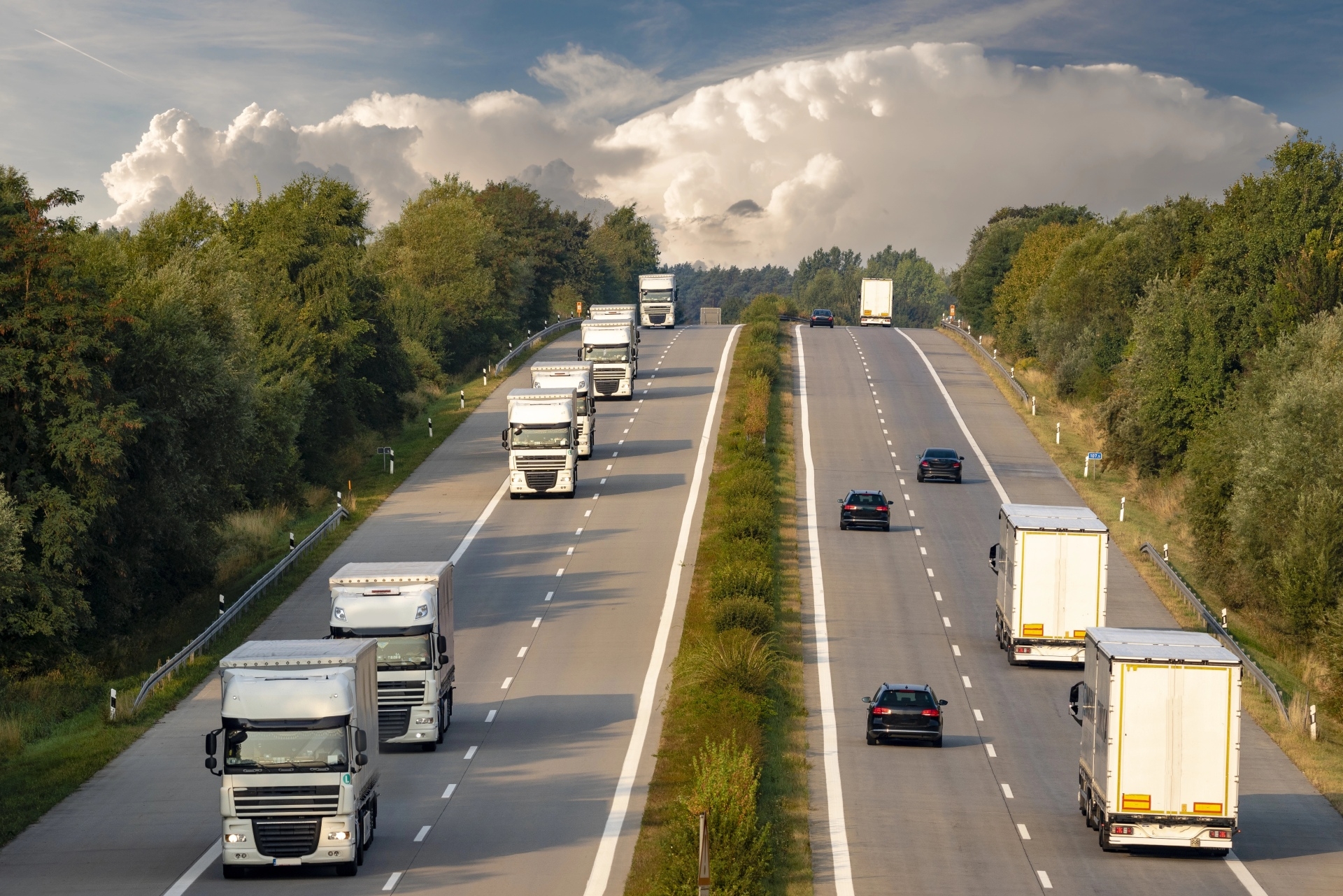
The latest information from Germany offers hope for an acceleration in the momentum of its economy. The projected GDP growth for Poland’s western neighbor is expected to reach 1.3 percent in 2026. Data from DSV – Global Transport and Logistics indicate that these forecasts are already being realized in actual trade, and the demand for road transport services to Germany increased significantly in the third quarter. This sudden surge in demand carries significant consequences for Polish companies.
The transport, forwarding, and logistics sector is the lifeblood of the modern economy. Its role is to ensure that the right goods, components, or raw materials reach the right places at the right time – from factories and ports to hypermarkets. What happens in supply chains can be one of the indicators of economic conditions.
Since September, we have observed a significant increase in the number of orders for road transport services. Comparing the current situation to the same period in 2024, in the case of DSV, we are talking about a clear, approximately twofold increase in interest. In my opinion, this is not a simple seasonal peak related to increasing stocks before the holiday period. Perhaps we are experiencing the first signs of a new, positive trend in the real economy. The key question remains unanswered for now: is this just a temporary rebound, or quite the opposite?
– points out Aristoteleis Liadis, Director of International Road Transport for the BENELUX&DACH cluster, DSV – Global Transport and Logistics.
The increase in demand coincides with the economic forecasts presented by the German government. On October 8, 2025, an upward revision of the GDP growth forecast was announced, estimating it at 0.3 percent in 2025 and 1.3 percent in 2026. These figures are confirmed by what is happening on the roads connecting Poland with its western neighbor.
The dark sides of the boom
It might seem that the current situation should be a cause for satisfaction for the Polish TSL industry, which has been waiting a very long time for a revival in international trade. However, the scale and suddenness of the growth have posed significant challenges for the sector. In recent years, many transport companies have undergone accelerated restructuring. Faced with rising labor and fuel costs and a decline in the number of qualified drivers willing to work – while simultaneously experiencing a drop in profitability – some of them decided to reduce their vehicle fleets by as much as 50 percent, and in some cases, to cease operations. As a result, the market is experiencing a mismatch between supply and demand, which translates into a significant increase in rates.
As a logistics operator, at DSV we have always prioritized entering into long-term cooperation agreements with fleet partners, precisely because of the predictability this model provides to our clients and fleet partners. Thanks to this, in a situation like the current one, we can guarantee our business partners access to cargo space and appropriate service quality. Companies that commission transport on an ad hoc basis or have not previously used long-term forms of cooperation with an operator or directly with a transport company are in a much more difficult situation. Spot rates have increased by several dozen percent since the summer of 2025, significantly increasing logistics costs for businesses.
– points out Aristoteleis Liadis.
Market constraints have caused not only costs to rise but also the estimated delivery times to lengthen – provided the exporter can even find a partner willing to undertake ad hoc cooperation. In the opinion of the DSV expert, the tense situation on the market will persist at least until the end of 2025.
Stabilization, however, may prove to be only temporary. A structural problem in both Poland and other European countries remains demographics. An increasing proportion of drivers are approaching retirement age, and younger generations are not interested in this career path, particularly in working on international routes. Without taking steps to make it more attractive by all market participants, reversing negative trends, and thus preventing an overly rapid increase in road logistics costs, will be impossible.
DSV responds to the needs of professional drivers by investing in solutions that support their work-life balance. Such projects include the digitalization and optimization of loading and unloading processes, the expansion of the road groupage network, and the strengthening of social infrastructure that the operator provides to drivers in the facilities it manages.
Polish exports in Europe
Despite the challenges, there are grounds to argue that after years of stagnation, the European economy is entering a phase of some recovery, from which Polish companies are benefiting. Road transport, as a barometer of the trade in physical goods, is a testament to this. DSV data indicate that a major revival is occurring in the chemical, cosmetic, pharmaceutical, and interior design industries. Moreover, the busy period in the second half of 2025 does not only concern operations in the German direction. Although it is characterized by particular activity, an increase in the number of transports has also been recorded on routes to the Benelux countries, France, and Italy.
Source: DSV – Global Transport and Logistics