








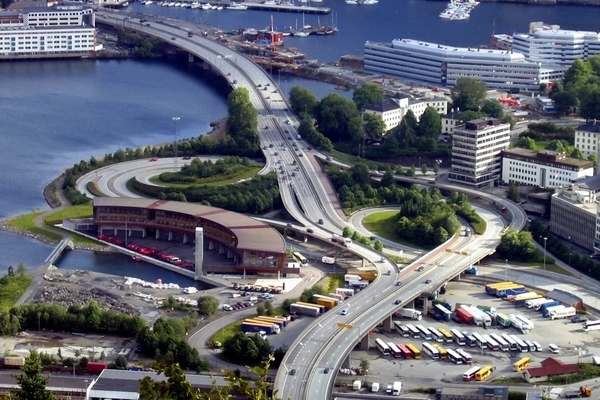
When describing a real transport process, it is difficult to imagine a transport network where the problem of congestion and, consequently, traffic jams before nodal points does not occur. Therefore, in order to present a model of the dynamics of a real transport process, it is necessary to include the possibility of queues occurring. Taking the above into account, it seems that the best method to achieve this goal would be to use the apparatus of queueing theory to describe the transport process.
Queueing theory deals with the study of mathematical models of real processes in which downtime, waiting, queues, and losses occur. It is one of the fields of application of probability theory that uses complex analysis, the theory of differential and integral equations, and other fields of mathematics as research tools. Queueing theory allows us to assess the potential behavior of a transport system in the future. A queueing network is extremely convenient to use due to its similarity to a transport network. The results of mass service theory are used when designing new systems, when we want to determine the parameters of the designed system in such a way as to best satisfy the demand of future customers while simultaneously taking into account the interests of the system manager. It should also be emphasized here that time losses themselves are not always the only or the decisive criterion when assessing the quality of a queueing system.
1. Queueing theory – assumptions
From the customer’s point of view, knowledge of the structure and properties of the system can primarily help us make decisions regarding behavior in the queueing system. Customers may have different ways of influencing their individual time spent in the system, the losses or outlays (financial, time, or other) associated with it, and, generally speaking, the conditions under which their service is carried out. This can be achieved, for example, by choosing the appropriate moment to report to the system or by choosing a service provider. Sometimes, for an additional fee, one can ensure priority over other customers, and at other times it will be worth leaving the system entirely and looking for alternative service in another system. (…)
The article contains 24,376 characters.
Source: Logistyka Magazine 4/2012
Queueing theory applied to the description of the transport process – PDF file for download