








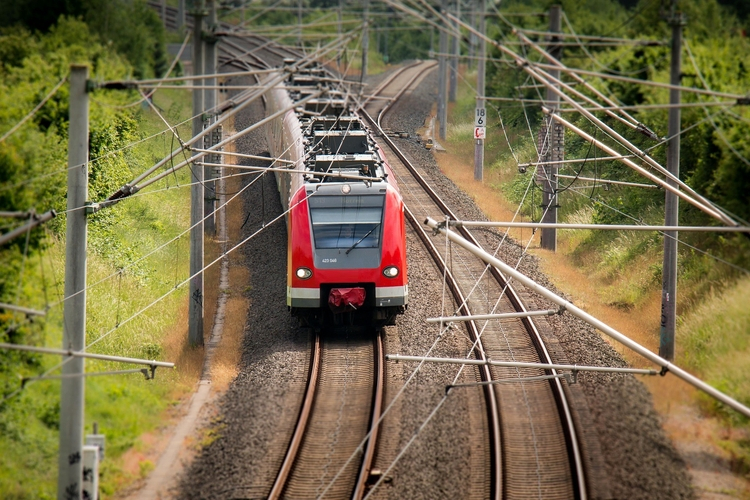
In Poland, we deal with various vehicles moving on rails. These include vehicles transporting raw materials and goods (e.g., freight trains) as well as people (trams, passenger trains). We must not forget about maintenance and repair vehicles, which also travel on tracks. To ensure their long-term operational capability, they must be serviced in an effective and efficient manner.
Proper maintenance of rail vehicles is an extremely important issue. Whether these types of vehicles remain operational for a long time determines not only the safety of passengers and the goods they carry. Their effective repair is also significant in an economic context (after all, every service costs a considerable amount!) and in terms of the smooth operation of the entire infrastructure (i.e., the availability of trains for passenger transport, the absence of delays, etc.).
It turns out that in Poland there is a special repair system for rail vehicles, which consists of 5 levels.
5 levels of rail vehicle maintenance in Poland – what do they concern?
According to the regulations established by the Office of Rail Transport, every vehicle moving on rails must have so-called Maintenance System Documentation. Within its scope, we find 5 levels of vehicle maintenance. These determine the actions that must be taken to ensure that a given vehicle is fit for use, i.e., fully operational and safe.
P1 – P3, i.e., levels one through three, are simply regular inspections of railway machinery,
P4, i.e., level four, is the revision repair of the vehicle. It is maintained that this level is the most fundamental for the continued safe operation of the vehicle. Within the scope of the fourth level of rail vehicle maintenance, we find the necessity of replacing, for example, all rubber and rubber-metal elements that are part of the equipment of individual vehicle parts (especially the first and second-stage suspension systems, including complete pneumatic systems with emergency springs). Such replacements must be performed after a period of 8 years or a mileage of 1.2 million km (whichever comes first). Regular replacement of rubber and rubber-metal elements is important because they are subject to wear not only due to the work performed or the load applied but also due to external exposure, and consequently, the effects of weather conditions (e.g., the sun, i.e., UV radiation, which accelerates the process of rubber crumbling and aging, resulting in a decrease in its stiffness, which in turn significantly lowers the level of driving safety).
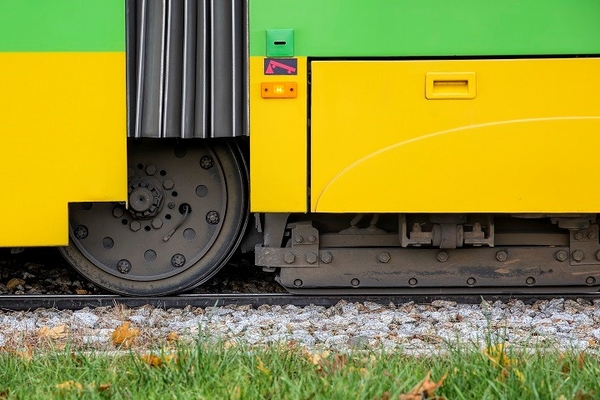
Source: https://tc.mmrgroup.pl/
In the context of the fourth level, the regular replacement of emergency springs in the second stage of suspension is also important. Emergency springs – despite their name – do not only work in exceptional situations when the pneumatic bellows fail. They are also quite active under standard conditions, and their role is to transfer loads. Additionally – it is worth emphasizing – during their operation, emergency springs deform, performing vertical and horizontal movements. To maintain the safety of the vehicle operator, passengers, or other rail traffic participants, they must be replaced with the same commitment as rubber elements.
P5, or level five, involves performing repairs.
Why is the Maintenance System Documentation so important?
The answer is simple: following the rules contained therein and the guidelines that indicate the direction of rail vehicle maintenance is a guarantee of safety for both traveling in such vehicles and operating them. Neglecting any of the maintenance points, failing to perform them at the specified time, or performing them in a careless and superficial manner can have catastrophic consequences, which may include vehicle derailment and other traffic accidents. In order to maintain all procedures, it is worth monitoring the work of service centers and always keeping oversight of the serviced vehicles. After all, we cannot be sure that every service facility strictly follows all DSU guidelines.
One of the publications of the Office of Rail Transport also proves helpful. The guide issued by them clearly indicates the regulations regarding the obligation to service rail vehicles and also helps to navigate exceptional situations – such as changes introduced to vehicles at the initiative of the carrier.