








Three questions for Piotr Kozłowski, Ocean Business Director at DB Schenker Logistics.
The port package came into force on January 1st as part of the so-called fourth tranche of economic deregulation. How does the package work from the perspective of a logistics operator?
Six months of this package’s operation is still not enough to evaluate it comprehensively. Certainly, a very big advantage is the online platform, which gathers in one place all information about a shipment sent by ocean freight and the procedures of border services to which a given shipment has been subjected. Both all border services (customs, sanitary, veterinary, 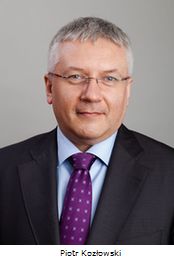 sanitary inspection), as well as shipowners and logistics operators have access to the system. Thanks to this, the exchange of information between individual entities takes place much faster. Previously, the logistics operator had to coordinate the acquisition of information from various services operating at the border on their own to know at what stage of the procedures their shipment was. The system also allows for a reduction in the number of duplicated revisions or inspections. Furthermore, all border services see their actions in the system on an ongoing basis, and this causes a kind of mobilization, because none of these entities wants to be the link slowing down the process. Thanks to this, there has been an improvement in operations, from which primarily shipment senders and customers benefit.
Have Polish ports become more attractive to entrepreneurs thanks to the package?
Yes, but this is the result of a multi-year process, not just the port package. The main advantage of Western ports used to be the possibility of customs clearance of shipments with deferred VAT. For several years now, it has also been possible to settle accounts in this way in Polish ports, which increases their importance.
It is worth noting here that since January 2015, all companies such as DB Schenker Logistics, holding the status of Authorized Economic Operator (AEO) valid throughout the European Union, can use the simplified VAT settlement procedure. This means that they can settle VAT on the import of goods in the VAT declaration, and not at the time of payment of customs duties.
The second important factor increasing the attractiveness of Polish ports is the increasingly clear presence of large shipowners in them. Currently, as many as eight large shipowners offer or will offer a regular direct service from Asia to Poland, without the mediation of German ports. Thanks to this, the transit-time for imports to Poland will be much more predictable and will allow entrepreneurs to safely plan their deliveries.
Polish entrepreneurs and smaller companies from other countries are indeed becoming convinced of the Tri-City ports. However, large international corporations with multi-thousand volumes of goods still use German ports. This has nothing to do with the port package, but with the specific requirements of their business. Hamburg is often a center for these companies for handling and distributing goods for all of Western and Central-Eastern Europe.
What else needs improvement in Polish realities?
Certainly the process of communication with border services. As far as the Customs Office is concerned, the exchange of information takes place electronically and generally runs smoothly. However, other services – veterinary, sanitary – still rely on paper document circulation. If there were a possibility of online communication with these services, sending scans of documents and other files electronically, it would certainly improve the decision-making process, and thus speed up the customs clearance procedure for goods.