








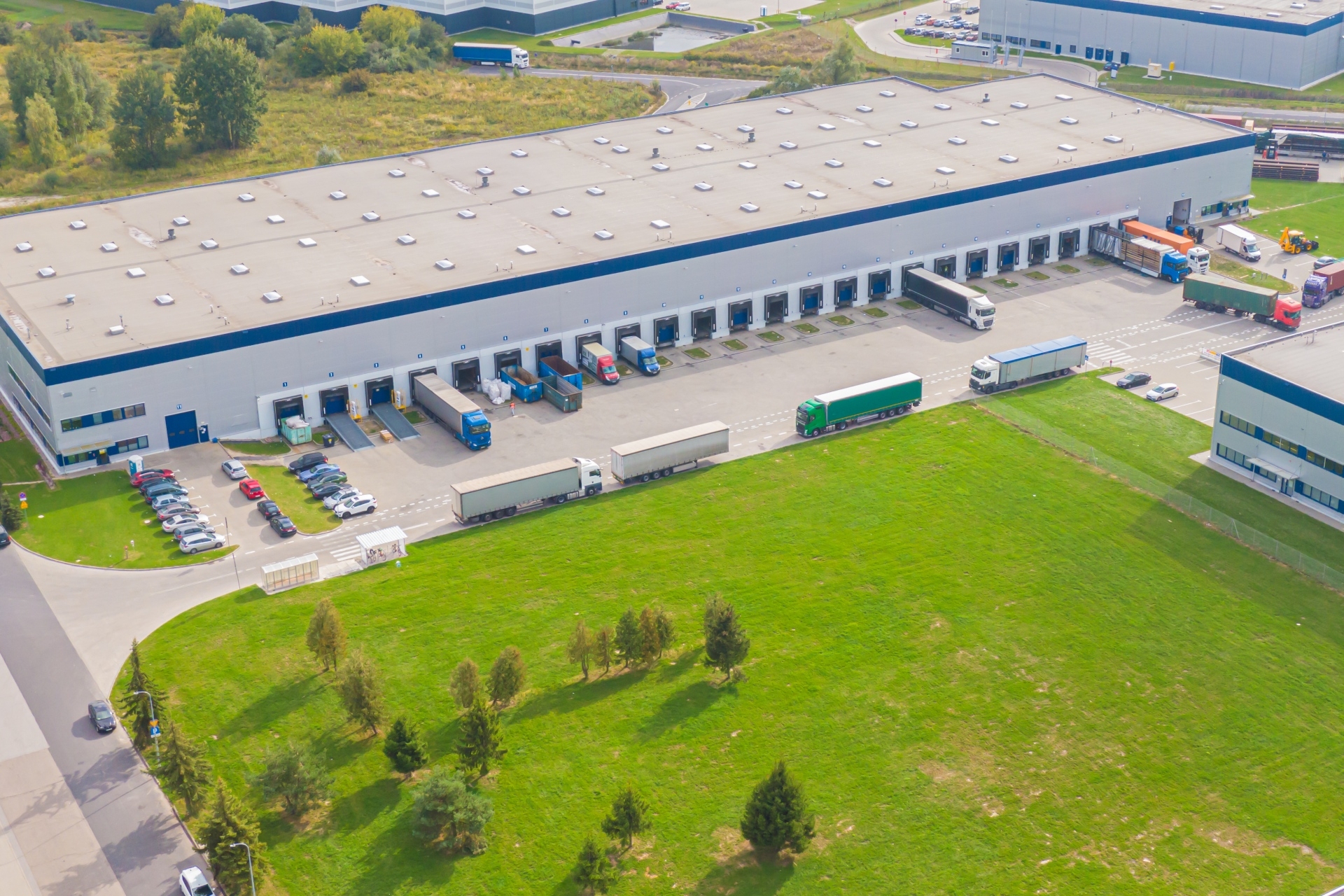
In 2025, gross demand for warehouse space in Poland is expected to approach levels seen in the record-breaking years of 2021-22. However, the result was driven by completely different factors. The low activity of developers, who have significantly limited new supply, is a cause for concern. As a result, we may face market space shortages in the coming years. Experts from the advisory firm JLL summarize the past 12 months in the domestic warehouse market and forecast the most significant trends for 2026.
JLL experts predict that total gross demand for warehouse space in 2025 will amount to approximately 6 million sq m, a result similar to the record years of 2021-22 and about 10% higher than the 5-year average. The structure, however, has reversed – such a strong result is the effect of a very high number of lease renewals (including sale & leaseback transactions), which account for roughly half of total gross demand. For comparison, in 2021, renewals accounted for only 22% of transactions, and in 2022 – 32%. It is worth noting, however, the new net demand, which has remained stable at around 3 million sq m per year since 2023. This is still a very good result, demonstrating the maturity and healthy structure of the domestic market. Warehouse stock in Poland is very attractive, relatively young, and still modern, which is why tenants do not feel qualitative pressure to change warehouses and often decide to stay in their occupied facility. At the same time, new players continue to appear, both from abroad and companies with local roots, and existing tenants are growing their businesses, which leads to the expansion of warehouse space.
A stable level of new demand is something on which we can build forecasts for 2026. We do not expect major changes here – rather a continuation of current trends. Companies operate very rationally today; every decision to lease new space is carefully calculated. On one hand, we have new players entering the Polish market, and on the other – existing tenants expanding their operations. This gives us stable demand for new space. We also assume a continuation of companies releasing capital from real estate through sales and leasebacks.
– comments Tomasz Mika, Head of Industrial Agency, JLL.
Consistently, the largest markets, the so-called “Big Five,” account for the majority (about 75%) of total demand. However, it is worth paying attention to regional growth engines, namely the Tri-City and Szczecin, which, together with Krakow, now form a strong “Tier 2” of the Polish warehouse sector. We expect that by the end of 2025, gross demand in both the Tri-City and Szczecin will exceed 300,000 sq m and will most likely repeat – or perhaps even exceed – this result over the next 12 months.
Low new supply
2025 was an exceptionally quiet year in terms of developer activity. JLL experts estimate that total new supply for the year will amount to just over 2 million sq m, which is 40% less than the 5-year average and as much as 60% less than the record-breaking 2022. This state can be explained by the industry’s reaction to the stabilization of new demand dynamics and the need to absorb a relatively large volume of speculatively built space (perhaps slightly overestimated) delivered in 2022 and 2023 (4.5 and 4 million sq m, respectively).
We do not expect a return of the development boom, but in the most likely scenario, the scale of new supply will gradually increase in 2026. At the same time, in many locations, there is a very limited availability of ready-to-use, large modules, especially in the 20–30,000 sq m and larger ranges, which prompts companies to consider Built-to-Suit projects. From the perspective of conversations with tenants, there is a clear change in expectations – ESG has ceased to be an option and has become a standard, and increasingly, questions about preparing facilities for automation and robotic systems appear at an early stage. It is this combination of rising quality requirements and limited availability of ready-to-use space that naturally drives interest in BTS projects.
– predicts Mateusz Iłowiecki, Senior Director, Industrial Agency, JLL.
Vacancy rates affect rents
Rents for warehouse space remained at a similar level to the previous year. In the case of the newest, best investments – especially those with implemented ESG solutions – upward pressure can be observed. Our market is maturing and offers an increasingly wide range of facilities, differing in age, standard, location, or infrastructure availability, among other things. For selected projects and large contracts with proven and trusted tenants, developers may be more willing to negotiate and offer so-called incentives today.
We estimate that the average vacancy rate across Poland will remain below 8%, and even approach 7%. This means about 3 million sq m of vacant space – a volume that is consistently melting away. While net demand has remained at a level close to 3 million sq m per year for several years, developers are currently delivering 2 million sq m of new space. This means a potential supply gap of up to one million sq m per year. Since a drop in the vacancy rate below 5% is unlikely (there are simply spaces that are practically “unleasable” – small, divided modules scattered all over Poland), if the current market dynamics are maintained, we would be dealing with warehouse space shortages in just a year. And that would certainly mean a developer’s market and an increase in rental rates.
– says Maciej Kotowski, Director, Research & Consultancy, JLL.
What else in 2026?
All of Europe and the world are waiting for the end of the war in Ukraine, which may happen within the next 12 months. Undoubtedly, this will also be a breakthrough event for the warehouse market in Poland. However, a lot depends on the terms of the agreement, which are not yet known. If peace talks drag on, an additional stalling of demand is possible, as interested players will wait for official terms before taking further steps. This could significantly weaken new demand results, but with the prospect of a solid rebound after an agreement is reached. This would likely lead to space shortages in the market, especially considering today’s excess of demand over new supply. There is also another scenario in which both developers and tenants will want to close project implementation and pre-lease processes as quickly as possible, even before the official announcement of the expected peace. This would allow them to avoid potential increases in construction costs, materials, and lower availability of general contractors, who could then become involved in projects on Ukrainian territory. Regardless of the scenario, the southeastern, border regions of the country will undoubtedly be beneficiaries of peace, where developer activity will concentrate. If materials related to the reconstruction of Ukraine are transported by sea (and some certainly will be), port markets like Gdańsk and Szczecin may gain additional importance.
Expansion of Asian automotive
Chinese electric vehicle manufacturers, who are already thinking about relocating their factories to Europe to avoid EU tariffs, will certainly want to take advantage of the difficult time for the German industry and the automotive sector. An entire technological background and spare parts production will also be needed. Regions in western and southern Poland, especially the Lubuskie and Silesian provinces, long associated with the automotive industry, could benefit from this. The slowdown across the western border is reflected in the situation in warehouses along the S3 expressway – the vacancy rate in the Lubuskie province fluctuated this year from about 15% to over 20%. And there were years when it was one of the most attractive, desired, and active markets in the country.
E-commerce from the East and the development of e-grocery
While the Western e-commerce we have known so far (e.g., Amazon, Zalando) has slowed down significantly, Asian platforms have appeared on the market. Since the end of 2023, SHEIN has leased a total of over 700,000 sq m in the vicinity of Wrocław. This improved demand results and showed that there is room for new players in e-commerce.
The e-commerce market is entering a phase of maturity. The success of Asian platforms, such as SHEIN, shows the high price sensitivity of consumers, but it results mainly from cost-regulatory advantages, not from a permanent market gap. In parallel, strong segmentation is taking place – universal models are losing importance in favor of specialized formats, where profitability and operational efficiency become key. These changes translate directly into the growing diversity of logistics and warehouse needs. Alongside mass distribution models, specialized fulfillment centers are developing, handling short series, high rotation, omnichannel, or specific industry requirements. Logistics is ceasing to perform only an operational function and is increasingly becoming an integral part of the competitive strategy of e-commerce companies.
– emphasizes Paulina Dziubińska, Senior Director, Industrial Agency, JLL.
Falling inflation and rising purchasing power mean that Poles are spending more on consumption and are more willing to shop online, including for groceries. The convenience and efficiency of the process favor the development of the e-grocery sector – such facilities require advanced and tailor-made warehouses, i.e., high initial outlays, but thanks to the use of robots and automation, they allow for the fulfillment of thousands of orders every day. A good example here could be one of the most modern in Europe, the recently commissioned Auchan distribution center in Wilcza Góra near Warsaw, for which JLL also worked. Further investments in this sector seem to be only a matter of time.
Labor market and the announced minimum wage increase
Minimum wage increases are always a challenge for the logistics and production industry, for which labor costs constitute a large part of the budget. The end of the conflict across our eastern border would be an additional shock to the labor market in Poland, as it would involve the outflow of some Ukrainian workers, including those employed in warehouses. How, then, to protect against a shortage of labor? Tenants should compete for employees not only with salary but also place greater emphasis on the broadly understood well-being of their team. Improving working conditions, non-wage benefits, special amenities at the workplace (e.g., green zones, relaxation areas, gyms, convenient access) – all these solutions affect the attractiveness of the workplace and strengthen employee engagement.
Source: About JLL