








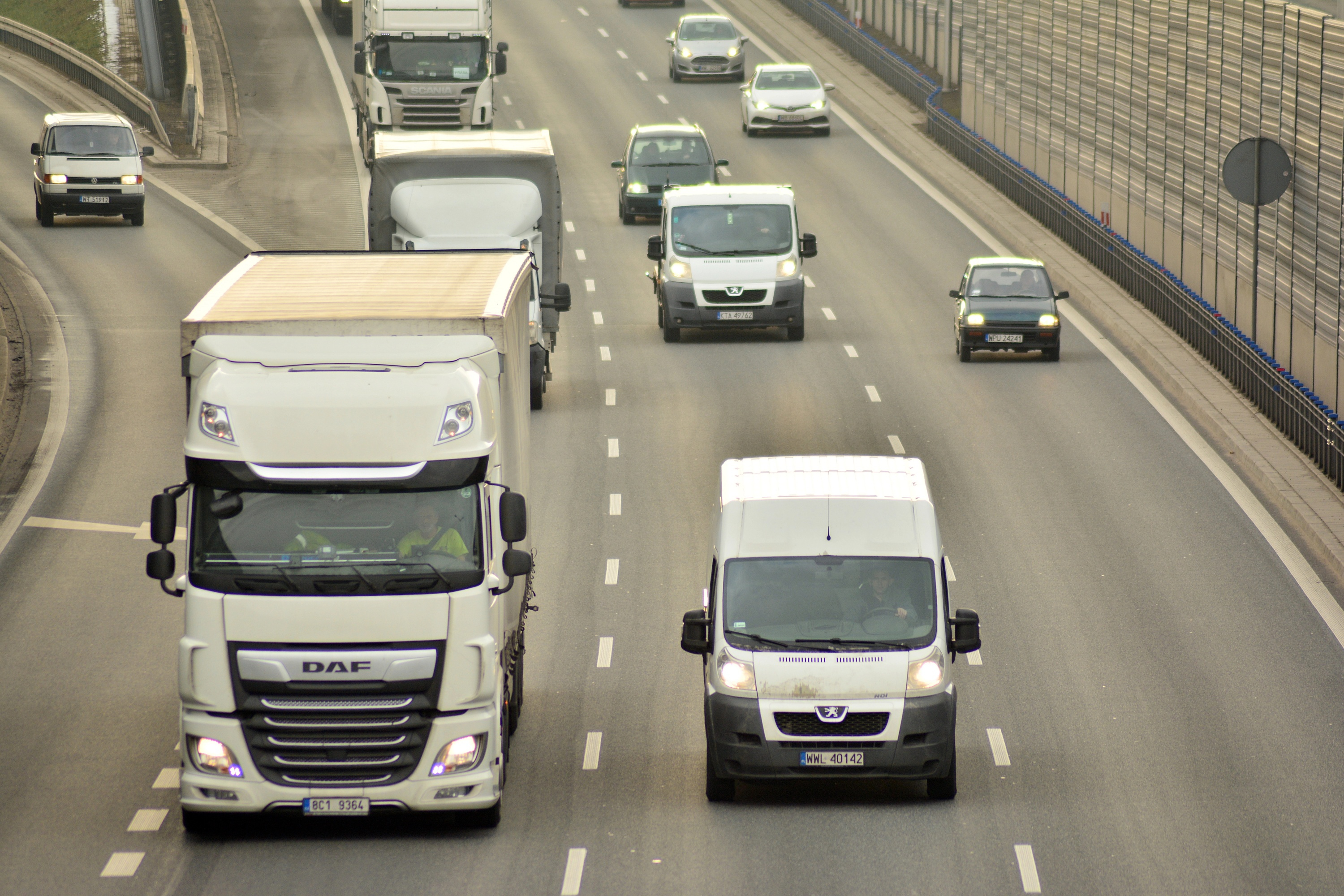
For years, it was widely believed that the heavy transport sector was dominated by traditional management methods and resistant to technological innovation. As it turns out, however, nothing could be further from the truth. Today, acquiring technology is simply a must-have, without which running a business becomes risky and expensive, and as data shows, more and more Polish companies understand this. Modern tools help not only to streamline management but also to eliminate errors that no business can afford in the face of rising costs and market demands. What innovations are both small and large transport companies in Poland focusing on today?
Transport has embraced technology
Market data clearly indicates a growing interest among carriers in investing in digitalization. Business owners most often decide to purchase telematics solutions, TMS-class systems, or advanced tools for fleet monitoring and driver working time accounting. According to a 2023 report by Frost & Sullivan[1], investments in digital technologies in the TSL industry increased by as much as 22 percent compared to 2022. Moreover, 74 percent of companies in Europe plan to further increase spending on innovation over the next two years.
– Without modern tools in transport, it is difficult to think about company development and even harder to secure it. As the data shows, investments in these areas have grown dynamically over the last five years, and carriers are seeing the real benefits of digitalization. Investing in technology is currently not only about increasing efficiency but also about reducing risks associated with unplanned breakdowns, costly downtime, or fleet management errors. Without the use of technology, running a business in the road transport industry therefore becomes more expensive and risky – comments Dawid Kochalski, Integration and Implementation Coordinator, Inelo from the Eurowag Group.
There is no turning back from digitalization
Heavy transport has undergone a true digital revolution in recent years. While telematics tools or TMS systems have been available on the market for a long time, it is only the last decade that has brought a rapid surge in their popularity and usage. Poland, being one of the leading transport powers in Europe, could not be left behind.
– An industry that was recently opposed to innovation is now confidently embracing digitalization. The 2023 Fleet Barometer: The Future of Mobility report indicates that 52 percent of carriers in Poland are already implementing advanced telematics systems, while in other countries covered by the study, this average was 44 percent[2]. Cutting costs, route optimization, and real-time vehicle status monitoring are just some of the benefits that modern technologies bring. Consequently, carriers are no longer afraid of technology, and drivers are beginning to realize that digital tools are not a form of control, but primarily support in their daily work. The cooperation between human and technology contributes not only to improving road safety but also to increasing the efficiency of the entire company – says Karol Marcinkowski, Technical Manager, Eurowag Group.
New technologies – a remedy for difficult times
The year 2024 is a challenge for Polish heavy transport. Regulatory changes, rising operating costs, and staffing problems mean that carriers must look for ways to optimize their operations. Investments in technology are proving to be one of the key elements of the strategy for many companies that want to meet market challenges and maintain competitiveness.
– Transport Management Systems (TMS) and telematics, as well as tools for accounting for driver working time, are becoming an indispensable element of the functioning of transport and logistics companies. Why? Primarily, they help reduce operating costs by eliminating errors resulting from manual management, automating processes, and improving the operational fluidity of the entire company. Modern technologies enable better route planning, real-time fleet monitoring, and ongoing efficiency analysis, which is particularly important in such demanding times – notes Dawid Kochalski, Inelo from the Eurowag Group.
One of the key advantages of modern technological solutions is their scalability. As a company grows, its fleet management needs also increase. At this point, it becomes crucial to choose proven suppliers who can guarantee comprehensive solutions. Why? Using fragmented solutions often hinders the integration process and sometimes makes it impossible.
Integration in transport – the first digital platform on the market
The milestone achieved by the TSL sector in the area of digitalization is best illustrated by the latest digital platform, which the Eurowag Group presented in September at the Hanover Fair. The Eurowag Office platform (as it is called) will enable fleet management, vehicle monitoring, driver working time accounting, as well as route planning and optimization in one integrated system.
– Thanks to modern digital solutions, transport companies can now manage their entire business from one place, which allows for significant savings in time and money. Integrating various tools into one system is the future of the TSL industry – says Karol Marcinkowski, Eurowag Group.
The platform was designed primarily for transport companies that want to streamline their operations, improve efficiency, and minimize the risk of errors. Thanks to the ability to customize tools to individual user needs, the platform provides full flexibility and support at every stage of company development.
[1] Wallace Lau, Global Medium- and Heavy-duty Commercial Vehicle Aftermarket Outlook, 2023.
[2] Arval BNP Paribas Group, Fleet Barometer 2023: The Future of Mobility.
Source: INELO