









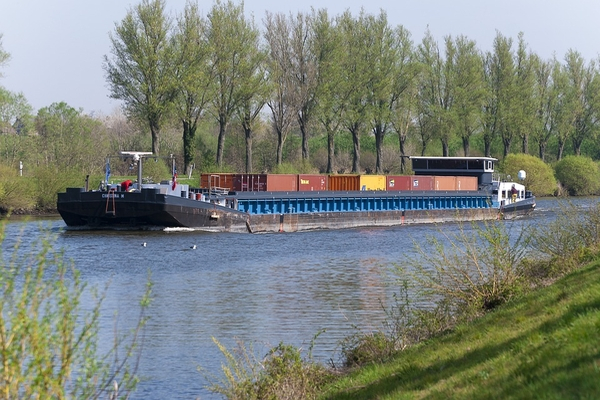
Since 2016, the volume of cargo transported by Polish shipowners via inland waterways has been systematically decreasing. This is due to unfavorable navigation conditions on Polish rivers.
State of inland waterways
According to Statistics Poland (GUS), the length of the inland waterway network in Poland in 2019 amounted to 3,722 km, i.e., 68 km more than the previous year. 2,512 km of this network consisted of regulated navigable rivers. 3,513 km, or 94.4% of navigable waterways, were in use for shipping. In 2019, only 206 km of waterways in Poland, i.e., 5.5%, met the requirements for international waterways (classes IV and V). The remaining waterways of regional importance (classes I, II, and III) had a total length of 3,516 km in 2019.
Shipping fleet
The state of the Polish inland transport fleet is not very promising. The number of pushers and tugs constituting the towing fleet for inland shipping in 2019 amounted to 179 units, i.e., 22 fewer than in the previous year. The passenger fleet numbered 130 units, i.e., 7 more than a year earlier. The number of self-propelled barges decreased to 80 (by 9 units), and the number of non-self-propelled barges decreased by 60 units (to 402). More than 83% of the barge fleet consists of non-self-propelled units, with nearly half of them produced between 1949 and 1979. Its age significantly exceeds the standard service life, and further operation is possible only through constant modernization.
Inland waterway transport operations
The volume of cargo transport and transport performance in inland shipping is primarily influenced by the state of the waterways. Unfavorable navigation conditions determine the basic design parameters of the fleet, and thus the relatively small cargo capacity of barges. This translates directly into the volume of transported cargo. In 2019, 4,680.9 thousand tons of cargo were transported by inland shipping, and 655.8 million tonne-kilometers were performed in terms of transport work. These values were lower than the previous year by 8.4% and 16.2%, respectively. Compared to 2018, domestic transport recorded a decrease in cargo transport by 3.4% (to 2,348.5 thousand tons) and transport work by 31.7% (to 66.1 million tonne-kilometers). The reason was a decline in the transport of cargo from the coal and lignite, crude oil, and natural gas groups.
Nearly half of the goods transport carried out by inland shipping by Polish shipowners took place within international transport (49.8%). On an annual basis, there was a decrease in the volume of transport between foreign ports (by 10.2%), although their share in total international transport was dominant and amounted to 81.6% in 2019 (an increase of 2.4 percentage points). Exports of cargo decreased by 17.6%, and imports by 30.5%. Exports accounted for 12.9% of total international transport, and its main destination was Germany. In the structure of transported cargo in 2019, as in previous years, goods from the group of metal ores and other mining and quarrying products; peat, uranium, and thorium dominated (37.9%).
Fewer passengers are also using inland transport. The number of people transported by inland passenger vessels decreased by 2.4% year-on-year.
Signal information regarding the GUS report
Source: Statistics Poland (Główny Urząd Statystyczny)