








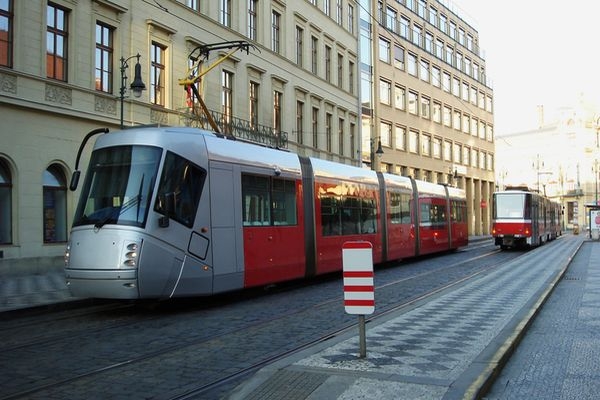
Thanks to EU subsidies, trams are back in favor with local governments. The development of environmentally friendly public transport is one of the strategies for a low-carbon economy for the years 2014-2020. New orders are an opportunity not only for the largest manufacturers of rolling stock, but also for the entire industry and many Polish companies.
The projected pool of funds under the Infrastructure and Environment program for 2014-2020 is over 27.4 billion euros, of which 16.8 billion euros is to be allocated to the development of transport, including sustainable urban transport. As media reported in August, the government declares that 168 km of new or modernized tram lines will be built by 2022. According to the NIK (Supreme Audit Office) report, the Silesian and Lesser Poland voivodeships will receive the most funds under regional operational programs.
Government plans for 2014-2020. Trams on top
In the “Transport Development Strategy until 2020” developed by the Ministry of Infrastructure, urban transport is treated as an “element of an integrated communication system”. The document contains European Commission guidelines aimed at harmonizing public transport systems in Polish cities. These include, among others, special care for the natural environment, smooth movement in cities, the use of intelligent urban transport, accessibility, and the creation of reliable and safe urban transport. Trams are a means of transport approved by the EC because they do not emit as much harmful dust as cars and buses. They thus fit into the plans for the development of a low-carbon economy, i.e., activities that will bring economic profit with a significant reduction in CO2 emissions.
Local governments are buying new rolling stock
Szczecin and Silesia already have new trams. The report “New urban rail vehicles in the second quarter of 2014” by the InfoTram portal from September 5th shows that 20 new rail vehicles were delivered to Polish cities in the second quarter of 2014. These were 12 PESA Twist Step trams for Tramwaje Śląskie, 7 Inspiro-type trainsets for the Warsaw Metro from the Siemens-Newag consortium, and 1 Moderus Beta tram from Modertrans for the Szczecin MPK.
PESA, a Polish manufacturer of rail vehicles from Bydgoszcz, still dominates among suppliers on the market. By the end of the year, it is to fulfill orders for Tramwaje Warszawskie, ZKM Gdańsk, MZK Bydgoszcz, and MPK Kraków (the specially designed Krakowiak model).
This is not the end of rolling stock replacement in Polish cities. Moderus Beta will continue to supply vehicles for Tramwaje Szczecińskie and MPK Poznań. Warsaw, Olsztyn, Łódź, and Wrocław are also preparing to purchase new trams.
A boom for Polish manufacturers
The tram renaissance should please not only public transport users.
– The boom in orders for new trainsets is also an opportunity for a revival of the Polish economy, because it is precisely many domestic companies that are winning tenders. Good prospects are emerging not only for manufacturers of rail vehicles (Solaris, Newag, PESA), but also for companies supplying sub-assemblies or elements of construction and equipment, such as brake sand, which is necessary in every tram because it ensures safe braking – says Andrzej Rams from the company Piaski Hamulcowe, a supplier of specialized sand for rail vehicles.
Purchases of rolling stock are often accompanied by modernization work on tracks, so construction companies involved in the design and construction of urban transport infrastructure and their subcontractors will also benefit from this.