








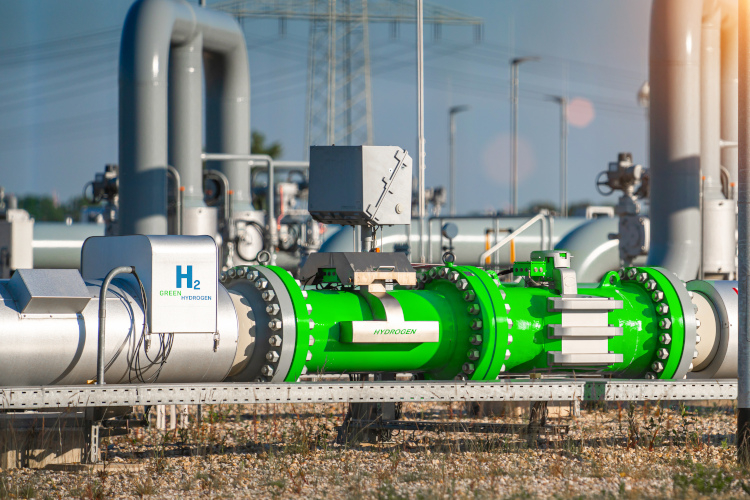
The coming years will be crucial for the development of the hydrogen economy, according to a report prepared by 4CF. Over the last several months, the EU has significantly intensified its efforts to build this low-emission branch of the economy, with France, Germany, and Italy among the leaders. However, other countries aspiring to become producers and suppliers of hydrogen are also participating in the global race. Against this background, Poland still looks pale – despite the adoption of a hydrogen strategy, there is a lack of, among other things, clear legislation to reduce investment risk for hydrogen projects and a regulatory framework for the operation of the hydrogen market.
– Poland can play a significant role in the European hydrogen revolution, in every link of the value chain – both in the field of research and development, creating innovations related to production, as well as hydrogen transport. Here, we already have significant achievements, including supplying European partners with installations necessary for the production and transmission of this raw material – says Maciej Jagaciak, an expert at 4CF and the Polish Society for Futures Studies, to the Newseria Biznes agency.
To achieve climate neutrality by 2050, Europe must significantly accelerate its energy transition. Clean, green hydrogen, which is an alternative to fossil fuels and has great potential for use in energy and transport, among other sectors, is intended to help with this. Green hydrogen currently accounts for barely about 1 percent of global hydrogen production. The vast majority is grey hydrogen, which comes from fossil fuels and is used in oil refining, ammonia, methanol, and steel production. Replacing it with a clean raw material creates an opportunity to accelerate decarbonization, while at the same time stimulating innovation and creating a new, profitable industry.
– Green hydrogen can also be a very important element of the Polish energy sector because it is an excellent energy carrier. The fact that we are not currently using it is mainly due to certain technological problems. They are solvable, but they are simply more expensive. However, the technology for generating electricity from hydrogen or using hydrogen to power cars, for example, is already quite well understood – says Maciej Jagaciak.
In the last several months, the EU – both as a result of climate policy and the Russian invasion of Ukraine, which prompted all of Europe to become independent of Russian fuels – has significantly accelerated efforts to build a hydrogen economy. Its adopted hydrogen strategy, the RePowerEU plan, and the updated Renewable Energy Directive (RED III) assume, by 2030, among other things, the construction of electrolyzers with a capacity of 40 GW and the consumption of 20 million tons of hydrogen, including 10 million tons from imports. Furthermore, the RED III directive mandates the use of green hydrogen, which by the end of this decade is to account for 5.7 percent of fuel demand in the EU (including 50 percent of fuel demand in industry and 1.2 percent of fuel demand in maritime transport). European companies are also to be legally obliged to use green hydrogen in their fuel mix. This is expected to translate into approximately 9–10 million tons of demand for green hydrogen in 2030.
Intensive work is also underway in the EU on innovations aimed at reducing costs, increasing efficiency, and lowering energy consumption in hydrogen production, including the use of non-ceramic materials and water vapor instead of water, the use of light in the production of electrolyzers, hydrogen production from hydrogen sulfide (which only requires light, without heat), or the use of seawater instead of fresh water.
The newly emerging European Hydrogen Bank is intended to help finance such projects, but the EU is already supporting research and development projects and providing direct outlays for production infrastructure through several aid programs. Large-scale hydrogen projects have also already been started by many European corporations that want to join the construction of the new branch of the economy early and take leading positions in the entire hydrogen value chain.
The report “Polish Hydrogen. Will we make it in time?”, prepared by the consulting firm 4CF, shows that the European leaders in hydrogen investments are currently France, Germany, Italy, Spain, the Netherlands, and Portugal. In these countries, financial institutions are already financing hydrogen projects, and public and private entities are moving to the implementation phase of these projects. The market is also developing outside of Europe. Developing regions (Africa, the Middle East, South America) aspire to the role of hydrogen suppliers, and in the USA (including under the Inflation Reduction Act), an entire regulatory environment, support systems, and public aid for hydrogen projects are being created. Investments in infrastructure, electrolyzers, and fuel cells are also growing, with Asian countries dominating in this area. The 4CF report shows that currently about 35 percent of global hydrogen investments are being made in Europe and 15 percent each in Latin and North America. So far, more than 1,000 large-scale hydrogen projects have been announced worldwide, of which almost 88 percent are to be launched by 2030. – The Polish hydrogen economy is at an interesting point because, on the one hand, we are currently the third-largest producer of hydrogen in Europe, and on the other – this hydrogen is used mainly for the needs of power plants and it is so-called grey hydrogen, not the ecological one that the hydrogen revolution in Europe is about. However, there is a very strong movement towards shifting the hydrogen economy in Poland onto more ecological tracks. This is the goal of, among other things, the recently adopted Polish Hydrogen Strategy 2030 with a perspective until 2040. Very large investments in this segment are already being carried out by the Orlen Group, and there are also several examples of private companies trying to operate in this field – lists the 4CF expert.
Currently, legislative work on the so-called Hydrogen Law is also underway, and hydrogen clusters and valleys already exist. However, this is still just the beginning of the road and – as analysts assess – compared to other countries, Poland is still at a very preliminary stage of implementing a hydrogen economy.
– The hydrogen market in Poland suffers from a similar disease as all emerging markets in our country, i.e., a certain timidity towards investing. It is known that for most investors, something that is new and has no guarantee of return is not as attractive as proven ways to multiply their assets. Therefore, some guarantees or at least clear declarations from the government could play a big role here, thanks to which business would consider all these risks to be smaller than they are perceived at the moment – assesses Maciej Jagaciak.
As the 4CF report shows, despite the adoption of a hydrogen strategy, Poland still lacks, among other things, a clear energy transition strategy with implementing acts or legislation reducing the investment risk of hydrogen projects. It is also unknown what funds will be allocated to support the development of the hydrogen economy in the perspective until 2030 or what to do to make the production of Polish hydrogen cost-competitive. The scale of Polish hydrogen initiatives – even though there is a lot of talk about them – is still very small. The participation of Polish entities in European initiatives is also minimal.
The delays in this area are also evidenced by the fact that among the 100 largest hydrogen projects in the European Union, only NeptHyne of the Pomeranian Hydrogen Cluster and IPCEI Black Horse (Poland, Slovakia, and Hungary) are mentioned. Apart from them, one mainly hears about projects in the transport sector or purchases of hydrogen-powered urban transport vehicles initiated from the bottom up by local governments.
– At the moment, even more than changes in the law, we need concrete decisions regarding what the future of the Polish energy sector is to look like. We have many different concepts as to which direction it should head – there are concepts of sticking to the existing ways of powering Polish energy grids, there is the nuclear concept, hydrogen, RES, etc. For at least a dozen or maybe even several dozen years, the discussion about this has been going on incessantly and without any conclusions. Concepts change every few years and, unfortunately, there is a certain problem with bringing them to the final phase. Therefore, clarity of decisions on what is to be in this mix, and the certainty that this decision will be maintained, is crucial today – emphasizes the expert from the Polish Society for Futures Studies.
It is estimated that ultimately about 60 percent of hydrogen will be produced by countries with the best conditions for generating wind and solar energy. This puts Poland in a rather unfavorable situation, however – as the 4CF report shows – there are still broad opportunities for participating in part of the production and other components of the hydrogen economy value chain. It is important, however, to ensure appropriate conditions for development for Polish entities in this sector right now. In the short term, it is necessary to, among other things: create a regulatory framework for the operation of the hydrogen market in Poland, as well as a national system for supporting hydrogen research and production, and ensure appropriate funds for this purpose by the government. Without this, Poland will drift away from the European and global leaders, becoming for the most part only a consumer of foreign hydrogen technologies and an importer of hydrogen, thereby depriving itself of potential revenues, opportunities for increasing employment, and technological development.
Source: Newseria