









The clothing sector in Poland is expected to reach a value of over PLN 43 billion in 2022, according to the KPMG report “Fashion Market in Poland”. In European rankings of the size of the clothing market, Poland holds the 8th position. Domestic workwear manufacturers are counting their profits and celebrating the growth in demand.
Digitalization, globalization, and environmental protection – these factors, as read in last year’s “Fashion Market in Poland” report, are influencing the development of the clothing sector. According to the research results: 43 percent of Poles buy clothing at least once a month, almost half spend less than PLN 300 per month on clothing, and 28 percent declare owning luxury clothing. It is worth remembering that the clothing and footwear market in Poland is created not only by the most popular chain stores with everyday clothes and shoes, but also by workwear manufacturers.
Safety, feminine trends, and online sales
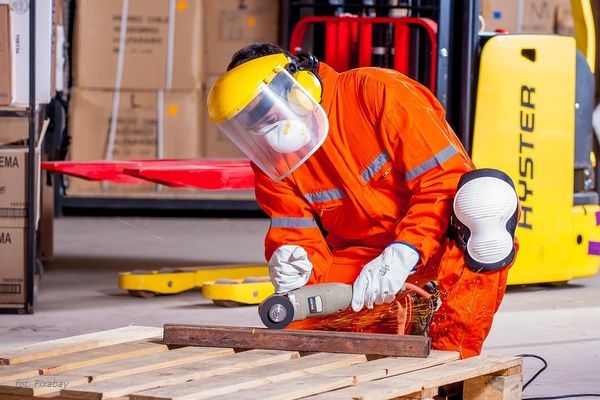
Companies in Poland are becoming wealthier and are more willing to invest in workwear. Therefore, its manufacturers must rise to the challenge in terms of technical requirements, appropriate aesthetics, and by properly matching distribution channels. Regarding safety, workwear must primarily meet the European Union’s requirements for employee protection, which are constantly tightening. However, while in the construction or heavy industry sectors, properly selected clothing is a matter of the health and life of employees, in the service industry, its choice is most often determined by the aesthetics and comfort of employees. Companies involved in the sale of workwear must keep track of industry trends, especially when it comes to clothing intended for women, which requires different cuts.
– Some work and protective clothing require special styles designed specifically for women. Our company, meeting market requirements, offers collections intended for various industries, designed precisely with women in mind – admits Elżbieta Rogowska, Vice President of the Management Board at PW Krystian, a member of the Safe at Work Coalition. – Interestingly, we have recently noticed an increase in demand for women’s styles and small sizes in industries that are usually perceived as “male”. We estimate that in the last 5 years, the growth in the production of workwear intended for women has increased by about 20 percent.
Workwear can also be purchased online more and more often. Many studies (including Euromonitor International) state that in recent years the number of stationary clothing stores will systematically decrease, which can be observed in almost every city. It turns out, however, that this is not a threat, but an opportunity for domestic manufacturers. Moving sales to the online channel has enabled small companies offering workwear to reach customers from a specific niche. Particularly with clothing protecting against hazards, this sales channel is not optimal, as the selection of such clothing requires advice and individual matching of the solution to the workstation, and often also a personalized size of clothing tailored to a given employee.
The market for men’s workwear in Poland is worth 400 million annually
13.3 billion USD – this is how much the global market for protective workwear is expected to grow by 2022, according to a report by Grand View Research Inc. from three years ago. Almost one-third of this market is clothing protecting against chemical substances, and slightly less is flame-retardant clothing. More than 40 percent of the global market is dominated by South America, while in the Asia-Pacific region, the growth in sales of these products is the fastest. In Poland, an increase in imports, including from Asia, is visible.
Although work clothes imported from the East are definitely cheaper, their quality is questionable. And just as it may not be decisive for a baker’s apron, for an electrician, quality should be the most important factor when choosing the right brand.
– There is no doubt that workwear must be made of the best quality materials. The market for textiles for workwear production is changing dynamically, there are more and more innovative solutions, and companies are increasingly open to using technological novelties. Work clothes should be lightweight, ensuring comfort and safety, and meeting current standards – says Ewa Gawrysiak, Sales and End User Marketing Manager Eastern Europe & Russia at TenCate Protective Fabrics, a member of the Safe at Work Coalition. – Above all, however, which is important in the case of specialized clothing, they must be tailored to the specific expectations of the recipient and thoroughly tested in this regard. The entry into the market of such a line, for example, textiles used for the production of flame-retardant overalls, was preceded by numerous laboratory studies and user tests.
Service is also important
When choosing workwear, one should pay attention to whether it meets the appropriate standards and whether it is made of high-quality materials. Unfortunately, it is often forgotten that its proper servicing and maintenance during use is equally important.
– Workwear service in professional conditions in industrial laundries is extremely important for several reasons. First of all, it prevents microbiological contamination and removes many microorganisms that can lead to poisoning – says Marta Tomaszewska, OHS specialist at CWS-boco Polska, a member of the Safe at Work Coalition. – By putting clothing in professional hands, we also have the certainty that it will not lose its protective properties.