








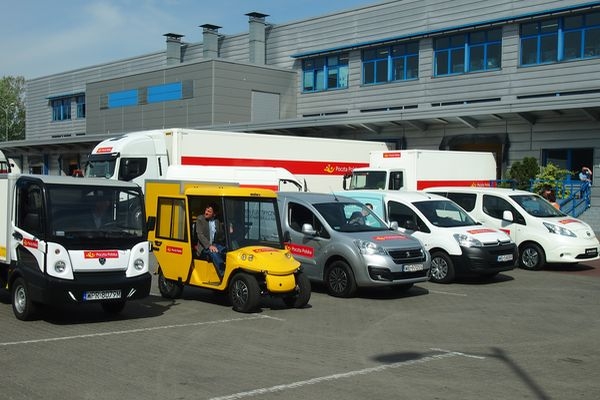
Ecology and operating costs, which should be lower than those of traditional vehicles, are key factors in the introduction of electric cars. The first tests of electric delivery vehicles on such a scale in Poland are intended to answer a number of questions regarding electric-powered vehicles, as well as to indicate which solutions would be best for the Company. Poczta Polska wants not only to deliver parcels but also to take care of the environment.
Manufacturers present on the Polish market who currently offer vehicles with a payload of up to 800 kg with road homologation have been invited to cooperate. For the first time on such a large scale, so many different models of delivery vehicles from seven manufacturers available on the Polish market will be tested in practice. In the first stage of the tests, there will be twenty units of eight different models. In 2018, there are plans to test about 50 electric vehicles.
– We want to check in traffic whether electric delivery vehicles will meet the expectations of Poczta Polska. They will be tested by postmen, couriers, and drivers delivering materials to branches. We employ about 80,000 employees across the country, about 25,000 of whom are postmen. This provides great opportunities for the use of electric vehicles. Few entities use logistics or IT solutions on a scale comparable to the Post – says Przemysław Sypniewski, President of the Management Board of Poczta Polska.
The following brands will take part in the test of electric delivery vehicles organized by Poczta Polska: Renault, Nissan, Zeppelin Goupil, Melex, Citroen, Peugeot, KOMEL (a converter from the Institute of Drives and Electrical Machines). Until the end of June, Poczta Polska drivers will check, among other things, the payload, the method of charging batteries, and the number of kilometers that can be traveled. Potential financial savings resulting from replacing the fleet with vehicles powered by alternative energy sources will also be calculated. The tested cars will be visible on the streets of Poznań, Warsaw, Rzeszów, Białystok, Kraków, Lublin, Łódź, Gdańsk, Wrocław, and Katowice. In addition to the cars, various types of chargers and charging stations will also be tested. This is another step towards the implementation of vehicles 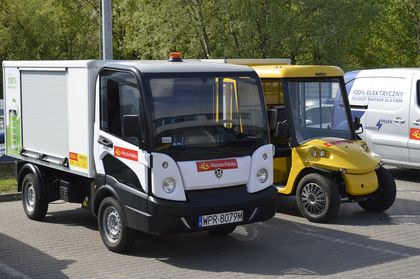 electric in Poczta Polska. The company is already cooperating with the company Jeden Ślad, which produces electric scooters and three-wheeled vehicles, and which applied for the 2nd edition of the start-up program entitled “GammaRebels powered by Poczta Polska”. The vehicles are already after the first phase of test drives.
Electric cars can be particularly useful in towns and cities where road noise and traffic air pollution are a nuisance for residents. The tested models are quiet, so they can also work perfectly during night-time parcel transport. Both the passenger car and truck markets are changing very quickly. Many patterns are no longer valid. Manufacturers’ capabilities are growing, and you don’t have to wait years for a new model of a given brand. Vehicles powered by alternative fuels are the answer to the needs of the environment and the market. Currently, almost all corporations have electric cars in their offer or are in the process of preparing them. According to announcements, a breakthrough will occur in 2020. It is estimated that by 2025, one million electric-powered cars will appear on Polish roads.
Electric cars are already used by, among others, Royal Mail in Great Britain, Deutsche Post DHL in Germany, and the La Poste Group in France. Poczta Polska is the first state-owned company to organize such large tests of electric vehicles. Regardless of geography and the level of development of a country, electric cars have become the future of the automotive world. This is influenced by fuel prices, the rising operating costs of traditional vehicles, and the need to protect the natural environment. More and more countries are opting for an electric fleet in postal and courier companies. Moreover, the postal market is becoming one of the driving forces of the electric energy-based automotive industry.