









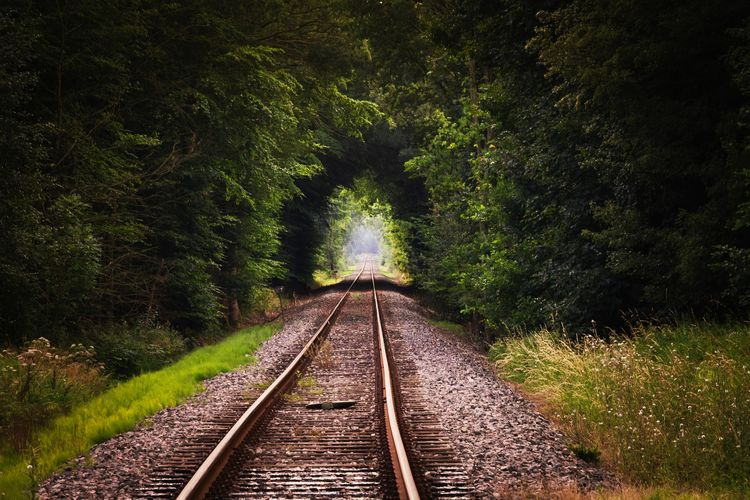
Rail transport is characterized by more than 3 times lower carbon dioxide emissions than road transport and more than 8 times lower emissions than air transport, making it the most ecological means of public transport.
Wishing to raise awareness among passengers about the environmental impact of various modes of transport, PKP Intercity is working on implementing information for passengers regarding the carbon footprint their train journey will leave and how much more ecological it will be compared to traveling by other means of transport. By choosing PKP Intercity trains instead of road transport in 2020 alone, Poles contributed to a reduction of 460,000 tons of carbon dioxide emissions into the atmosphere.
– The European Green Deal assumes that by 2050 the transport sector is to achieve a 90% reduction in greenhouse gas emissions, and scheduled journeys under 500 km are to become carbon neutral by 2030. Some may think that these are distant deadlines and that passenger transport has plenty of time for changes. At PKP Intercity, we are not waiting; we have been intensifying our ecological activities for several years now, implementing numerous projects in this area. We are very grateful to every passenger who chooses the train instead of another means of transport. Each of these decisions is a small step towards reducing the negative impact on the environment. We want to become the first Polish passenger carrier whose operations will be climate neutral – says Tomasz Gontarz, member of the management board of PKP Intercity.
Despite the low environmental impact of rail, PKP Intercity is working on an ecological offset that will allow passengers to participate directly in the carrier’s achievement of climate neutrality. This will be a voluntary additional fee, which will be entirely allocated to ecological projects. PKP Intercity plans to carry out plantings together with the State Forests. The carrier and the organization have signed a letter of intent regarding cooperation on this project. The option to pay a voluntary additional fee for environmental purposes will be made available to passengers in subsequent sales channels, starting with the e-IC online system.
– The State Forests are very eager to establish cooperation with entities that are interested in acting for the protection of the natural environment. The number of forests in Poland is growing. As part of its activities, the State Forests plant several hundred million trees every year. This takes place not only in areas where foresters have previously cut down trees for the needs of the Polish economy, but also where there was no forest before. We are glad that more and more companies are noticing how important the development of forest areas is for climate and air protection – says Andrzej Konieczny, Director General of the State Forests.
Passengers perceive rail as an ecological means of transport
76% of PKP Intercity train passengers perceive rail as the most ecological means of public transport – this is according to a travel satisfaction survey conducted in September 2020 on PKP Intercity trains. According to the declarations of 44% of PKP Intercity passengers, ecological issues influence their choice of transport. For this group, when choosing a means of transport, issues related to carbon dioxide emissions (indicated by 84% of respondents) and energy and fuel consumption (64%) are key. Young people (up to 25 years old) were more likely than others to pay attention to low carbon dioxide emissions and relatively low energy or fuel consumption.
– We are observing growing public awareness regarding ecology, and it is particularly high among youth and young people who are aware of how they can limit their impact on the environment. This all the more proves that rail is the green transport of the future – comments Tomasz Gontarz.
Development of the energy efficiency improvement program
PKP Intercity is successively implementing numerous activities aimed at protecting the natural environment. The currently implemented PKP Intercity investment program provides for, among other things, infrastructure investments, including the reconstruction of 16 railway sidings throughout Poland using modern solutions that reduce the negative impact on the environment. PKP Intercity plans to use renewable energy sources in the form of photovoltaic panels at its parking stations to cover part of the demand for electricity. The company has completed analyses in this regard and is planning a pilot launch of photovoltaic RES sources at the Warszawa Grochów railway siding.
To increase energy efficiency, the company has installed electricity meters in over 300 PKP Intercity locomotives and electric multiple units and is implementing an eco-driving project, the assumption of which is to develop train driving techniques by drivers that will allow for a reduction in the amount of electricity consumed by all trains operated using electric traction. Thanks to these activities, the carrier expects annual savings of several percent in the volume of traction energy, which will indirectly contribute to the protection of the natural environment.
Source: PKP Intercity