








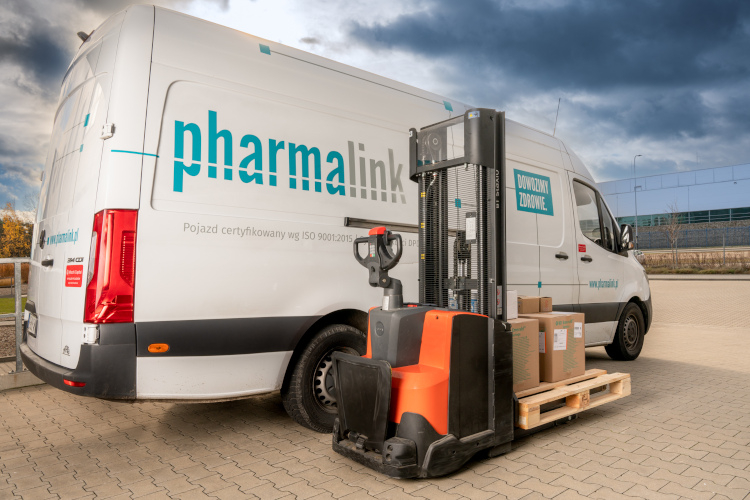
Ensuring the safe and timely transport of medicines requires a multidimensional approach that combines technology, appropriate procedures, and the commitment of trained personnel. The priority for a logistics operator should always be to maintain the required conditions for transporting pharmaceuticals in order to deliver the highest quality medicines to patients. Therefore, the storage and transport of such products under controlled conditions is the foundation of the pharmalogistics industry.
Temperature adapted to the specifics of medicinal products
Responsibility for entrusted medicines and the highest quality of deliveries to end recipients must be a priority for every logistics operator. After all, this translates into the health and safety of patients. The basis is to provide these types of products with appropriate conditions, especially controlled temperature, both during storage and transport. This allows for the preservation of the composition and properties of pharmaceuticals, avoiding damage, spoilage, or loss of effectiveness. Therefore, to ensure the appropriate temperature for medicinal products, they are stored and transported under controlled conditions, covering a specific temperature range: 15-25°C (warm chain), 2-8°C (cold chain), and below -20°C (in dry ice). To this end, the logistics operator must have a fleet equipped with appropriate heating and cooling devices enabling the transport of pharmaceuticals at temperatures strictly specified by the manufacturer’s specifications.
– Owning a fleet of mapped and qualified dual-chamber vehicles with isothermal bodies, heating and cooling devices, and a modern monitoring system to control temperature and other relevant parameters during transport is a guarantee of providing medicines with proper transport conditions. Modern logistics for pharmacy also requires an effective product tracking system throughout the supply chain, including continuous GPS monitoring – 24 hours a day, 7 days a week. Thanks to this, deliveries of medicines at a controlled temperature can be carried out safely and on time – explains Kacper Soszka, Logistics Operations Manager at Pharmalink, a logistics company providing services for the pharmaceutical industry, which is a leader in deliveries under controlled conditions.
Additionally, it is good for the logistics operator to have portable refrigerators on hand, which can be useful during the transport of pharmaceuticals requiring temperatures as low as -20°C between the vehicle and the pharmacy or hospital. Having an adequate number of such devices allows for ensuring the safety of deliveries, as was the case in past years when transporting valuable COVID-19 vaccines.
Warehouse logistics
In logistics for pharmacy, it is just as important to provide an appropriate environment during storage as it is to transport medicinal products under controlled conditions. Therefore, the logistics operator’s warehouses must also be properly equipped – with refrigerators, freezers, and cold storage rooms with controlled temperatures. Additionally, in such spaces, mapping should be performed and temperature recorders installed, thanks to which employees can control the conditions inside the warehouse by adjusting settings accordingly. As for employees, including drivers, the commitment of trained personnel who are perfectly aware of the value of the work they perform is extremely important.
– In the case of medicine logistics, knowledge of both the logistics and pharmaceutical industries is very important. The know-how, extensive professional experience of employees, and their commitment also have a huge impact on the safety and speed of deliveries. Continuous improvement of the team’s qualifications, including through internal training, is also significant, thanks to which all personnel know how to handle the goods, including ensuring the appropriate temperature, as well as how to act in the event of a failure or emergency situation – adds the Pharmalink expert.
Compliance of operations
When choosing a logistics operator, it is worth ensuring that they have the appropriate certificates and operate in accordance with international standards. We are talking about ISO certificates, Pharmaceutical Law, or Good Distribution Practice (GDP), which confirm that the company is a reliable and proven business partner, and also translate into safety, punctuality, and high quality of services provided. It is also crucial to maintain full and precise documentation at every stage of the logistics process, from the collection of medicines from the manufacturer to delivery to the medical facility. Any temperature excursions or other irregularities should be reported to the client and documented in the logistics operator’s quality systems. All this to provide patients with the best – without the risk that they will receive a pharmaceutical devoid of its medicinal properties.
Source: Pharmalink