








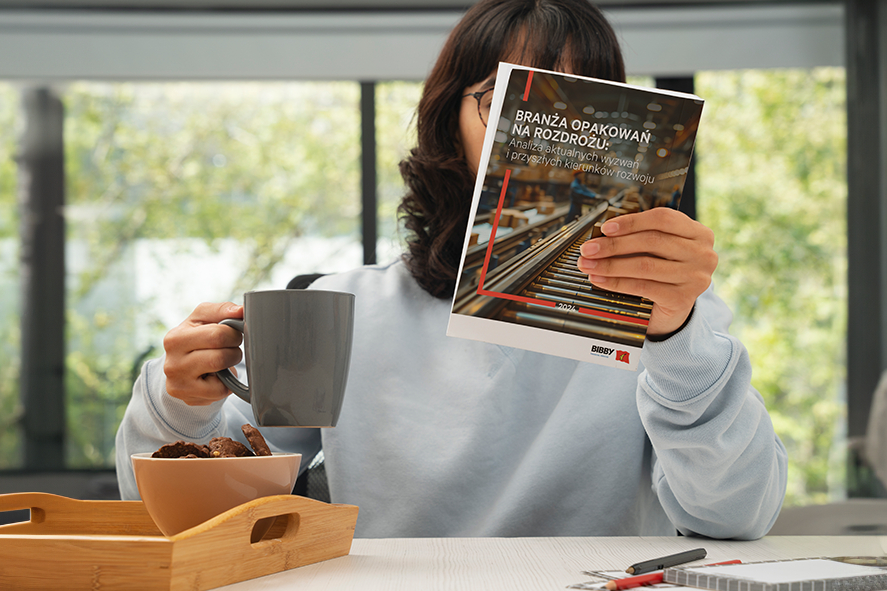
The Polish packaging industry is facing numerous challenges, ranging from rising raw material and energy costs to new legal requirements regarding sustainability. A study conducted by Keralla Research on behalf of Bibby Financial Services shows that companies must not only struggle with rising prices and competition but also seek new sources of revenue and adapt to dynamically changing consumer expectations.
Nearly half of the companies (45 percent) indicated price increases in the study. The packaging industry is quite energy-intensive, and the prices of many raw materials rose significantly during and after the pandemic. Although prices are currently stabilizing, the industry has experienced a decline in production for the first time in history. Analysts at Santander Bank Polska estimate that last year, packaging production fell by approximately 6.6 percent to 67 billion PLN, including a 10 percent drop in plastic packaging production and a 5-10 percent drop in paper and cardboard packaging.
New regulations force investments
High operating costs, including labor and transport costs, are a problem for 36 percent of the surveyed companies. Growing competition, indicated by 34 percent of entrepreneurs, forces a fight for customers and orders. 28 percent of companies are facing declining sales – the challenge in this situation is finding new sources of revenue – and for 22 percent, it is adapting the business to legal regulations such as the Single-Use Plastics (SUP) directive, Extended Producer Responsibility, or the obligation to report sustainability (ESG) indicators.
Regulatory requirements have a huge impact, especially on the plastic packaging market. For many companies in the industry, they directly mean the need to remodel product lines for more ecological alternatives – also to meet consumer expectations – and this involves additional investment and operational costs.
Payment delays and rising debt
Meanwhile, one in five companies has problems maintaining financial liquidity and fears customer bankruptcy. One in six is struggling with payment delays.
– The packaging industry is diverse and includes manufacturers of various materials, including plastics, cardboard, paper, foil, or glass. Each of these groups struggles with slightly different problems, but the common denominator is the need to ensure financial liquidity to settle liabilities on an ongoing basis, procure raw materials for production, or invest in new solutions to meet market challenges
– notes Ewa Gawrońska-Micuń, member of the board of Bibby Financial Services Polska.
Lack of capital is a pain point
Marek Nałęcz Jawecki, CEO of Lakman, a company producing cardboard packaging, notes that raw material prices are no longer his biggest worry.
– The problem is primarily the lack of stability in contracts with customers, because the lack of long-term orders makes it difficult to invest in equipment, technology, and modernization. In our company, the solution is cooperation with Bibby Financial Services. Factoring provides us with the funds to fulfill orders and make necessary investments
– says Nałęcz Jawecki.
Protection against insolvency
However, there are more advantages to factoring. Instruments such as non-recourse factoring can provide not only financial liquidity but also protection against the risk of customer insolvency. An element of the factoring offer can also be the verification of the financial condition and payment history of potential recipients. Before starting cooperation with a new contractor, the factor conducts a detailed analysis, thanks to which entrepreneurs can minimize the risk associated with the insolvency of trading partners. Such verification is of invaluable value, especially when expanding into new markets and looking for new customers.
Unlock capital
Factoring is a way to quickly recover funds frozen in invoices. In the packaging industry, as many as 76 percent of companies have such capital, and the average value of frozen amounts is 55,000 PLN. It is worth releasing them to maintain financial stability and meet upcoming challenges.
The full report “Packaging industry at a crossroads: an analysis of current challenges and future development directions” can be found on the Bibby Financial Services Polska website.
About the report: The study “Packaging industry at a crossroads: an analysis of current challenges and future development directions” was conducted using the CATI method on a representative group of people responsible for running the company (owner, manager) or responsible for purchasing or development. Packaging manufacturers of plastics, cardboard, paper, glass, and foil answered the questions. The duration of the study was the turn of April and May 2024. The study covered 100 companies.
Source: Bibby Financial Services