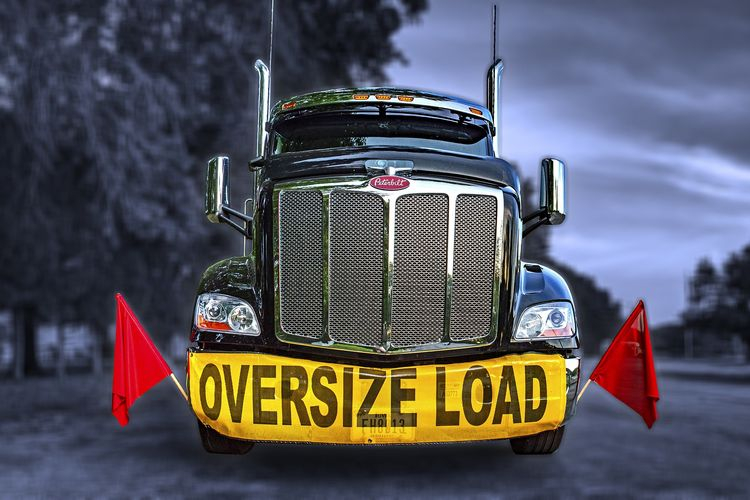
This article describes the process of non-normative transport in a selected logistics company using the example of transformer carriage. Currently, there are still many problems associated with the transport of oversized cargo, and the most popular branch of transport used for this type of cargo is road transport, which faces a number of challenges. In Poland, there is currently no easily accessible information regarding obstacles occurring on individual road sections. There are no detailed instructions regarding the proper securing of cargo in road transport, whereas, for example, in Germany, there are detailed industry standards for cargo securing in transport, and they are strictly enforced.
Both domestic and international transport of oversized cargo requires careful and competent planning. When organizing oversized transport, the following is essential:
- inspection by specialists in the field of the cargo planned for transport,
- determining the category and parameters of the transported cargo,
- selection of the transport method and appropriate vehicles that best match the cargo parameters,
- designating an optimal route, where narrow roads and bridges must be excluded.
Furthermore, the specifics of traffic regulations and rules must be taken into account when performing international cargo transport. A simple example is the fact that in France there are no restrictions regarding cargo height, but on the motorway, one can transport cargo up to 3 m wide. In case of exceeding the permitted width, it is necessary to obtain a special permit (which takes quite a long time to arrange) or to plan the route outside the motorway. Another solution is using waterways. International maritime transport enables the delivery of oversized cargo with transshipment at port terminals and further road transport. It is also necessary to develop schemes/drawings for cargo securing and loading/unloading technology, prepare a package of documents and permits in accordance with the cargo specifics and the designed route, as well as – if necessary – customs documentation. Ensuring safety is also a very important aspect in the transport of oversized cargo – when transporting them, drivers must have sufficient experience in delivering heavy and dangerous goods. Moreover, all vehicles are subjected to strict inspection beforehand, and transports must take place under favorable weather and road conditions. During transport, drivers strictly follow the route designated by logisticians and speed limits. In some cases, to ensure safety and ensure compliance with the permitted speed, the cargo is under the supervision of a patrol car. There are many problems in the implementation of oversized cargo transport, and additionally, it is regulated and solved differently in each country, even though such transport influences the development of the manufacturing industry, various sectors of the economy, as well as infrastructure. In the transport of non-normative goods, the advantage of companies from the European Union is clearly visible. Their competitors from outside the EU point to the lack of access to appropriate, modern machines and technical equipment used in the transport of oversized goods as the main barrier to competing for increasingly demanding customers. There are far fewer manufacturers of heavy sets, special modules, and platform trailers in countries outside the EU than in the Union itself, and they are not competitive in terms of the quality and functionality of the offered equipment. A separate issue is the inability of rail, sea, and air transport to meet 100% of transport needs, including “door to door” relations, the necessity of bypassing viaducts and tunnels, as well as the unsatisfactory condition of roads and bridges, as a result of which equipment often requires expensive repairs after covering long routes. Enterprises from the European Union, including those from Germany, Poland, Lithuania, Sweden, and Denmark, are the most competitive on the transport services market in non-normative transport. They implement various EU projects aimed at, among other things, eliminating “bottlenecks” in transport. Additionally, joint actions are planned aimed at improving the quality of existing transport connections and creating new ones, as well as presenting proposals for practical solutions to improve the quality and durability of non-normative transport means.
The full article is available below in PDF format.
The article comes from the magazine LOGISTYKA 1/2019.
The e-edition of the magazine is available in our offer!