








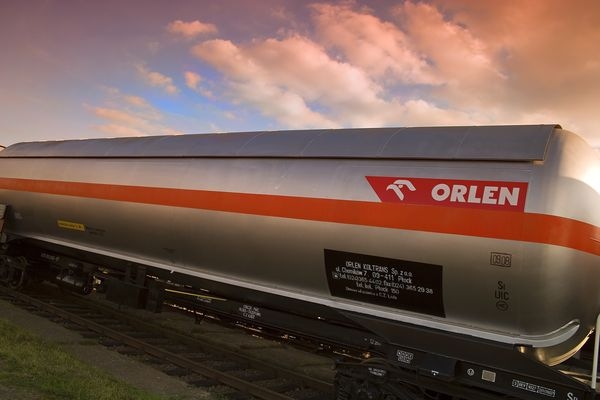
A new hermetic railway tanker cleaning facility will be built at the PKN ORLEN Production Plant in Płock. The technology will be based on a modern, fully sealed cleaning process. The investment will contribute to reducing odor nuisance as well as significantly limiting the consumption of energy utilities.
The implementation of the project, which has just begun and is related to the elimination of hydrocarbon emissions, is in line with the company’s activities included in the global Responsible Care program. This is a pro-environmental program implemented by the chemical industry worldwide, and in Poland, it is carried out by over a dozen companies in the chemical and related sectors that voluntarily implement measures for environmental protection, health protection, and the increase of process safety.
The investment regarding the construction of the new cleaning facility has been divided into several stages. This year, the documentation process will be carried out, consisting of selecting the construction and executive design. The demolition of the old unloading shed will also begin, in the place of which construction work for the new cleaning facility will start a year later. Its commissioning is planned for next year, while the final acceptance of the entire investment is scheduled for the first half of 2019.
At the hermetic railway tanker cleaning station, six wagons will be cleaned in a steaming-washing-drying-cooling cycle. One tanker cleaning cycle will take about 3 hours, which allows for cleaning up to nearly 50 units per day. The modern technology used will enable faster and more effective cleaning of tankers without the need for personnel to enter the interior of each one. The cleaning method used will be based on the use of high-pressure equipment and special cleaning heads. The technical solutions applied will minimize and eliminate risks associated with working at heights, the necessity of entering the tanker’s interior, and the use of high-temperature media. Additionally, control over the chemical substances used in the cleaning process will be improved. The designed infrastructure will also allow for the improvement of ergonomics at workstations and performed tasks. According to the adopted assumption, thanks to, among other things, the installation of appropriate devices recovering heat from the cleaning process, the investment will result in a reduction in the consumption of energy utilities, water, and steam. Meanwhile, wastewater from tanker cleaning, saturated with hydrocarbons, detergents, and uncondensed steam, will be directed to hermetic collectors to further eliminate the emission of odorous compounds. Cleaning tankers is necessary to ensure there are no sediments or product residues in the tanks. Considerations regarding the elimination of microorganisms that could negatively affect the quality of transported products are also important.
Thanks to the technology used for the cleaning facility, the Company will have the opportunity to obtain the European Cleaning Document (ECD) issued with the consent of the European Federation of Tank Cleaning Organisations (EFTCO). The ECD certificate, formally established in July 2005, is honored throughout Europe as a model of a common document for providing services related to the washing and cleaning of tankers according to European standards aimed at improving service quality, safety, and environmental protection.