








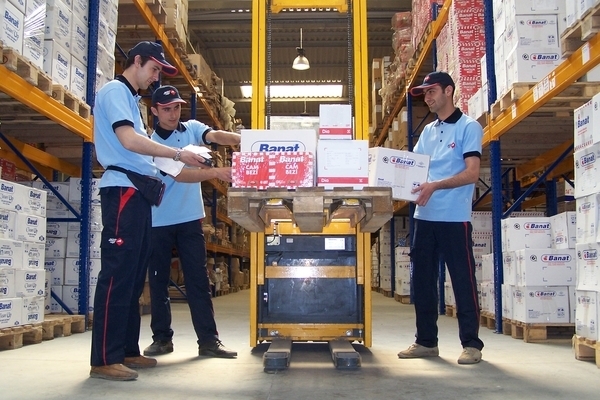
The efficiency of distribution systems depends primarily on the effectiveness of the order picking process. Customer requirements regarding timeliness, completeness, compliance, and quality of deliveries force companies to seek increasingly effective picking systems in terms of the organizational and technological solutions applied.
A key concept from the perspective of a company’s market activity is the efficiency of the picking system, understood as the ratio of the inputs and operating costs to the achieved operational results. In other words, it is about achieving the required process performance at the lowest possible organizational cost.
A bit of theory
The picking operation is one of the four phases of the warehousing process, consisting of retrieving stock from stacks or storage equipment to create a set of assortment items in accordance with the assortment and quantity specifications for a specific recipient. A picking system consists of three main subsystems: information flow, material flow, and process structure organization. Within each of these subsystems, specific basic functions are performed, which are presented in Table 1.
A systemic combination of implementation variants for material and information flow functions creates so-called elementary picking system types. Complex picking systems, which we encounter in warehouse practice, are created by connecting elementary systems in parallel or in series under specific organizational conditions. The mentioned organizational models of picking systems do not take into account the variability of possible technical and technological solutions. The diversity of warehouse technologies available on the market in terms of storage and internal transport, as well as IT techniques, significantly increases the number of possible variants for implementing the picking process.
Main problems
The proper selection of a picking system is a complex and responsible problem, and the individual nature of the process significantly limits the possibility of determining unambiguous criteria for selecting an effective model. The primary difficulties stem mainly from the high variability of process implementation conditions and market (customer) requirements regarding timeliness, lead time, and delivery quality. Also, the aforementioned number of possible implementation variants, increasing mainly due to newer technological solutions, does not make the work of those responsible for investment decisions any easier. A significant factor influencing the choice is the high cost of organizing a picking system. These result mainly from the high labor intensity of the process and significant expenditures related to its computerization, mechanization, or automation.
The article contains 17,470 characters.
Source: Logistyka Magazine 5/2012