









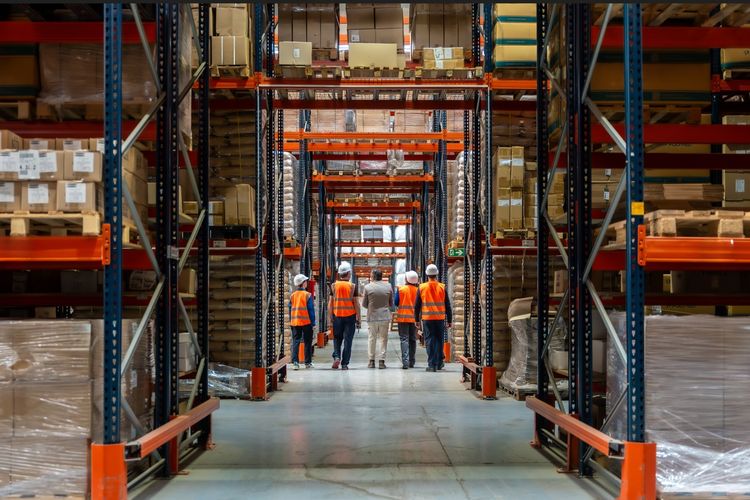
Rising operating costs and labor shortages are making logistics companies look more closely at how they use their warehouse space. Instead of investing in more square meters, they are focusing on process optimization, modern IT systems, and the support of external experts in organizing warehouse operations. In response to these needs, Prologis, through its Prologis Essentials platform, offers comprehensive operational consulting – now available not only to customers of Prologis parks but also to companies operating in external locations. We examine what this service entails and how it helps companies better utilize the potential of the warehouse space they already have.
Even the most modern warehouse can operate well below its potential. An improperly designed layout, long picking paths, bottlenecks, poorly thought-out placement of goods and warehouse zones, or the lack of a WMS system are factors that not only affect productivity but, above all, generate daily losses – often unnoticeable in the short term, but significant on an annual basis. Prologis Essentials operational consulting focuses on identifying these areas and organizing them into a logical, measurable action plan.
Optimizing warehouse operations does not start with moving racks or buying robots. Effective change must be preceded by a deep analysis of data, because investing in logistics process optimization without calculating volumes or implementing a system without adjusting processes will not bring the expected results. That is why Prologis Essentials operational consulting is conducted according to a structured model that allows moving from diagnosis to a ready-to-implement project. This entire process is fully controlled and based on data analyzed by our Solution Design team
– says Michał Tasior, Essentials Solutions Manager at Prologis.
Three stages: from diagnosis to a ready project
The Prologis Essentials operational consulting process is based on three clearly defined stages:
- Analysis of the current state
The first step is a detailed diagnosis of operations. It includes a review of the layout and goods flows, an analysis of receiving, storage, picking, and shipping processes, as well as an assessment of the use of space and technical infrastructure. In parallel, KPIs are analyzed – including team productivity, order fulfillment times, error rates, or inventory turnover. An important element is also the IT environment: the functionality of the ERP system, the presence or absence of a WMS system and its functionality, the degree of system integration, and the quality of operational data. The result of this stage is a clear map of bottlenecks and areas where rapid performance improvement is possible.
- New operating model
The second stage involves designing an optimized operating model. A concept for a new warehouse layout is created, adapted to actual flows and the product range structure. The capacity of zones, workstation ergonomics, and process throughput are analyzed. At this stage, scenarios for implementing automation and MHE equipment modernization are also considered. If the system environment limits the development of operations, functional requirements for the WMS system and directions for integration with the ERP are defined. The concept is calculated each time in terms of its impact on operating costs (OPEX) and capital expenditures (CAPEX). This allows determining which actions will bring the fastest return and in what order they should be implemented.
- Preparation for implementation
The final stage translates the concept into a detailed execution project. The final layout is developed, including technical installations, signage, safety systems, and insurer requirements. The implementation schedule and cost estimation are refined. As a result, the client receives not only recommendations but also a complete implementation plan – ready to be deployed in an existing facility or used when planning new space.
Concrete business value, not declarations
In a dynamic market environment, the ability to flexibly respond to changes in volumes, seasonality, or new customer requirements becomes just as important as the warehouse space itself. That is why Prologis Essentials operational consulting is not limited to presenting recommendations but focuses on building a scalable and change-resistant operating model. Its goal is to translate process improvements into measurable business results – including increased team productivity, reduced costs and order fulfillment times, fewer picking errors, or better use of warehouse space and volume. Such an approach allows for making investment decisions in an informed and justified manner, avoiding unnecessary, costly outlays on new infrastructure.
The “from audit to efficiency” approach shows that before a decision is made, it is worth carefully analyzing what is already functioning. For example, in many projects we have carried out, clients were convinced that they needed to significantly increase their warehouse space to cope with growing volumes. Meanwhile, in the very first stages of process reorganization, it was possible to significantly increase throughput without expanding the facility. Better use of volume, implementation of mezzanines, proper matching of the number of locations to the product range structure, or streamlining replenishment processes in picking zones allow postponing the decision about costly expansion or relocation. Only after using these “reserves” do investments in additional space become justified
– adds Michał Tasior.
From operational consulting to comprehensive support
Operational consulting is one of many services offered under the Prologis Essentials platform. The offer also includes, among others, the rental of racking systems and internal transport equipment, installation of energy-efficient LED lighting, installation of chargers for electric vehicles, photovoltaic panels, and heat pumps, or fire safety audits. Prologis also carries out comprehensive “turnkey” warehouse preparation projects – from concept, through design and contractor coordination, to technical acceptance and the launch of the client’s operations.
The “from audit to efficiency” approach shows a new philosophy of warehouse space management. In an era of high costs, companies that can see the hidden potential within their own walls succeed. Operational consulting is an investment in knowledge that protects against unnecessary infrastructure spending. It is a strategic step for anyone who wants their warehouse to work smarter, not harder and longer.
If your current operating model is slowing down your company’s growth, it is worth looking at processes from an expert perspective. Contact the Prologis Essentials team to discuss an operational audit tailored to your business and see how data analysis can increase warehouse efficiency.