








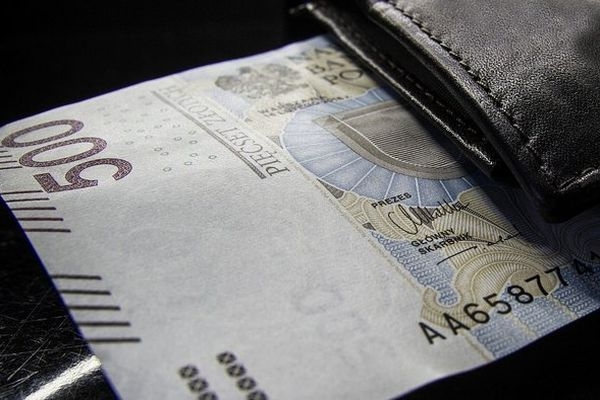
If you do not yield to an approaching tram, you will pay 250 PLN. Do you like talking on the phone while holding the device in your hand? Be prepared for a 200 PLN fine. If you occupy more than one lane on the road, you may receive a 150 PLN penalty. The new tariff schedule means higher amounts for offenses, and police statistics show that only 5% of such situations end with a warning. For the rest, a penalty ticket is issued.
Financial sanctions in Poland are not high. While in Scandinavian countries there is no upper limit for fines for some offenses, a Polish driver can pay a maximum of 500 PLN for speeding. Is a penalty ticket always irrevocable, when does it become time-barred, and why does the burden of demonstrating and proving that a traffic law violation actually occurred rest on the officer? Mateusz Górny, a lawyer at the National Center for Driver Settlement (OCRK), comments on the topic using examples.
According to Art. 97 of the Code of Procedure in Misdemeanor Cases, a penalty ticket may be imposed only in the following cases:
1) when the perpetrator of the offense is caught in the act or immediately thereafter;
2) when a person authorized to impose a fine by way of a penalty ticket observes the commission of an offense in the absence of the perpetrator, and there is no objection regarding the perpetrator of the act (therefore, identity cannot be in doubt);
3) a person authorized to impose a fine by way of a penalty ticket observes the commission of an offense using a control and measurement instrument or a recording device, and the perpetrator was not caught in the act or immediately thereafter. In this case, there can also be no doubt as to the perpetrator of the act.
– Due to the fact that the police are rarely witnesses to a traffic incident, officers, upon arriving at the scene, listen to the testimonies of the victim and the perpetrator. If they are consistent and do not raise doubts in connection with the extent of vehicle damage, then official actions end quickly, i.e., with the issuance of a ticket. The only legal consequence for the perpetrator is then a fine and penalty points. However, if there is a discrepancy between the testimonies, the case is referred to court, which is often associated with a long procedure and trial costs, which are borne by the person found guilty. In this light, a ticket seems to be a milder form for the citizen – assesses OCRK lawyer Mateusz Górny.
Thank you, I do not accept
When a driver is convinced that they did not commit a given offense, they have the right to refuse to accept the ticket. Let’s explain this with an example. The driver managed to cross the intersection before the red light turned on, but the officer has a different opinion. What then? A police officer imposing a fine on a driver by way of a penalty ticket is obliged to inform them of their right to refuse to accept the document. In the event of such a decision, the appropriate institution whose employee is the inspecting person files a motion to the court to punish the perpetrator of the offense. Importantly, the burden of demonstrating and proving that a traffic law violation actually occurred, i.e., in this case, running a red light, will rest on the officer. If the case goes to court, the police are obliged to secure evidence, testimonies, and present the case in court.
– Often in such situations, an expert opinion is necessary. The judge questions the parties to establish all the circumstances of the disputed event, after which a decision is made. Evidence can include: a video recorded on a dashcam, a photo taken by a speed camera, and other documented findings serving as evidence. Importantly, the court is not bound by any statutory or formal rules in assessing evidence (this is the so-called free assessment of evidence), which means that neither party is privileged. However, it is understandable that the opinion of the inspecting person is highly valued – adds Mateusz Górny from OCRK.
The case becomes time-barred
– Liability for misdemeanors expires one year from the date the offense was committed. It should be noted that imposing a fine by way of a penalty ticket, in relation to a perpetrator of an offense caught in flagranti or immediately after the offense, is possible only within 14 days from the date of disclosure of the prohibited act. After this period, the officer loses their authority to issue a ticket, and the perpetrator can only be punished by filing a motion to the court for punishment – says Mateusz Górny.
In the event that the commission of an offense was observed by an officer, the period within which a ticket can be issued is 90 days from the disclosure of the act. In relation to offenses recorded by speed cameras or other devices of this type, a ticket can be issued no later than 180 days from the date of the incident.
– It is also worth mentioning Art. 101 of the Code of Procedure in Misdemeanor Cases, regarding the cancellation of a ticket. There is such a possibility, but it only occurs when the fine was imposed for an act not prohibited as an offense. This means that if a ticket is issued for the lack of, for example, a first aid kit, a reflective vest, or a jack, i.e., elements that are not mandatory vehicle equipment, then this type of ticket can be overturned despite its finality. Note, the cancellation takes place at the request of the punished person submitted within 7 days from the date the ticket becomes final or ex officio – notes the OCRK lawyer.
Let us add that the body that can cancel a final penalty ticket is the court competent to hear the case, the district or local court, in whose area of operation the fine was imposed.
Indisputable
Demonstrating that one has been accused and punished for an act that is not an offense is basically the only possibility of overturning a ticket. Accepting the imposition of a penalty constitutes an admission of guilt. In this way, the legislator has protected itself against the possibility that a citizen could, after some time, appeal against a decision issued and accepted.
– Therefore, answering the question posed at the very beginning, if the punished driver does not have irrefutable evidence denying the commission of the offense, they should accept the ticket. Especially since financial sanctions in Poland are not described as very high compared to, for example, Scandinavian countries, where there is no upper limit for the amount of fines for some offenses. The maximum sanction for speeding is 500 PLN – adds Górny.
Source: OCRK